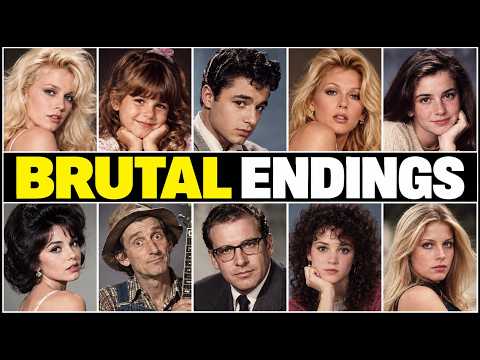
Bob Crane was a beloved TV star, but his life ended in a brutal, unsolved murder that shocked Hollywood. He is just one of many classic TV personalities whose lives were cut short by violence. From the glamorous to the humble, these are the stories of 13 stars who were murdered.
Their cases range from high-profile media sensations to quiet tragedies, but each one left a mark on the entertainment industry and the fans who loved them.
Bob Crane, known for his role as Colonel Hogan on Hogan’s Heroes, was found beaten to death in a Scottsdale, Arizona apartment in 1978. The case remains unsolved. Victor Kilian, a character actor blacklisted during the McCarthy era, found fame again in his 80s on Mary Hartman, Mary Hartman, only to be killed by burglars in 1979. Sharon Tate, a rising star and pregnant wife of director Roman Polanski, was murdered by the Manson Family in 1969.
Christa Helm, an actress with small roles on Wonder Woman and Starsky and Hutch, was stabbed to death in 1977; her murder also remains unsolved. Rebecca Schaeffer, star of My Sister Sam, was shot by an obsessed fan in 1989, leading to the first anti-stalking laws. Charles Wagenheim, a prolific character actor with over 250 film credits, was killed by his nurse in 1979. David “Stringbean” Akeman, banjo player and Hee Haw star, was murdered by burglars in 1973.
Karen Kupcinet, daughter of columnist Irv Kupcinet, was strangled in her apartment in 1963. Dominique Dunne, star of Poltergeist, was strangled by her ex-boyfriend in 1982. Lana Clarkson, actress in Deathstalker and Barbarian Queen, was shot by Phil Spector in 2003. Sal Mineo, Oscar-nominated for Rebel Without a Cause, was stabbed to death in 1976. Judith Barsi, a child actress known for The Land Before Time and All Dogs Go to Heaven, was killed by her father in 1988. Dorothy Stratten, Playboy Playmate and actress, was murdered by her estranged husband in 1980.
These stories are a reminder of the darkness that can lurk behind the spotlight. In the following pages, we will explore each of these cases in detail, from the lives they led to the investigations that followed.
The details of these cases reveal more than just the violence itself. They show how the entertainment industry and the public reacted, and how the legal system sometimes failed the victims.
Bob Crane’s murder investigation focused on John Henry Carpenter, a friend who worked in video equipment sales. Blood matching Crane’s type was found in Carpenter’s rental car, but without DNA testing in 1978, the county attorney declined to file charges. The case was reopened in 1990, and Carpenter was arrested in 1992. At the 1994 trial, Crane’s son testified that his father had called Carpenter the night before to end their friendship. The defense argued the case was circumstantial, and the jury acquitted Carpenter. He maintained his innocence until his death in 1998. In 2016, the blood samples were retested with newer methods, but the results were inconclusive. The murder of Bob Crane is still officially unsolved.
Victor Kilian’s death came just five days after another elderly actor, Charles Wagenheim, was killed a few blocks away. The two cases were not connected, but for a week in March 1979, it felt like old Hollywood was under attack. No one was ever charged in Kilian’s death, and the case is listed among the unsolved murders in California. A man who had survived the blacklist and lost an eye on a film set, who got a second career on television in his late 80s, died alone in his own home at the hands of strangers.
Sharon Tate’s murder shocked the world. She was more than eight months pregnant when members of the Manson Family entered the property on the night of August 8th, 1969. She was killed along with her unborn son and four others. Charles Manson, Charles Watson, Susan Atkins, and Patricia Krenwinkel were convicted and sentenced to death in 1971. The next year, the California Supreme Court struck down the state’s death penalty, and the sentences became life in prison. Atkins died in prison in 2009, and Manson died in custody in 2017. Tate and her son, named Paul Richard Polanski, were buried together at Holy Cross Cemetery in Culver City. Her mother, Doris Tate, became one of the best-known victims’ rights advocates in the country, speaking at parole hearings against the release of her daughter’s killers. In 1992, President George H. W. Bush honored her work, and the Doris Tate Crime Victims Bureau was founded in 1993. Her younger daughter, Patty, carried that work on.
Christa Helm’s case went cold almost immediately. The original detective believed it was a rage killing, but there were no witnesses and no arrest. Investigators noticed she died one year to the day after Sal Mineo was killed in the same part of town, but that lead went nowhere. Her daughter, Nicole, spent years pushing for the case to be reopened, and eventually the cold case unit of the Los Angeles County Sheriff’s Department took it on. In 2008, the CBS program 48 Hours covered the investigation. Detectives tested DNA, looked for missing personal papers, and interviewed people from her old circle, but no one was charged. More than 40 years later, the murder of Christa Helm remains unsolved. She was a young actress with a few television credits, a daughter, and plans for a music career, and the person who killed her has never been identified.
Rebecca Schaeffer’s death changed the law. In 1990, California passed the first anti-stalking law in the United States, written partly in response to what happened to her. Other states followed. The fact that her killer, Robert John Bardo, had found her through the Department of Motor Vehicles also led to the federal Driver’s Privacy Protection Act, signed in 1994, which restricted the release of people’s personal information from motor vehicle records. The Los Angeles police also set up a unit to deal with threats against public figures. For many viewers who grew up in the ’80s, Rebecca Schaeffer was the girl from My Sister Sam who was just getting started, and the laws that came out of her death are a big part of the reason stalking is treated as a serious crime today.
Charles Wagenheim’s case had a strange detail. His final television credit, a small part as a homeless man in an episode of All in the Family, aired on March 25th, 1979, nearly three weeks after he had died. Viewers watching Archie Bunker that night saw him on screen without knowing what had happened. After 50 years of playing the man in the background, he was gone before his last scene was even broadcast.
David “Stringbean” Akeman’s murder had a lingering mystery. Reports at the time said the killers got away with very little, and that a large amount of cash was still on Stringbean’s body. Both cousins were convicted. Marvin Brown later admitted his part but said it was John who fired the fatal shots. Marvin died in prison in 2003. John Brown was paroled in 2014 after serving 41 years of a 198-year sentence, over objections from people in the country music community. The story of the hidden money never quite went away. In 1996, the new owner of the house reportedly found a few thousand dollars, badly chewed by rodents, tucked inside the chimney, although that account has been difficult to confirm.
Karen Kupcinet’s death came at the same moment the country was mourning President Kennedy. The case was covered heavily in the press, and over the years, various writers have put forward their own theories. But no one was ever charged, and no suspect was ever officially named by police. Her death remains officially unsolved more than 60 years later. For her family, it never ended.
Dominique Dunne’s family called the verdict an injustice. Her father wrote about the trial in an essay called Justice, published in Vanity Fair in 1984, and it launched his long career as a writer about crime and the courts. Her mother, Lenny, helped found Justice for Homicide Victims, a group that supports the families of murder victims. Dominique Dunne had been on the edge of a real career, and her family spent the rest of their lives making sure her case was not forgotten.
Lana Clarkson’s family and friends spent years reminding people that she was a working actress with real credits. A woman who had made people laugh on network television and who had been trying to rebuild her career when she was killed. In 2012, her mother, Donna Clarkson, settled a wrongful death lawsuit with Phil Spector and his insurer.
Sal Mineo’s case drew wild speculation in the press for more than a year before Lionel Ray Williams was connected to the killing. Williams was convicted in 1979 and sentenced to 51 years, but he always maintained his innocence. He was released on parole in 1990. Mineo is buried in Gate of Heaven Cemetery in Hawthorne, New York. For classic TV fans, he was the teenager from those live dramas of the ’50s and the guest star who kept turning up on the detective shows of the ’70s. He was trying to build a second act on the stage when his life was cut short.
Judith Barsi’s story is often brought up when people talk about warning signs that were missed. There had been police reports and a child protection case, and in the end, none of it was enough to protect her. Both of her best-known films came out after she died. The Land Before Time was released in November 1988, and All Dogs Go to Heaven in 1989. Generations of children have grown up with Ducky’s voice without knowing what happened to the girl who provided it.
Dorothy Stratten’s story was retold quickly. The television movie Death of a Centerfold aired in 1981 with Jamie Lee Curtis playing Dorothy. In 1983, Bob Fosse made the film Star 80 with Mariel Hemingway in the role. Peter Bogdanovich wrote a book about her called The Killing of the Unicorn, published in 1984. The book included accusations against Hugh Hefner that Hefner strongly disputed. Bogdanovich later married her younger sister, Louise Stratten. Dorothy Stratten was 20 years old. She had already appeared on some of the biggest television shows of her day, and she was just starting the kind of career that a lot of people believed would have lasted decades.
These cases, taken together, show a pattern. Many of these murders were committed by people the victims knew: a friend, a nurse, a husband, a father, a boyfriend. Others were random acts of violence or the result of obsession. In several cases, the investigations were hampered by the lack of forensic technology that we take for granted today. In others, the legal system delivered verdicts that left families feeling betrayed. And in a few, the killer was never found, leaving a question that may never be answered.
The stars on this list came from different backgrounds and eras. Some were household names, others were character actors who worked steadily without fame. Some were just starting out, with their best work ahead of them. All of them were loved by someone, and all of them died too soon. Their stories are a reminder that the spotlight can attract not only admiration but also danger, and that the people we invite into our living rooms through the television screen are not immune to the darkness that exists in the world.
What ties these thirteen stories together is not just the violence, but the lives that were still in motion. Bob Crane was touring dinner theater, hoping for a comeback. Dorothy Stratten was twenty and already on the cover of everything. Judith Barsi was ten, and her voice still sings to children today.
Many of these cases remain unsolved, and some families are still waiting for answers. But others turned grief into action: stalking laws, victims’ rights groups, and cold case units that keep looking long after the headlines fade.
These stars are gone, but the work they left behind—and the laws their deaths inspired—are still with us. Their stories remind us that fame offers no protection, and that even the most familiar faces can be taken in an instant.
Which of these cases do you think deserved more attention when it happened? Share your thoughts in the comments below.
Report this article
Select a reason for reporting:






