The Ningen is a modern Japanese urban legend that originated on an anonymous internet forum in 2002. Researchers Derek Hayward and Christopher Greenland, who study folklore rather than marine biology, traced the story’s development for the International Journal of Research into Island Cultures. They dated its core version to May 2002, considerably earlier than most casual retellings suggest.
The original post claimed that crew members involved with Japan’s Antarctic whaling research program had encountered strange white shapes in the water, described as human-shaped objects. The information was framed as coming from someone connected to the whaling operations who said it could not be officially announced.
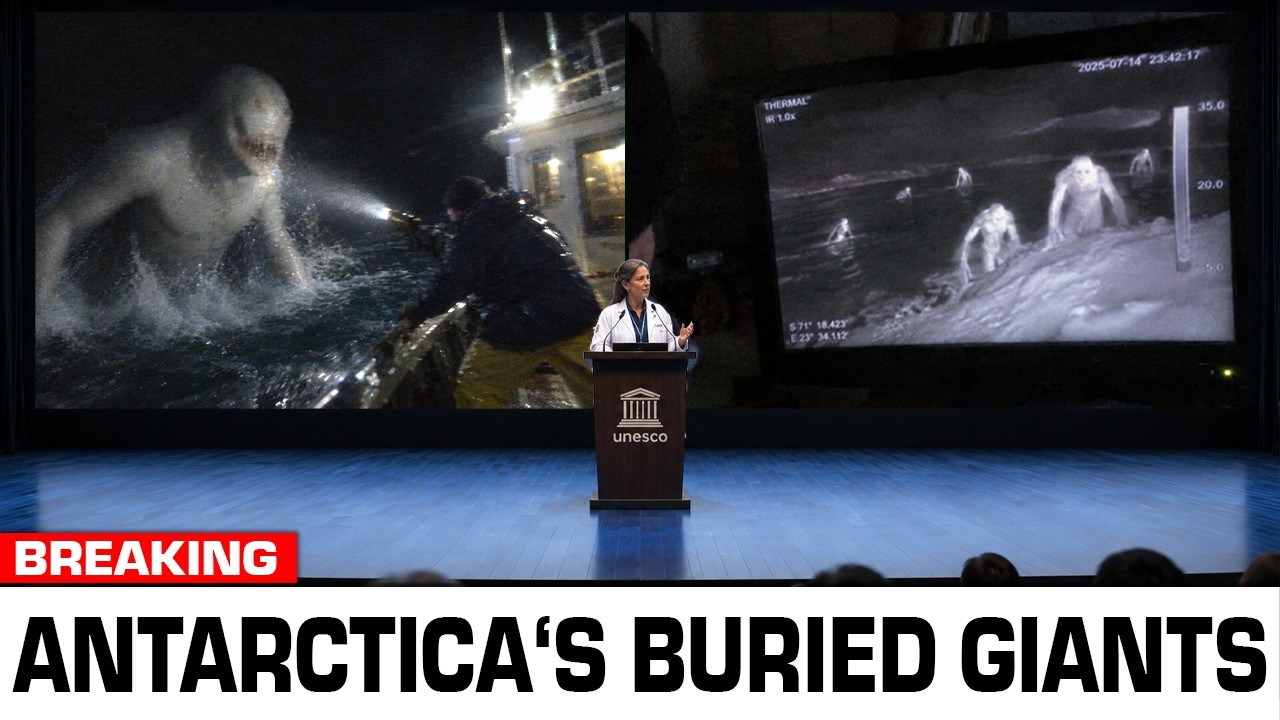
The story did not spread widely at first. It gained traction around 2007, when new anonymous posters added details with each retelling. A Japanese paranormal magazine called Mu published an article that year about a strange white shape visible in a Google Earth satellite image off the coast of Namibia, suggesting it could be a human-shaped monster called Ningen.
The Mu article’s author, a writer named Namiki, later acknowledged the story’s two-channel origins in a separate collection of Japanese urban legends published the same year. He treated it openly as internet folklore rather than a confirmed sighting.
The original 2002 thread is no longer available in two-channel archives. Researchers have not been able to fully confirm the exact wording of that first post. The foundational document behind the entire legend cannot be independently verified today.
In 1958, the crew of the Soya, Japan’s first post-war Antarctic research icebreaker, reportedly described an unusual sighting near Lutzow-Holm Bay. The account was nicknamed “Antarctic Godzilla” in later retellings. Some secondhand accounts described it as resembling a whale with an ape-like face. The crew member reportedly went below deck to retrieve a camera but the creature had vanished by the time he returned.
Once the Ningen rumor gained traction in the 2000s, Mu magazine and later writers connected this older, vaguely described 1958 account to the newer internet legend. The original report never used the word Ningen and never described anything specifically humanoid. This pattern of retroactive connection is well recognized in how modern folklore develops.
One widely circulated piece of footage was formally addressed by the Inoshima Aquarium in Japan. The aquarium stated that the shape people identified as a creature was actually an unusual rock formation resembling a frog, with two patches of sponge growth creating what looked like eyes from a distance. Other specific sightings have been identified as ordinary icebergs or beluga whales, which can look strange under certain lighting conditions.
A secondary layer of folklore built up around the core Ningen story within a few years. It added claims that the Japanese government knew about the creatures, that research crews operated under formal agreements requiring silence, and that sightings had extended beyond Antarctic waters. Hayward and Greenland describe this secondary material as having no primary sourcing behind it whatsoever.
The claim of silenced witnesses has no identifiable specifics. There is no former crew member who has come forward publicly under their own name describing pressure to stay quiet. No leaked internal memo from any whaling company or research institute exists. No journalist has tracked down a named source willing to confirm the claim even anonymously.
The encyclopedia project Groipedia, built by xAI, hosts an entry on the Ningen describing it as a modern Japanese urban legend originating from anonymous online posts. It states clearly that there is no verified scientific evidence for its existence and attributes reported sightings to misidentified whales, ice formations, or optical illusions.
Antarctica operates under the Antarctic Treaty, signed originally in 1959 by 12 countries including Japan, the United States, the Soviet Union, the United Kingdom, and Australia. Article 7 of the treaty grants every consultative party the right to designate observers who can inspect any other party’s stations, ships, and research operations across Antarctica at any time with no advance notice required. Article 3 separately requires treaty nations to freely share scientific data and personnel plans.
In more than 60 years of operation under this system, no nation has been caught running a secret military installation. The system was deliberately built around transparency because Antarctica’s unusual legal status made mutual openness the only realistic way to keep the arrangement functioning peacefully.
Japan’s real Antarctic whaling program provided a genuine backdrop for the original rumor. Japan launched its first post-war Antarctic whaling expeditions in the late 1940s. By 1987 the program was reorganized under a scientific research designation called JARPA, which ran until 2005. It was followed by an expanded successor program, JARPA 2. The fleet was built around a large factory ship called the Nishin Maru, supported by several smaller catcher vessels.
The fleet was shadowed for years by the anti-whaling group Sea Shepherd Conservation Society, whose activists documented the whaling ships’ activities specifically to expose anything they considered wrongdoing. The group never once reported anything resembling a Ningen sighting.
The program drew serious international criticism. In 2014, the International Court of Justice found that Japan’s Antarctic research whaling program did not meet the scientific standard it claimed to operate under. Japan formally withdrew from the International Whaling Commission in 2019, shifting its whaling activity toward its own coastal waters.
Published marine research across Antarctic waters contains no logged sighting resembling the Ningen. No unexplained sonar return has been matched to the story in any research paper. No footnote in any whale population study mentions an unidentified giant humanoid.
Real scientific discoveries have been made in Antarctic deep sea areas. The Andep Project, short for Antarctic Benthic Deep Sea Biodiversity, sent three sampling expeditions into the deep Weddell Sea and surrounding areas, working at depths from roughly 750 to more than 6,000 meters. Publishing in the journal Nature, the research team documented hundreds of species of isopods, small crustaceans related to shrimp, the overwhelming majority entirely new to science. None looked anything like a giant humanoid.
The deep ocean has genuinely hidden large animals from science before. The colossal squid was first identified in 1925, known only through remains found inside sperm whale stomachs. It was not filmed alive in its natural habitat until March 2025. What separates those confirmed cases from the Ningen is the presence of actual physical evidence. The Ningen has none.
Polar regions produce a specific kind of mirage called a fata morgana, named after the sorceress Morgan le Fay from Arthurian legend. It happens when a sharp temperature difference between cold air near the surface and warmer air above bends light dramatically, distorting the image of a distant object. In 1906, explorer Robert Peary reported spotting a large land mass roughly 130 miles away and named it Crocker Land. A 1913 follow-up expedition led by Donald MacMillan spotted what looked like hills and snowcapped peaks. An Inuit hunter named Pugatug immediately recognized the shape as an illusion. MacMillan pushed forward for five more days before admitting Pugatug had been right. Crocker Land had never existed.
The physical description of the Ningen also runs into a biological problem. Large animals that live in water follow different physical rules than large animals that walk on land. Water buoyancy carries most of the weight of the largest animals, freeing their bodies from needing the massive, dense skeletal structure a land animal of similar size would require. A creature described as walking on ice at 20 to 30 meters long with human-proportioned legs would need bones and joints capable of supporting that weight directly against gravity, something outside anything any known mammal lineage has produced.
Southern elephant seals can see adult males stretch close to 5 meters long, with pale, blubbery bodies that can look strange half-submerged in fog. Icebergs constantly calve and roll in these waters, briefly exposing pale, oddly shaped underwater sections. None of these explanations perfectly account for every detail in some retellings, which is partly why the legend has survived so long without being fully closed.
The Ningen traces back to an anonymous 2002 Japanese forum post that cannot be fully recovered today. It expanded significantly in 2007 through a Mu magazine article whose own author acknowledged its internet origins. It was connected after the fact to an older 1958 sighting that never originally described anything humanoid. At least one specific piece of viral footage has been formally identified as an ordinary rock formation. The claim that witnesses were silenced has no primary source. The published scientific record from decades of whale surveys contains nothing matching this creature.
What actually happened is a piece of anonymous internet fiction from 2002 that grew layer by layer into something mistaken for a hidden truth because enough people repeated an unsourced detail long enough for it to start sounding true.






