
Elon Musk’s Grok AI was asked who built the Great Sphinx, and its response left Egyptologists genuinely astonished. The artificial intelligence reportedly delivered a conclusion that challenges the long-accepted mainstream narrative, pointing instead toward a far older civilization.
The Great Sphinx at Giza has faced east toward the rising sun for roughly 4,500 years. Carved from a single block of limestone, it stands about 20 meters tall and stretches 73 meters long. Workers removed stone from three sides of the plateau to free the monument from the surrounding rock. It remains the largest monolithic statue on Earth.Despite centuries of excavation, translation, and satellite…

Graham Hancock just dropped evidence he claims rewrites everything we know about the pyramids, and the world is stunned. The controversial author has long argued the Giza monuments are far older than mainstream Egyptology admits, pointing to erosion patterns and celestial alignments.
The Great Pyramid of Giza is often cited as one of the most remarkable structures ever built. Its internal chambers, particularly the King’s Chamber, are constructed from massive granite blocks. The conventional account holds that Pharaoh Khufu built it around 2560 BCE using copper tools and a workforce of about 20,000 laborers over roughly two decades. Author and former journalist Graham Hancock…

A sealed chamber beneath the Great Pyramid has just yielded what experts call a “disturbing” discovery that could rewrite ancient history. The newly found space, long hidden behind a wall of massive limestone blocks, contains artifacts that directly contradict everything we believed about pyramid construction.
The Great Pyramid of Giza has been studied, measured, and debated for centuries. Every stone, angle, and passage has been documented, or so it was believed. In 2025, a research team reported finding structures buried deep beneath its base, a discovery that was not anticipated.Standing at the base of the Great Pyramid is an experience that is difficult to describe. The desert heat rises from the sa…
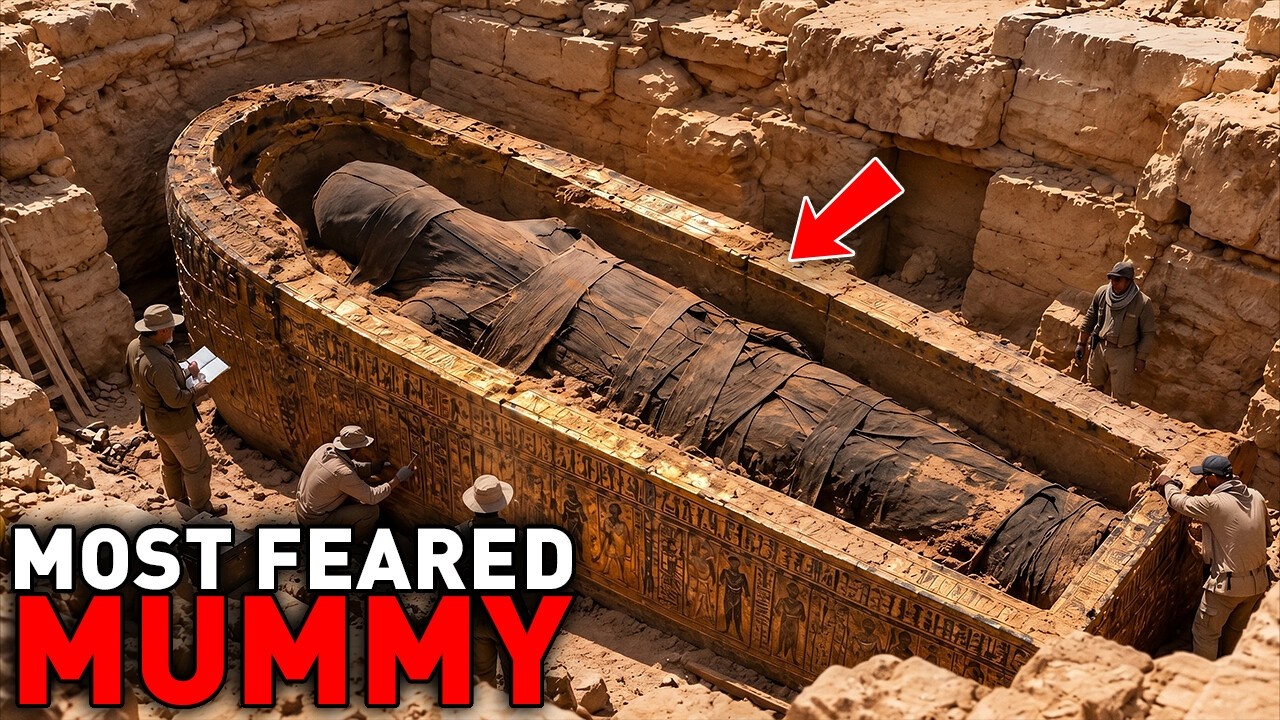
Archaeologists in Egypt just uncovered something that defies everything experts thought they knew about ancient burials—a mummy so massive it couldn’t fit through any standard tomb entrance. The staggering discovery came during an excavation in a previously unexplored region, and the sheer size of the remains left the team completely stunned.
Around 3,000 years ago, the body of an Egyptian woman named Lady Chenet Ah was placed inside a sealed coffin. For decades, researchers could not determine how she got in, as the coffin appeared to have no openings. Modern CT scans eventually revealed the method used by the embalmers.Lady Chenet Ah lived during Egypt’s Third Intermediate Period, a time between major dynasties. She was in her late 3…
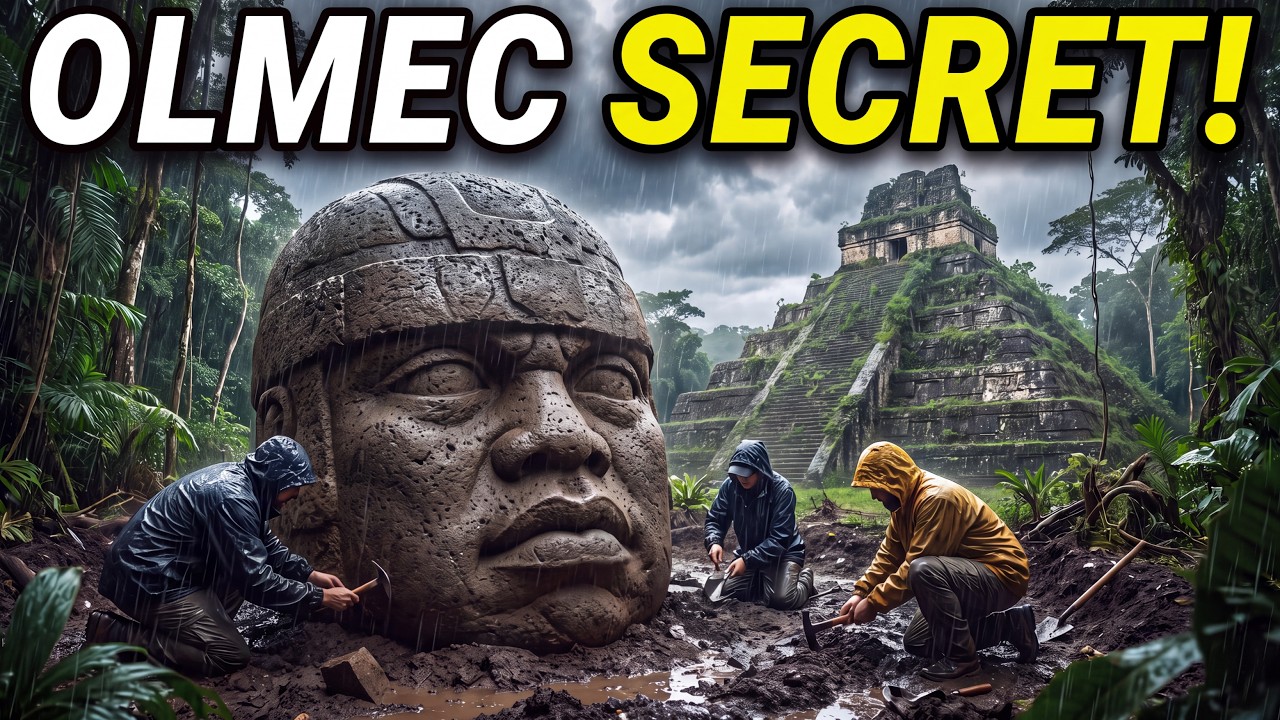
The Olmec colossal stone heads still defy explanation, but a newly examined detail about their creation just rewrote what experts believed. Known as Mesoamerica’s earliest civilization, the Olmec left giant sculptures weighing tons, long thought to be portraits of rulers.
In the state of Tabasco in southern Mexico, near the Guatemalan border, lies a large, flat pasture used for cattle grazing for generations. Underneath the grass is a raised earthen platform approximately 1.5 kilometers long and up to 15 meters high. Researchers estimate that its construction required moving more earth than was used to build the Great Pyramid of Giza.The site, known as Aguada Fenix…

In 1926, French engineer Émile Baraize finally forced open the mysterious hatch on Egypt’s Great Sphinx, a sealed passage that had baffled explorers for decades. What he found inside defied all archaeological expectation, a hidden chamber that rewrote what experts believed about the monument’s true purpose.
A rectangular shaft about five feet wide and six feet deep is cut into the top of the Great Sphinx’s head, directly into the skull of a statue long assumed to be solid rock. Discovered by the team of French engineer Émile Baraize during excavation work in the 1920s, the opening was later sealed with cement and an iron cover. It is not the only one. Additional openings exist at the back, beneath th…
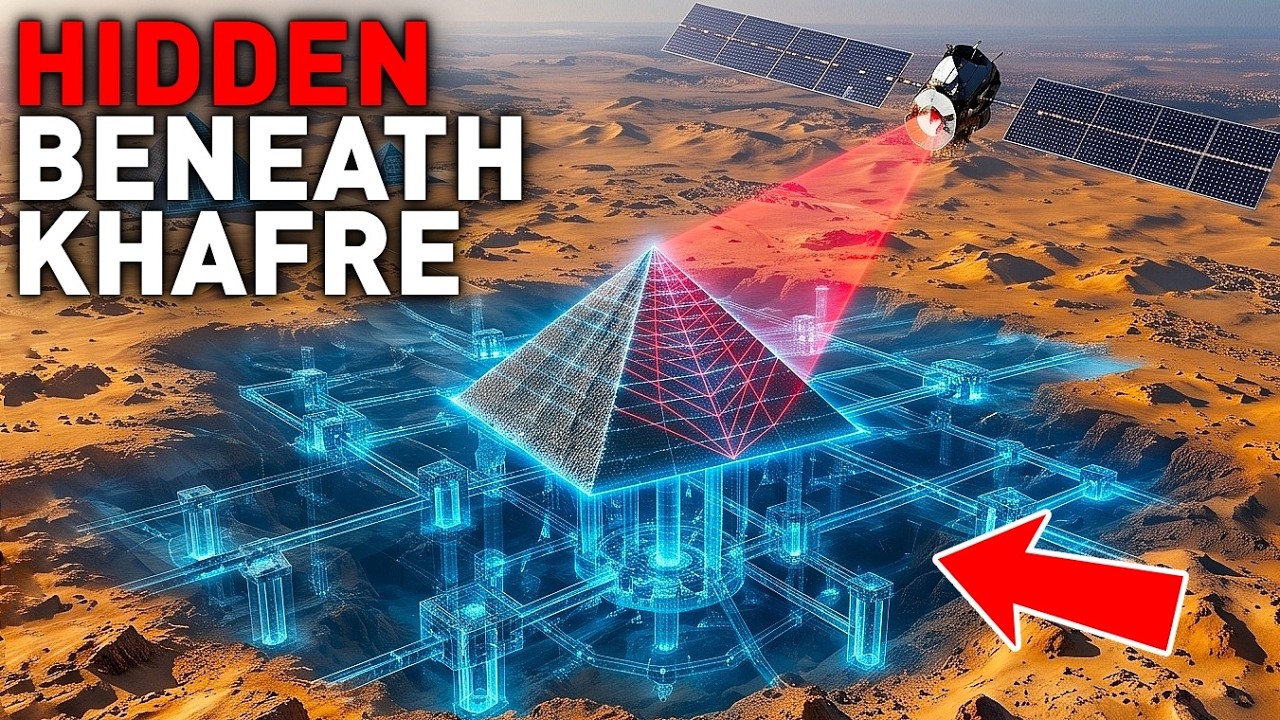
Four satellites just confirmed a massive, hidden structure beneath the Khafre Pyramid, and mainstream archaeology is scrambling for an explanation. Researchers say the underground complex features enormous vertical shafts and labyrinthine passages, but they refuse to call it a tomb.
The Great Pyramid of Giza and the surrounding plateau continue to be a source of archaeological and geological debate. Recent research and new scanning technologies have prompted renewed discussion about hidden structures beneath the sands and the methods used to build these ancient monuments.Much of the recent attention stems from a study by Italian and Scottish researchers who employed synthetic…
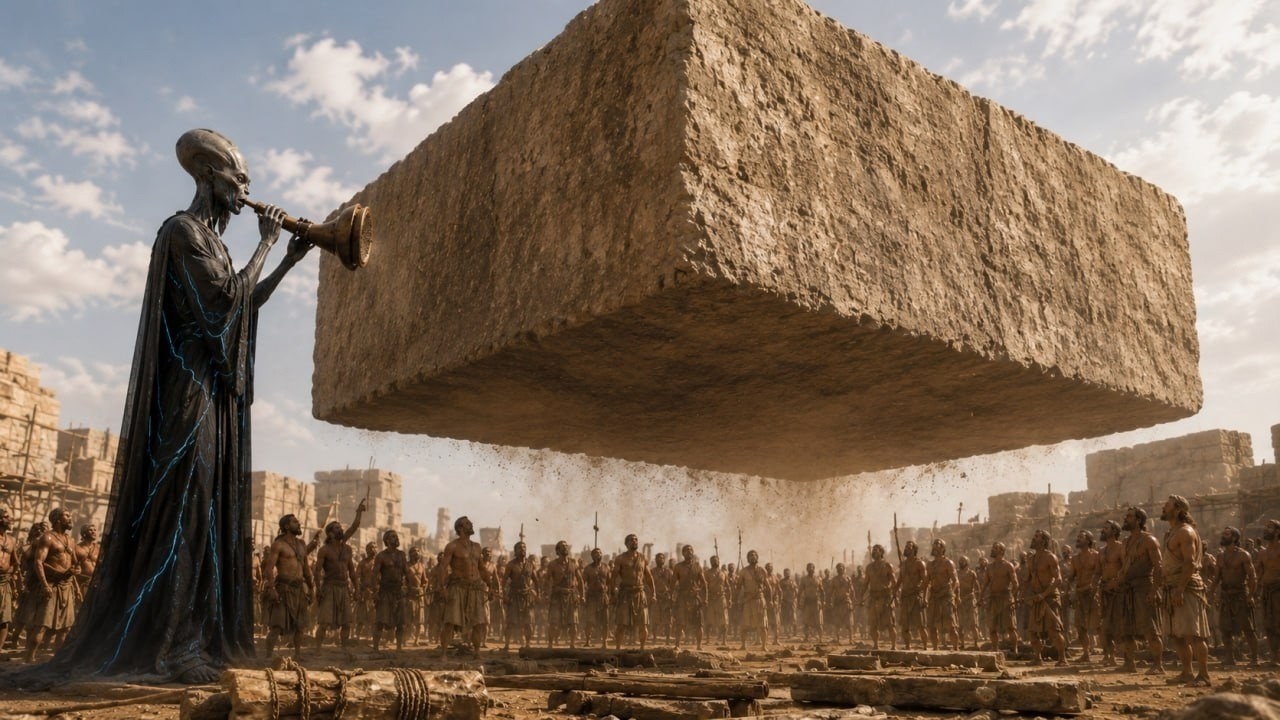
In der Antike bewegten Menschen Steine von bis zu 800 Tonnen – ein Rätsel, das Ingenieure bis heute beschäftigt. Man nahm lange an, riesige Hebel und tausende Sklaven seien die Lösung gewesen.
In einem Steinbruch im heutigen Libanon liegt bis heute ein etwa 1.000 Tonnen schwerer Steinblock. Er wurde vor rund 2.000 Jahren aus dem Fels gehauen und sollte offenbar transportiert werden. In der Nähe befinden sich in der Mauer eines antiken Tempels drei Steinplatten, die jeweils fast 800 Tonnen wiegen. Sie sitzen mehrere Meter über dem Boden so präzise im Mauerwerk, als wären sie mit einem Kr…
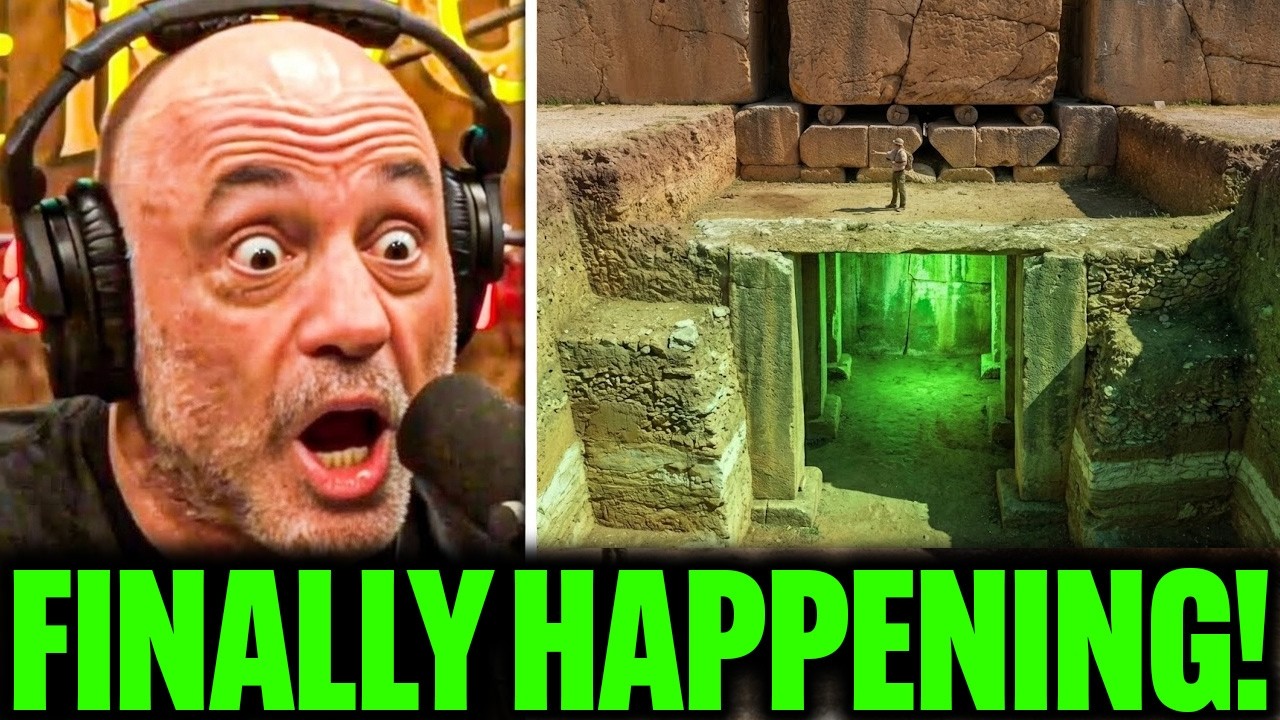
AI decoded Lebanon’s ancient mystery��and the truth is far stranger than anyone imagined. For decades, archaeologists puzzled over the massive stone platform at Baalbek, with blocks so heavy no known method could move them.
The ancient stone platform at Baalbek in Lebanon’s Bekaa Valley has long been considered one of the most impressive engineering achievements in the historical record. Situated less than a kilometer from the main temple complex, the site contains some of the largest stone blocks ever handled by human hands. Each of the three enormous stones in the platform’s retaining wall weighs roughly 800 tons,…
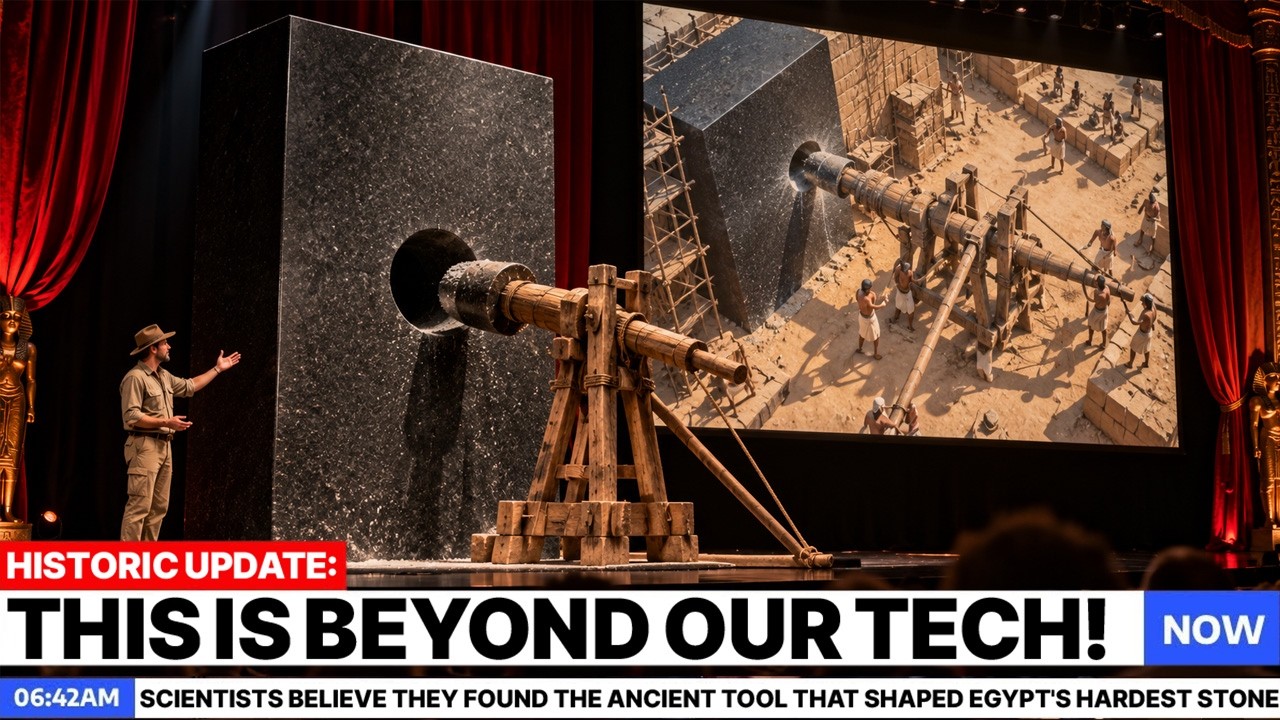
Scientists believe they found the ancient tool that shaped Egypt’s hardest stone, and it wasn’t what anyone expected. For decades, experts have puzzled over how the Egyptians carved granite with such precision using supposed copper tools, which should have been far too soft.
The Great Pyramid of Giza contains a granite sarcophagus that appears inconsistent with the tool technology generally attributed to ancient Egypt. The builders had access to copper, but copper is too soft to cut quartz embedded in granite. Yet the sarcophagus shows straight cuts and precisely drilled holes, with stone cores bearing spiral rings left by a rotating tool.Researchers have spent more t…