
Florida’s new weapon against giant pythons is unlike anything before, and it’s not a bigger trap or a faster hunter. Wildlife officials are deploying a specialized team that tracks the invasive snakes in a way that’s never been attempted.
Florida wildlife officials have considered a large-scale method to reduce Burmese python numbers in the Everglades: dropping dead mice laced with acetaminophen from helicopters. The common painkiller is highly toxic to snakes, which lack the enzyme pathway mammals use to process it. Laboratory tests confirm it is effective against Burmese pythons.The proposal has not moved forward. One significant…

Florida’s controversial plan to hire civilian snake hunters ended in a twist no one saw coming. State officials launched the program after invasive pythons decimated local wildlife, hoping trained amateurs could curb the crisis.
Florida has spent years trying to control its Burmese python population, and the effort has produced limited results. The snakes, introduced through the exotic pet trade, have spread across the Everglades and caused significant declines in native wildlife. In some areas, raccoon and opossum numbers have fallen by about 90 percent. Researchers have also documented pythons consuming deer whole.Hunti…
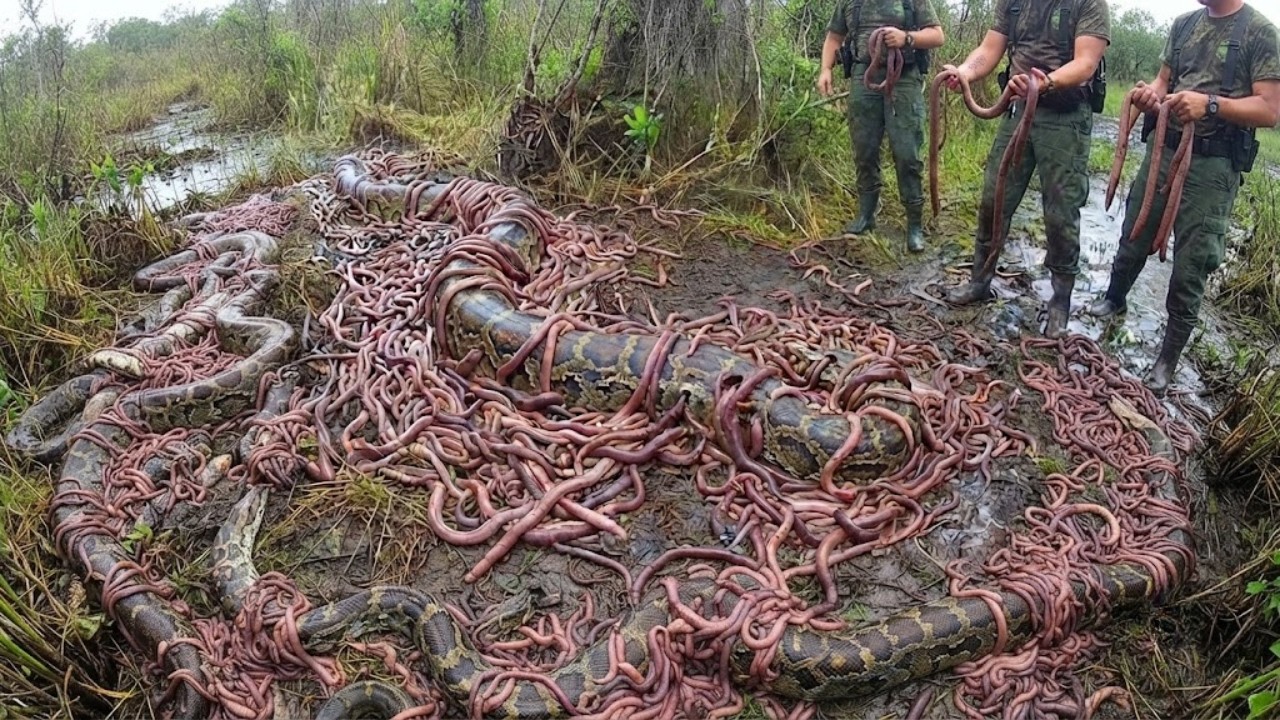
Florida’s pythons are being eaten alive from within—and scientists are stunned. The invasive snakes, already a deadly threat to local wildlife, now face an invisible killer.
In southern Florida, python hunters keep mental records of their catches. Last season, those numbers took an unexpected turn. Hunters captured fewer live pythons than the year before, which initially seemed like positive news. Fewer invasive snakes would suggest the ecosystem was recovering. But population models indicated the opposite. Radio transmitters attached to more than sixty monitored pyth…
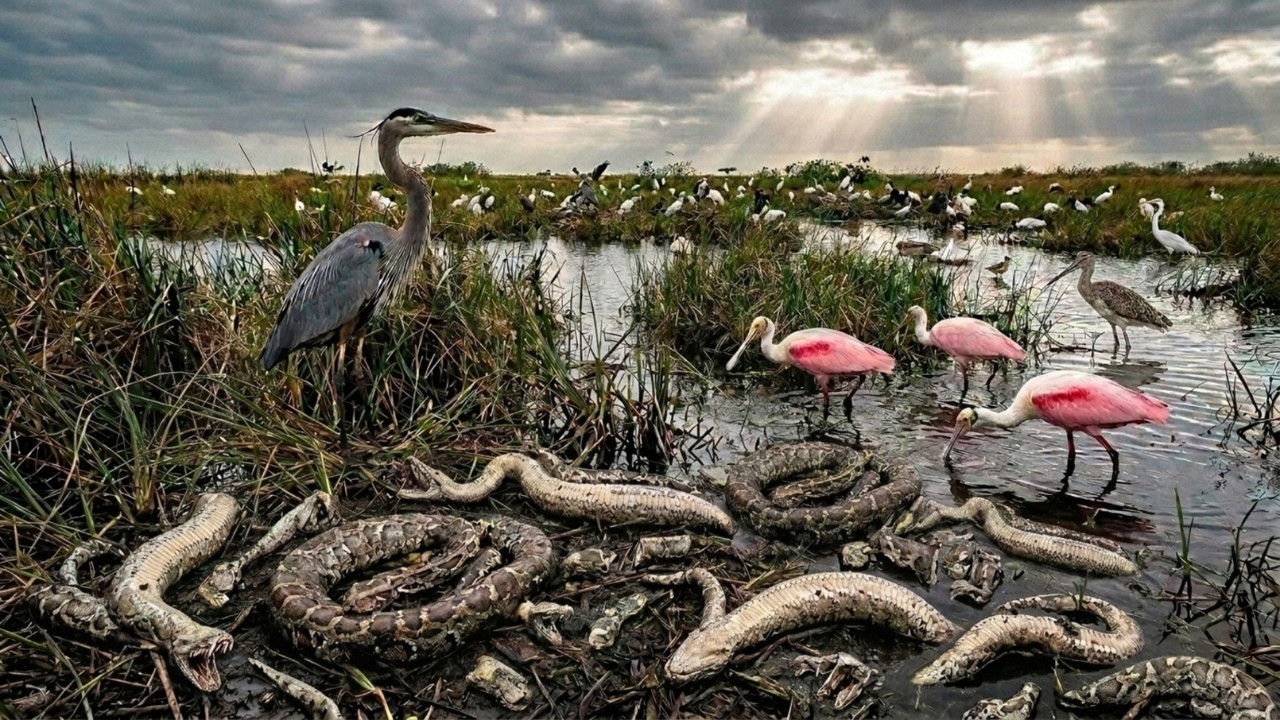
The Everglades’ invasive python collapse is silently reshaping the ecosystem, and scientists are finally tracking the true impact on wading birds. For decades, these massive snakes have decimated native wildlife, but new research reveals that the birds most affected are finding surprising consequences.
Margaret Hensley had spent 16 years counting nesting pairs at Corkscrew Swamp Sanctuary near Naples, and she knew the seasonal patterns of the wood stork colony well. During her March survey of the most recent nesting season, she recorded a colony larger than any she had seen in six years. The increase was significant enough that her usual measures of water levels, rainfall, and prey availability…
Florida’s invasive giant python population has been under attack—and scientists say a surprising hunter is responsible. Officials have tracked something killing massive pythons, leaving their bodies in ways no predator was expected to manage.
The population of Burmese pythons in the Florida Everglades has declined significantly in recent years. Governor Ron DeSantis attributed this reduction to a partnership with a Miami-based company that manufactures clothing and accessories from python skin. The pythons, an invasive species native to Southeast Asia, have caused extensive damage to the ecosystem of South Florida over the past four de…

The Everglades fires didn’t just scorch the grass—they dragged something hidden into the open, and it wasn’t only the snakes that had everyone talking. As flames tore through the dry marshland, authorities moved in expecting routine wildlife rescues, but what they started finding beneath the ash and smoke shifted the entire operation into something far more serious.
In 2011, researchers in the Florida Everglades found a 15-foot Burmese python that had consumed an 80-pound deer. While alligators are often considered the primary danger in Florida swamps, Burmese pythons have become a significant threat to mammal populations in the region. Since 2000, Florida has removed more than 23,000 of these snakes from the wild, and a single female can lay up to 100 eggs a…
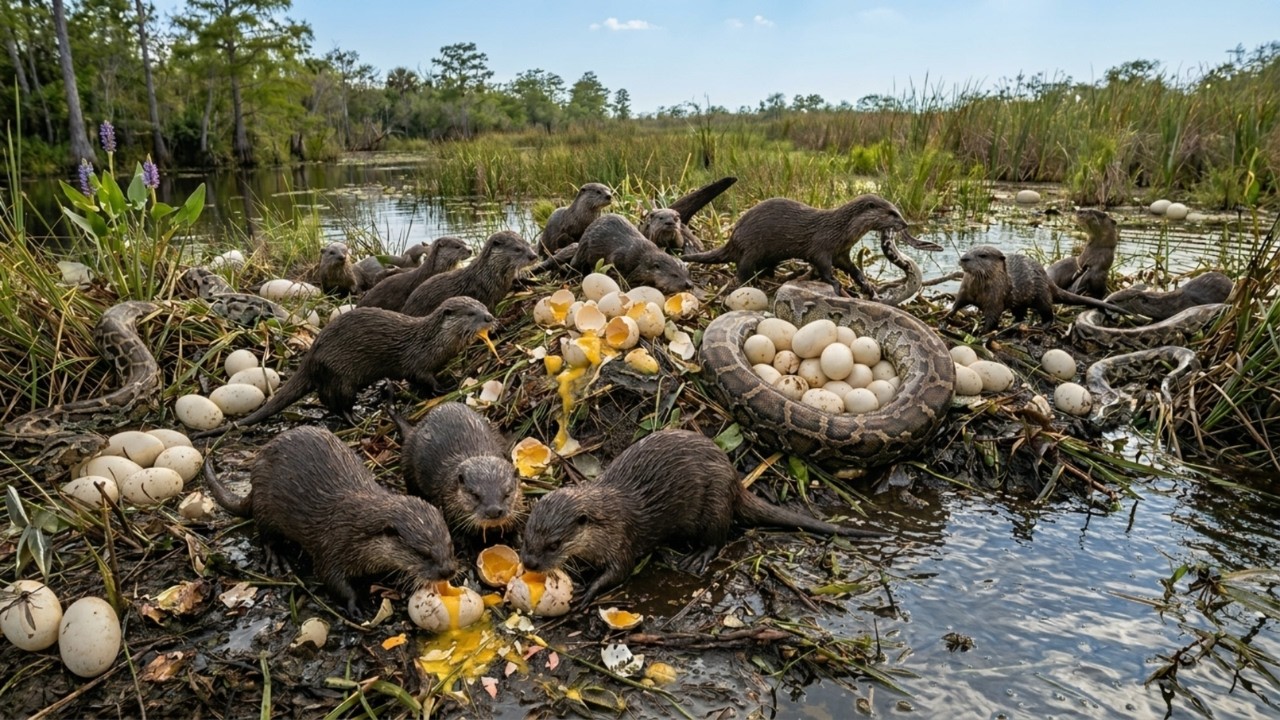
Scientists are watching Florida’s Burmese python nests vanish at an alarming rate, and the culprit isn’t what anyone expected. These massive invasive snakes, already notorious for devastating local wildlife, are suddenly seeing their eggs disappear before they can hatch.
A python nest camera deployed in the Loxahatchee River corridor of the Florida Everglades recorded 37 hours of footage during a single incubation window before the monitoring team reviewed it. The nest had been flagged six days earlier when a transmitter signal stopped moving in open water habitat where no python had previously remained stationary for that long. A graduate researcher pulled the fo…
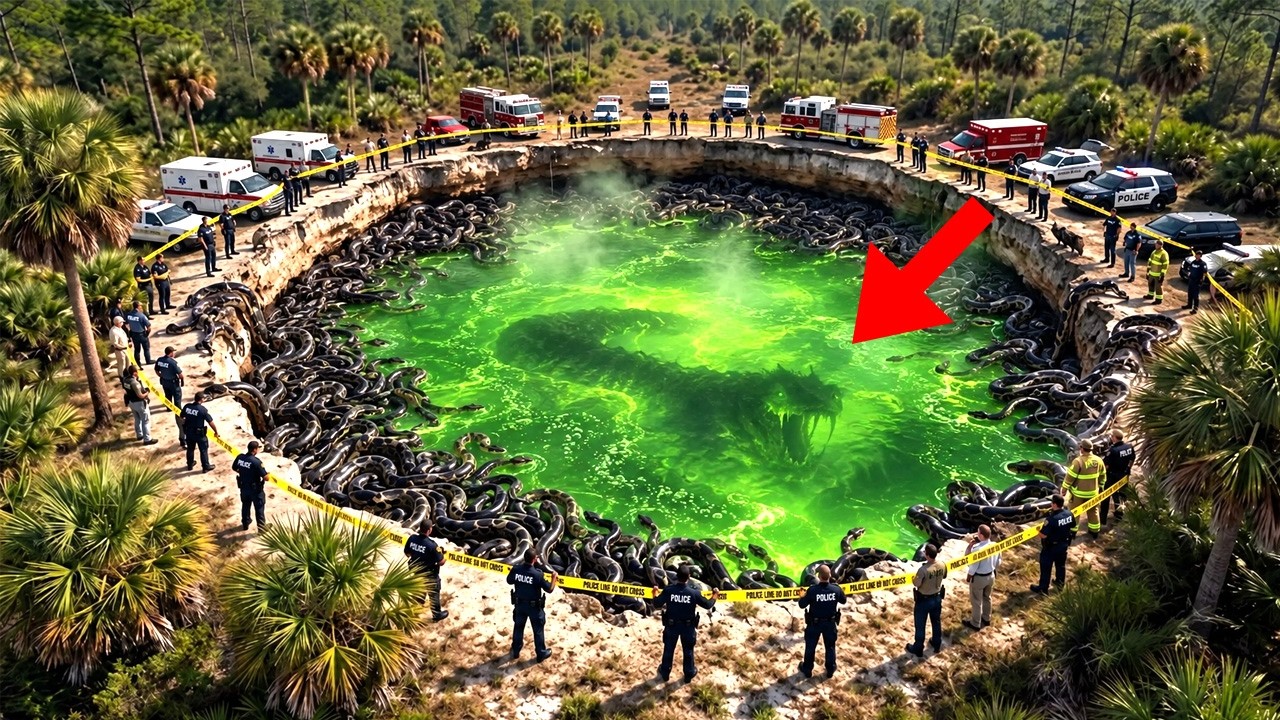
A swamp full of hungry predators and giant pythons had Florida scientists desperate for a solution. For years, invasive Burmese pythons wiped out native wildlife across the Everglades, and typical removal methods simply could not keep pace.
Burmese pythons in Florida can swallow an adult deer whole. The snakes have severely reduced raccoon, rabbit, and fox populations in the southern Everglades, and for years no native predator appeared able to stop them. Then researchers implanted radio transmitters in young pythons and followed the signals. Some of the pythons died, but their transmitters kept moving through the black water inside…

Florida swamps are hiding something nobody expected, and newly released footage just exposed the aftermath in shocking detail. What the camera caught beneath the murky surface is drawing immediate attention—yet the full picture remains shrouded.
In the decades since Burmese pythons became established in the Florida Everglades, the region has seen a documented collapse in many native mammal populations. Recent camera footage from the swamps, however, suggests that the ecosystem is not entirely passive. Researchers are observing signs of native predators adapting to the invasion, alongside ongoing efforts to restore species that were lost l…

A hunter in Florida just shot the biggest python ever recorded in the state, and the photos have sparked a firestorm on social media. The massive Burmese snake, nearly 19 feet long, was taken down after an exhausting hunt that pushed the team to its limits.
In July 2023, a 22-year-old man pulled a Burmese python from the grass beside a road in Big Cypress National Preserve in Florida. The snake measured 19 feet, making it the longest Burmese python ever documented in the state. The snake was captured on Highway 41 near Monroe Station by Jake Walleri and his cousin Stephen Gauta, who hunt pythons together and post their catches online as The Glades Bo…