The bottom of the ocean holds mysteries science has barely begun to map, but when NASA was asked what is really down there, their answer reportedly unsettled even seasoned researchers. Vast trenches plunge deeper than Mount Everest, yet less than twenty percent of the seafloor has ever been directly explored.
In March 2012, filmmaker James Cameron piloted a specially built submarine, the Deep Sea Challenger, to the Challenger Deep, the deepest point in the Mariana Trench. He was the first person to complete that particular dive alone.Waiting for him when he surfaced was Kevin Hand, a NASA astrobiologist from the Jet Propulsion Laboratory. Hand had joined the expedition to study the water and sediment s…
A mysterious sound at 35,000 feet has researchers questioning everything they know about deep-sea life. Equipment lowered into the Mariana Trench, the ocean’s deepest point, suddenly detected an unknown living organism far below any recorded habitat.
In July 2011, a research team from the Scripps Institution of Oceanography at UC San Diego, working with engineers from National Geographic, deployed several free-falling camera systems into the Sirena Deep section of the Mariana Trench. The cameras recorded video at a depth of 10,641 meters, about 34,911 feet, confirming the presence of giant single-celled organisms called xenophyophores on the s…
A sperm whale can dive beyond 2,000 meters, enduring pressure that would crush steel, yet researchers continue to find organisms living inside their bodies that are as remarkable as the animals
A sperm whale can dive beyond 2,000 meters, enduring pressure that would crush steel, yet researchers continue to find organisms living inside their bodies that are as remarkable as the animals themselves. Routine examinations of dead whales have produced discoveries that range from massive blockages caused by the animal’s own biology to parasitic worms longer than most vehicles.Sperm whales are t…
The water pressure at the bottom of the Mariana Trench reaches roughly eight tons per square inch, and sunlight never reaches it. In 2018, researcher Shiba avoided the ocean entirely and searched
The water pressure at the bottom of the Mariana Trench reaches roughly eight tons per square inch, and sunlight never reaches it. In 2018, researcher Shiba avoided the ocean entirely and searched video archives instead, reviewing 5,010 old dives that had received little attention. One scene from 1998 stopped her completely.The trench was first discovered by the Royal Navy survey ship HMS Challenge…
A strange sound just echoed up from Earth’s deepest abyss, and scientists are scrambling for an answer. More than 35,000 feet below the ocean’s surface, the Mariana Trench hides an environment so extreme that almost nothing survives.
In October 2014, a research vessel carrying a team from Oregon State University traveled to the Mariana Trench in the western Pacific Ocean. The group lowered an underwater drone equipped with sensitive listening equipment roughly seven miles into the trench, into a region known as the hadal zone, named after Hades, the ancient Greek underworld.The drone took about three hours to reach the bottom….
A fisherman’s camera caught a giant squid doing something science has never documented. The crew was hauling lines in deep water when the creature surfaced, and what it did next sent shockwaves through the vessel.
In December 2025, a fisherman off the coast of southern Japan filmed two giant squid at the ocean surface in daylight, with one apparently feeding on the other. The footage, posted online under the handle Yon Morikota, was notable because healthy giant squid almost never appear at the surface, and observing one actively feeding is rarer still.Giant squid have been known to science for centuries wi…
Descending 11,000 meters into the Mariana Trench, explorers expected a lifeless abyss, but they discovered a hidden world thriving in total darkness. That alien landscape holds creatures unlike anything on Earth, along with a deeply unsettling secret about human impact.
A popular claim repeated in documentaries for decades holds that more people have walked on the moon than have visited the bottom of the ocean. Researchers who study deep-sea exploration say this comparison is not accurate.Only 12 people have set foot on the moon, and 24 traveled there in total. By early 2023, researchers tracking crewed descents estimated that at least 27 people, possibly more th…

A rare deep-sea creature with transparent skin was caught on camera for the first time, leaving marine biologists completely stunned. The discovery, made during a routine midnight expedition, revealed a species never documented in any scientific database, its internal organs visibly pulsing beneath its fragile casing.
Researchers have recently reported a series of discoveries that have expanded scientific understanding across several fields. These findings, documented over the past two years, range from deep-sea observations to genetic analyses and astronomical measurements.In March 2025, a remotely operated vehicle from the Schmidt Ocean Institute filmed a juvenile colossal squid near the South Sandwich Island…
Deep beneath the Pacific, a remotely operated vehicle descended past 38,000 feet into the Mariana Trench, where crushing pressure and total darkness should make survival impossible. The footage captured there revealed something unexpectedly alive, defying every scientific assumption about the limits of life.
The pressure at the bottom of the Mariana Trench reaches about 8 tons per square inch, and sunlight never arrives there. In 2018, researcher Shiba avoided the ocean entirely and searched through video archives instead, examining recordings from 5,010 old dives that no one had previously studied in detail. One scene from 1998 stopped her completely.The HMS Challenger, a British Royal Navy survey sh…
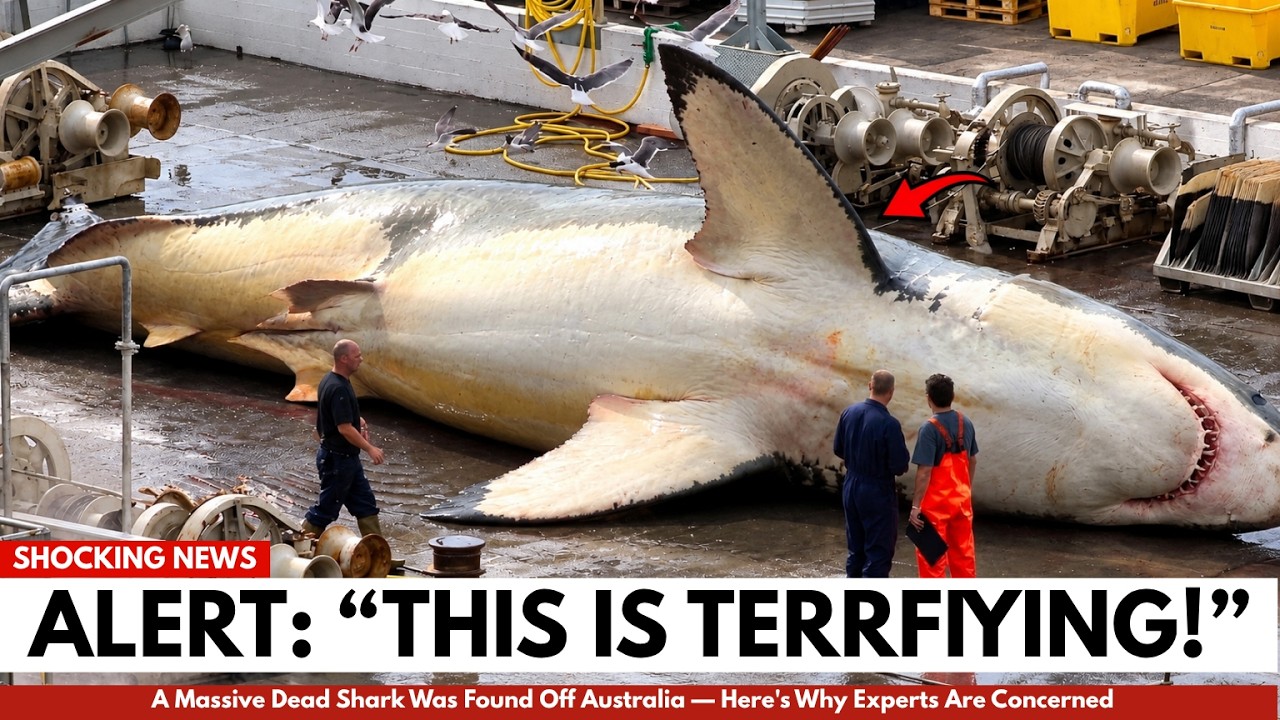
Australia’s coastline just produced a discovery no one expected—a massive dead shark surfacing offshore, and experts are already on edge over what it means for the waters
The ocean has a way of humbling anyone who thinks they understand it. Less than a quarter of the seafloor has been mapped at high resolution, and only a tiny fraction has ever been visually observed. That gap between what exists and what we have seen is where rumors go to breed, and in 2015, it produced one of the most persistent marine mysteries of the decade.A tuna net off Port Lincoln, South Au…