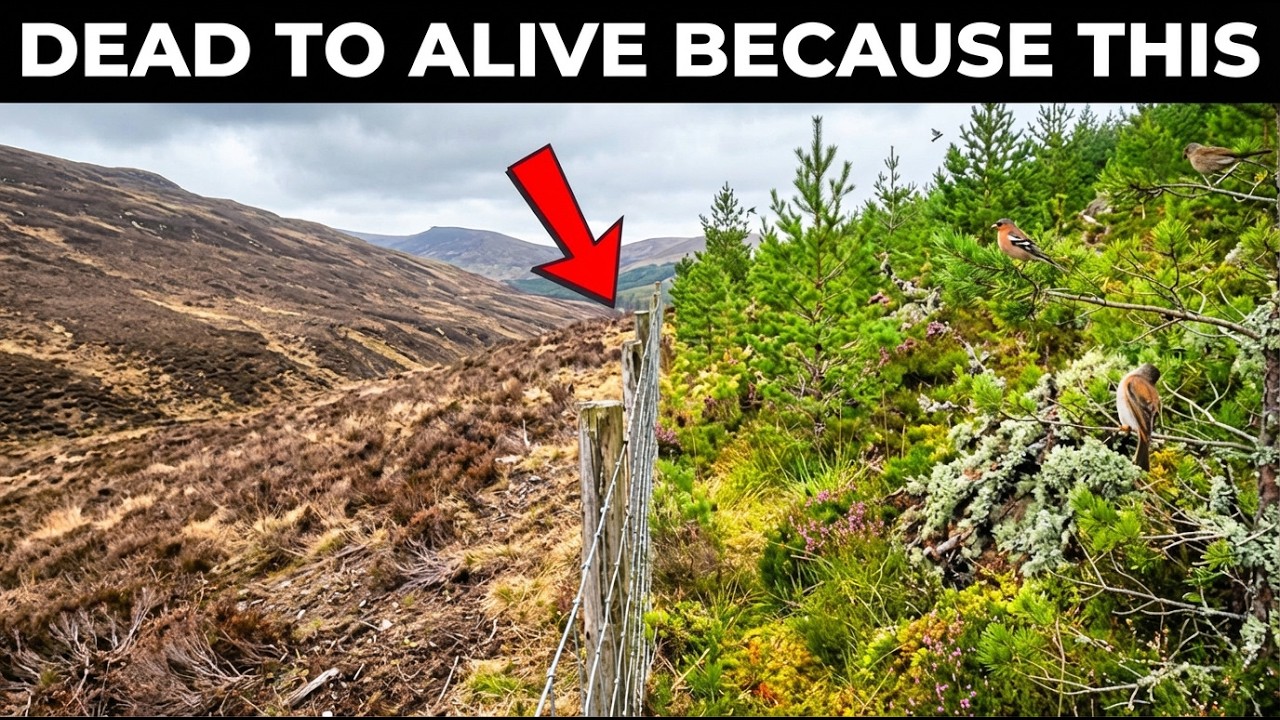
Scotland built a hidden fence around a long-dead forest, sealing an entire grove off from the world. The area had decayed for decades, with trees reduced to skeletal gray husks, and officials kept the site strictly closed to the public.
For roughly two centuries, no new trees took root across parts of the Scottish Highlands. Ancient Scots pines, some carrying a lineage that stretches back 9,000 years, stood in moors grazed by nearly a million deer. Then researchers built a fence to keep deer out of one area. With no planting, seeding, or soil treatment, one side of the fence turned into a dense young forest within a few years. Th…
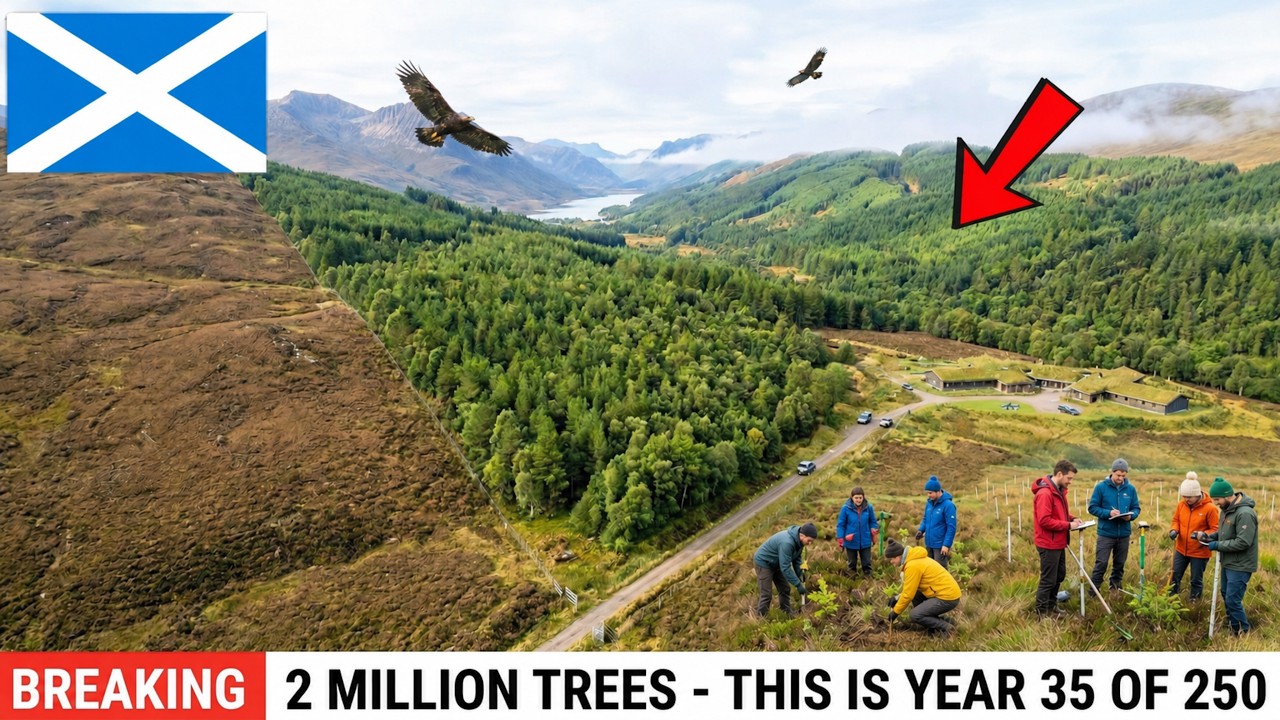
Thirty-five years after Scotland planted two million trees on a desolate Highland estate, something extraordinary returned to the landscape. The barren moor, once stripped bare by centuries of grazing, was transformed into a thriving ancient forest.
In 1991, volunteers in northern Scotland planted some of the first new trees to grow in parts of the Caledonian forest in two centuries. The work was part of a 250-year restoration plan announced by Alan Watson Featherstone in 1986. Over the following decades, more than two million native trees were planted across dozens of sites in a Highland landscape that had been treeless for so long that many…
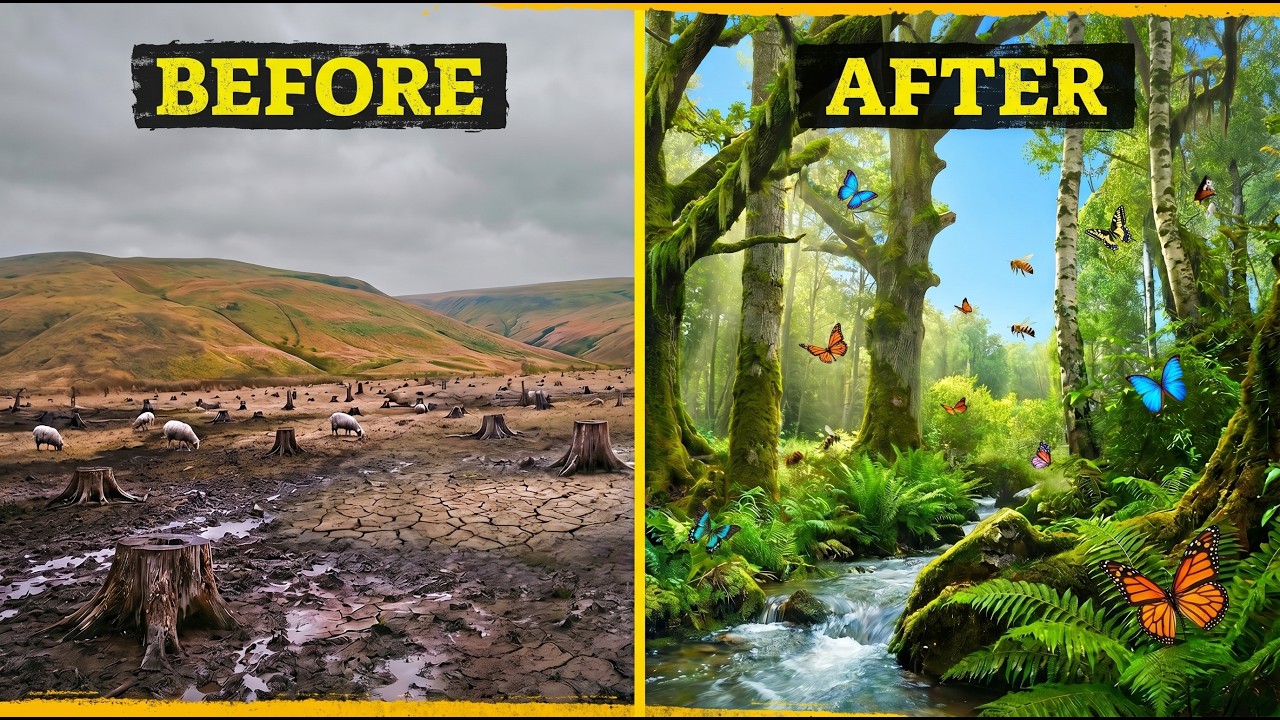
Britain’s temperate rainforest once spanned a fifth of the country, but after 800 years of felling, grazing, and toxic air, less than 1% remains. Then, in 2020, researcher Guy Shrubsole discovered moss-draped oak gorges that no map had ever catalogued, sparking the first national recovery strategies.
Britain once supported a temperate rainforest covering roughly a fifth of its land surface. This woodland, an estimated 4.6 million hectares, stretched from Cornwall to the Scottish Highlands along west-facing slopes and river gorges. The climate there, mild with heavy Atlantic rainfall, allowed oaks, mosses, lichens, and ferns to grow in dense, interconnected layers. Today, less than 1% of Britai…