The alligator gar, a native North American fish capable of growing past eight feet in length, was declared completely gone from Illinois waters by 1994. The disappearance followed decades of deliberate killing and habitat loss.
In 2010, Illinois joined a multi-state reintroduction effort led by the United States Fish and Wildlife Service. Since then, thousands of the fish have been released into rivers that are crowded with invasive Asian carp, and researchers have studied what the young predators actually eat.
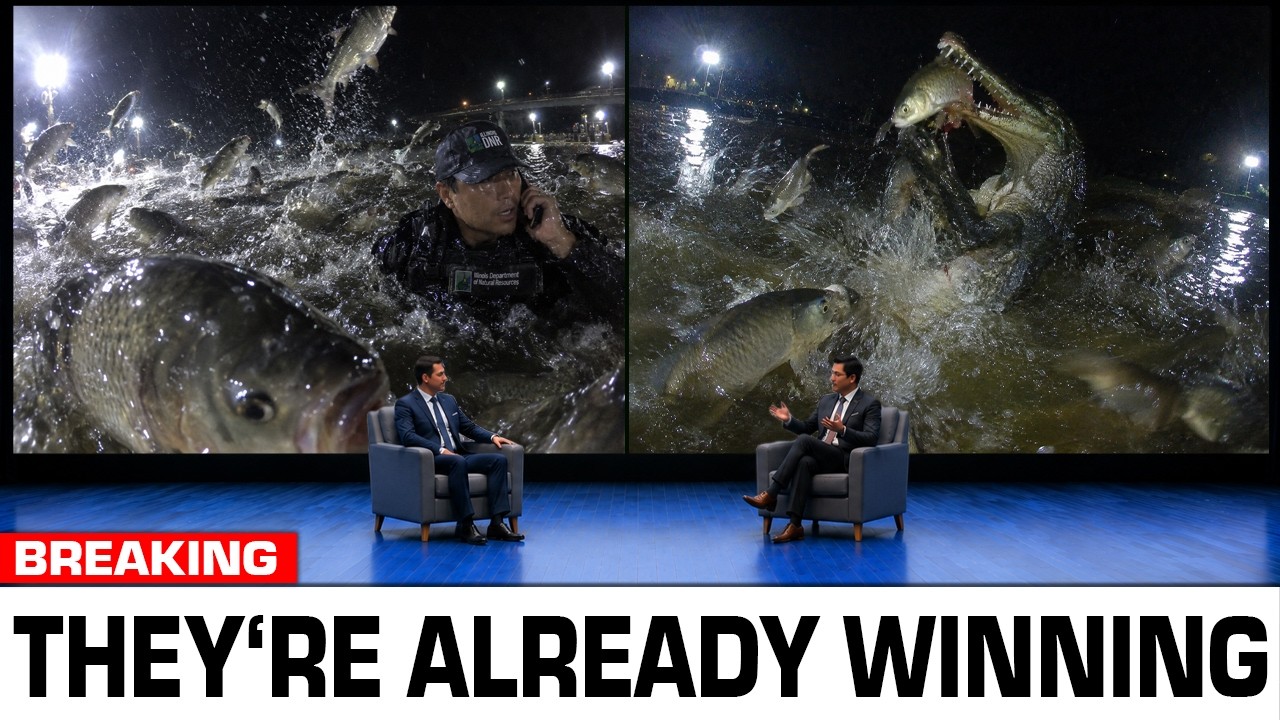
The invasive carp crisis involves four closely related species collectively known as Asian carp. Originally from rivers in China, the fish were brought to the American South in the 1970s to clean algae and plankton from catfish ponds and wastewater lagoons. Flooding allowed them to escape into open rivers, and by 1980 they were spreading through the Mississippi River basin on their own.
In some stretches of the Illinois River, Asian carp now make up more than 95 percent of the total fish weight. The silver carp species is known for leaping from the water when startled by boat motors, and injuries to boaters and water skiers have been documented.
Stopping the fish from reaching the Great Lakes has become a major priority. The Chicago Sanitary and Ship Canal, built at the turn of the 20th century to reverse the Chicago River’s flow, created an unbroken water connection between the Mississippi basin and the Great Lakes. The Army Corps of Engineers has installed underwater electric barriers there, and a larger engineering project near Joliet is expected to cost at least $858 million.
The other half of the response involves the alligator gar. The species is the second largest native freshwater fish in North America, behind the white sturgeon. It is covered in thick armor-like scales and can weigh over 300 pounds. The current world record specimen, caught in Mississippi in 2011, measured eight feet five inches and was estimated to be roughly 95 years old.
The gar’s reputation as a dangerous nuisance proved largely undeserved. The fish feeds primarily on shad, buffalo fish, and other rough fish rather than popular sport fish. Its swim bladder functions like a lung, allowing it to survive in warm, low-oxygen water. Its eggs contain a toxic compound that keeps predators away.
During most of the 20th century, the gar was shot on sight throughout much of its range, and in some documented cases, explosives were used to kill them in large numbers. Illinois left the species unregulated until 1977, when it was listed as threatened, then delisted in 1994 after it was declared gone from the state. The last confirmed Illinois catch came from the Cash River basin in 1966. Dams and levees made natural recovery impossible because they cut the fish off from the shallow flooded grasslands where they spawn.
A 2016 Illinois legislative resolution described the alligator gar as the state’s only native species capable of eating adult Asian carp. But Dan Stevenson, chief of fisheries for the Illinois Department of Natural Resources, said the stocking program was never about carp control. He told reporters the goals were restoring a native species, adding an apex predator to the ecosystem, and creating a new sport fish. He also noted that the state stocked too few gar to make a real difference in carp numbers.
Researchers used gastric lavage, a technique that flushes stomach contents from live fish, to study juvenile gar in Illinois floodplain lakes. They found the young fish were eating shad. Broader research on adult populations in states like Louisiana confirmed the species eats whatever prey is most abundant locally.
Missouri fisheries ecologist Quinton Phelps identified a physical limit: young gar cannot swallow fully grown adult carp. Any effect on carp numbers would depend on the gar eating the invasive fish while they were still small. Phelps described alligator gar as holding potential as a management tool but said that outcome remains unproven.
The reintroduction program has expanded into new territory. In 2023, Illinois stocked gar at Hennepin Hopper Lakes, the farthest north the species has been reintroduced anywhere in the United States. Officials cited changing climate conditions as a reason the habitat may now be viable further north. Occasional gar sightings outside known stocking areas have been attributed to aquarium releases by private individuals.
The most recent Illinois stocking in 2025 involved 81 fish released into the Cash River. These fish had been reared at a hatchery and at a clean energy center before release. Each was fitted with a small tracking device. This particular batch was identified as potential host fish for the yellow sandshell mussel, an endangered freshwater mussel species. Many mussels reproduce by releasing larvae that attach to a specific host fish species, and researchers found alligator gar may serve that role. The same habitat degradation that hurt the gar also damaged mussel populations, so restoring one species may help restore the other.
Missouri, Kentucky, Tennessee, and Alabama have joined related reintroduction work, drawing fish from the same federal hatchery supply. A tracking study in Mississippi is following gar movements during flood season, with researchers hoping to apply those findings as far north as Illinois.
Illinois has also pursued a separate, more direct strategy for reducing carp numbers at scale. In 2022, the state and its partners rebranded the invasive carp under the name “copi,” short for copious, to build a commercial market for the fish. Silver and bighead carp are mild-flavored and have been eaten in China for centuries, but American consumers were reluctant to try them under the old name. Commercial fishing pressure, officials said, represents the realistic path toward meaningful carp reduction.
Researchers hold cautious optimism about the gar program. One Louisiana specialist noted that nothing else has shown a real ability to affect carp numbers, making the gar a promising option worth pursuing seriously. An Illinois biologist suggested the most realistic outcome is a self-sustaining gar population that feeds partly on carp and creates a trophy fishery, even if it never measurably suppresses the invasive fish at the ecosystem level.
The evidence so far supports a modest conclusion. The alligator gar has been successfully returned to waters where it had vanished, and the fish are surviving and growing. The question of whether they can meaningfully control Asian carp remains open, and the immediate fight against the invasive species continues to depend on engineering barriers and commercial fishing rather than the reintroduced predator.






