The decline of river herring populations in Massachusetts was not fully understood for many years, but the scale of the loss became clear through historical records and modern observation. One stream in Plymouth, now known as Town Brook, once hosted a spring run of roughly two million fish. Over three centuries, that number fell so low that state officials declared similar rivers biologically dead and concluded in writing that the fish were gone permanently. That conclusion was wrong. Today, silver fish again move through the brook each spring, and nearby migration counts are higher than any living person has recorded.
The story begins in 1621. A few dozen survivors of the Plymouth Colony were struggling through their first year on a continent they did not yet understand. A stream running past their settlement helped keep them alive. Each spring, river herring migrated from the Atlantic Ocean into freshwater to spawn. A man from the Pawtucket people, Tisquantum, showed the colonists how to bury the fish in soil alongside their corn. The decomposing fish fertilized the ground. The corn that grew from that soil carried the colony through the following winter, and the harvest that followed became known as the first Thanksgiving.
The stream was not a legend. It was a specific waterway that still exists today. The herring that fertilized that first harvest were the same species that migrate through Town Brook each spring. For thousands of years before the colony arrived, the Mashpee Wampanoag people had structured their calendar around the spring return of these fish. The silver fish marked the beginning of a new year.
River herring are forage fish, meaning they sit in the middle of the ocean food web. They eat plankton and convert it into protein that larger animals can use. Striped bass, cod, and tuna feed on them in open water. Ospreys, herons, cormorants, and eagles take them from rivers. Seals, otters, and even whales depend on them for food. Remove herring from that system, and the structure above them begins to fail.
They are also diadromous, meaning they live in salt water but spawn in fresh water. Each spring, when rivers reach the right temperature, adult fish leave the ocean and swim upstream to the same ponds and streams where they were born. When they spawn, they carry ocean nutrients into inland freshwater systems. The migration functions like a circulatory system for the landscape, pumping the wealth of the open ocean into the forest.
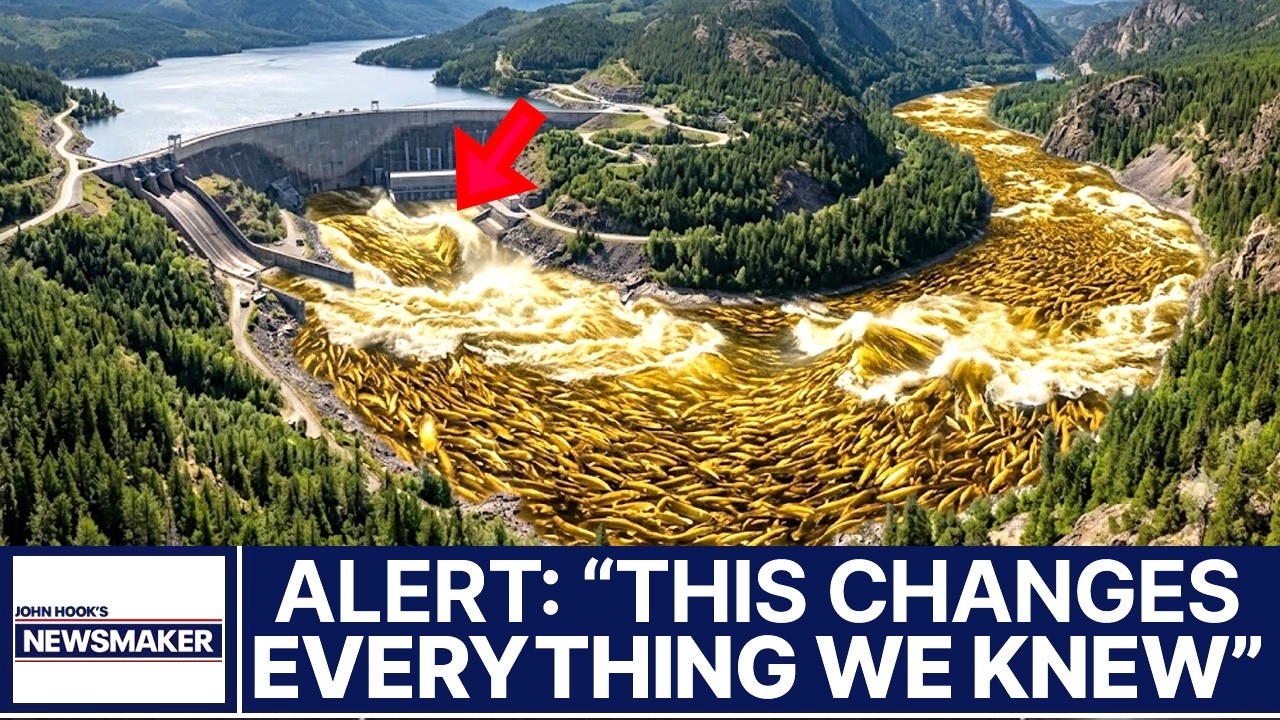
At peak migration, the effect is visible. Tens of thousands of fish push against the current together, their dark backs breaking the surface while gulls and ospreys feed above them. For a few weeks each spring, an ordinary stream becomes one of the most concentrated displays of raw life on the continent. Standing at the edge of a stream during full migration, a visitor hears a low rustling sound like wind through dry grass, except there is no wind. The sound comes from the water. Thousands of dark backs move side by side, all heading in the same direction, all pushing against the current with the same determination. The entire streambed appears to slide upstream. A heron stands in the middle of the run, barely needing to move to eat.
In 1636, colonists built the first dam on Town Brook to power a grain mill at the same site where a reconstructed mill still turns its wheel today. It seemed harmless at the time, a small wall on a small stream. But herring cannot climb walls. For a fish that must reach its spawning grounds or die trying, a dam is a closed door. Over the next two centuries, as the Industrial Revolution swept through New England, thousands more dams were built across the region. Massachusetts alone eventually had more than 3,000 dams, most constructed to power textile and grain mills. Each one turned a flowing river into a series of still ponds and closed another door to fish that had made the same journey since before any colony existed.
The fish kept coming anyway. River herring return to spawn regardless of obstacles. This behavior is deeply ingrained in the species. Generation after generation, fish gathered below dams and struck against concrete to no avail. Scientists who stood at the base of these barriers in spring described thousands of herring packed into the turbulent water below walls, pushing their bodies against the unyielding concrete. After weeks of this, most females either released their eggs in the stagnant water below the dam or reabsorbed them entirely. One biologist noted that the worst part was the silence. An entire reproductive cycle could pass without a single fish being caught.
By the early twentieth century, the damage had been documented in precise numbers. In 1921, Massachusetts surveyed the Mill River in Taunton, a waterway where alewives had once spawned in numbers described as incredible. The survey found the river so polluted with industrial waste and so blocked by dams that restoring the old fishery was considered impossible. The government officially declared the river dead, recorded its death certificate, and moved on. This was not an isolated case. Along the entire Atlantic coast, river herring populations eventually declined by more than 95 percent.
The raw numbers look like typographical errors. At the Holyoke Dam on the Connecticut River, the herring count fell from 630,000 fish in 1985 to 21 fish in 2006. On the St. Croix River along the Maine-Canada border, alewife counts dropped from over 2.5 million in 1987 to 22 in 2005. Commercial landings that once peaked at around 140 million pounds annually fell to historic lows measured in the hundreds of thousands of pounds. Dams were the largest cause, but not the only one. Industrial pollution degraded water quality. Commercial fleets caught adult fish at sea. Changing ocean temperatures disrupted the natural signals that told fish when to migrate. Scientists still debate which factor caused the most harm. But dams were the one pressure that society could physically address by removing them from the water.
In 2006, Massachusetts imposed a complete ban on possessing or selling river herring. A fish that had been so abundant four centuries earlier that colonists used it as fertilizer became a species people were not allowed to touch. The decline was most severe on the stream where the American story began. By the early 2000s, a waterway barely a mile and a half long was blocked by six separate dams and barriers. The herring run, estimated historically at up to two million fish, had fallen to around 150,000. To keep even that number alive, volunteers formed a human chain to carry fish in buckets over the concrete walls and back into the stream on the other side. In one year alone, that chain moved more than 17,000 fish by hand. A natural migration that had operated regularly for 400 years had been reduced to people hauling fish in buckets upstream.
In 2002, a team removed the Billington Street Dam on Town Brook. It was the first proactive dam removal in Massachusetts history. At the time, it seemed like a small local experiment. Heavy equipment tore the concrete apart. The pond held behind the dam drained. The river, which had been a stagnant series of pools for generations, began to flow again. Sediment that had accumulated behind the wall was carefully managed and moved away. The original streambed underneath, untouched since before the mills were built, saw light for the first time in generations. Old gravel beds reappeared. The water regained its original gradient and began moving at the speed it was always meant to move. The fish, without any direction or instruction, simply swam through the gap as if the wall had never been there.
There is no training period and no slow re-establishment over decades. Once the passage opens, fish use it within a single season because the instinct to ascend that particular stream was never lost. It was only obstructed. Over the following years, teams continued their work on Town Brook. They lowered the Water Street Dam to make fish passage easier. They removed the remains of the Billington Street Dam and rebuilt the natural channel by hand. In 2015, they removed the Plymco Dam and the old mill building attached to it. When crews later dug into one of the dams, they pulled a rusted car frame from its foundation. A car had been wedged into the heart of the wall. At that point, these dams were no longer monuments to industry. They were century-old piles of debris holding back a living river for no good reason.
Before long, David Gould, the environmental manager for the town of Plymouth, led most of the Town Brook work. His team sat beside the water day after day, carefully counting fish to track how many crossed the restored section and how many made it past the next barrier still in the stream. The result was decisive. 94 percent of herring that reached the restored section passed through it directly. At the next dam upstream, still standing, only 6 percent managed to cross. The data proved that dams were the obstacle and removal was an almost guaranteed solution.
The large Holmes Dam remained the biggest challenge. Its removal was a year-long project costing millions of dollars, with the goal of completing most of the restoration by 2020, the 400th anniversary of the Pilgrims’ landing. In 2019, the Holmes Dam was removed. An excavator the size of a small house swung its steel arm and drove its bucket into concrete that had not moved since long before anyone alive was born. Blocks of the old wall broke apart and fell into the streambed. Behind it, the mill pond that had remained flat and still for generations began to change. First it tilted, then it pulled, then it drained. The water regained a direction it had forgotten for a century. For the first time in 300 years, river herring could leave the Atlantic, enter the mouth of Town Brook, and swim to their spawning ponds without being lifted over anything by a human hand. In that first spring after the wall came down, the fish returned on their own schedule. No one carried them. They simply appeared at the mouth of the brook as their ancestors had done for thousands of years.
Some argued that removing old dams erased local history. Mills and mill ponds had defined these towns for generations. The restoration teams took the argument seriously. Their answer was that history could be preserved selectively, keeping the most important structures while freeing the rivers around them. It was not necessary to choose between remembering the past and reviving the river.
The lesson from this small stream spread across the state. On the Mill River in Taunton, the river declared dead in 1921, workers removed three dams between 2012 and 2018 and built a fish ladder at a fourth. In the spring of 2018, cameras captured the first river herring swimming in the Mill River in more than 200 years. Nearly a century after a government report declared restoration impossible, the report was proven wrong.
Then there is the Mystic River, which runs through the most developed watershed in New England, dense suburbs and pavement just north of Boston. Shopping centers, highways, and parking lots press against the water from every side. By every logical assumption, this was the river to give up on. Instead, it became the greatest comeback of all. When volunteers began counting herring at the Mystic Lakes Dam in 2012, they estimated about 200,000 fish. Teams continued improving fish passage structures, and the count grew year after year. By 2024, that migration was estimated at 815,000 fish, the largest river herring run ever recorded anywhere in the state, in the most developed watershed in New England. Biologists calculated that if all those fish were lined up end to end, the herring queue would stretch nearly 100 miles.
In 2025, the United States removed 100 dams in a single year, reopening nearly 5,000 miles of rivers, the largest such figure in the country in one year. Massachusetts alone removed 11 of those dams. Since the state established a dedicated ecological restoration division, it has completed more than 150 projects, removed more than 50 dams, and reconnected about 700 miles of rivers. In Braintree, a recently completed project allowed herring to reach a pond that had been cut off for about 200 years.
The work was not cheap. A typical single dam removal costs between a quarter-million and half a million dollars, far more than most dam owners can afford alone. State agencies, federal funding, and conservation groups had to share the burden. Every mile of reopened river represented a public bet that a living river was worth more than a dead wall. Fish counts continued to confirm that the bet was paying off.
The return of the herring never happens alone. Ospreys return to hunt them. Striped bass follow them toward shore. Turtles, eagles, otters, and mink feed on their eggs and on adult fish that die after spawning. Ocean nutrients carried by the fish from the Atlantic penetrate the streambed and feed the entire freshwater system from the base up. For the Wampanoag people, the return meant something that fish statistics cannot fully capture. The spring herring run had marked the beginning of a new year for over 12,000 years. With the fish flowing again, herring day gatherings have resumed, where elders teach the next generation why these silver fish matter and why the estuaries that host them must be protected. A missing link in a 12,000-year cycle had been repaired, one dam at a time.
The work is not complete. On Town Brook, teams began work in late 2025 on a nature-like fishway, a channel that will guide fish around the last remaining historic dam, the one at the site of the original 1636 mill, which the town chose to preserve rather than demolish. The compromise says almost everything about how this kind of work gets done in the real world. The town kept the historic mill standing and built the fish a path around it. History and the river are learning to share the same water instead of competing for it.
Four hundred years ago, a stream in Plymouth was so full of silver fish that it fed an entire colony and fertilized its fields. Then three centuries were spent proving how effectively that stream could be choked until an official report called it dead and meant it. Then, with nothing more than excavators, patience, and a stubborn willingness to count fish honestly year after year, that report was proven completely wrong. The silver fish are coming back, not yet in the millions, and perhaps never again at that exact level. But on rivers that everyone had given up on, the spring migration has returned, and the entire food web that depends on it is rebuilding itself. The impossible thing turned out not to be the return. The impossible thing was believing for 300 years that the walls were permanent.






