A routine water drawdown at a treatment facility in South Florida uncovered an underground network of invasive armored catfish tunnels and a hidden population of Burmese pythons, according to biologists who documented the find.
Water managers periodically drain the facility, which spans thousands of hectares in the heart of South Florida, to maintain vegetation. Biologist Sarah Mitchell had performed this standard procedure many times before. This time, however, the drying wetland revealed hundreds, then thousands, of armored catfish stranded in shrinking pools.
The invasive fish, native to South America, are commonly sold in pet stores as algae-eaters for aquariums. When they outgrow their tanks, owners often release them into local canals. In Florida, they have established themselves in numbers far beyond what researchers had predicted.
Their bodies are covered in bony plates that make them difficult for birds and small alligators to consume. More significantly, they burrow into riverbanks, creating tunnel systems that undermine root structures and destabilize the shoreline.
Mitchell called for additional personnel. Within hours, a full team arrived with nets, GPS equipment, and specimen containers. Over the following week, they documented a population roughly ten times larger than any model had estimated. Burrows extended meters deep into the earth, creating a network that connected different parts of the wetland. Some openings were large enough for a researcher to insert an entire arm.
On the third day, a team working in deeper sections of the wetland found tunnels that did not match the catfish patterns. The larger entrances and distinctive tracks belonged to Burmese pythons.
These snakes entered the Everglades decades ago, largely after Hurricane Andrew destroyed a breeding facility in 1992 and through releases by pet owners. Researchers originally assumed Florida winters would kill them, but the pythons adapted by finding warm spots in the limestone bedrock. A single female can lay up to 100 eggs. In some areas, they have reduced populations of small mammals such as marsh rabbits, raccoons, and opossums by up to 90 percent.
Dr. Robert Chen of the United States Geological Survey arrived on day four. His team found dozens of pythons sheltering in muddy tunnels, including specimens over 4.5 meters long. One tunnel contained a female guarding a clutch of eggs. The team captured 40 snakes in a single week, a record for the area.
The pythons had established permanent underground dens, protecting their eggs from weather and removal efforts. They hunted at night and returned to their tunnels before sunrise.
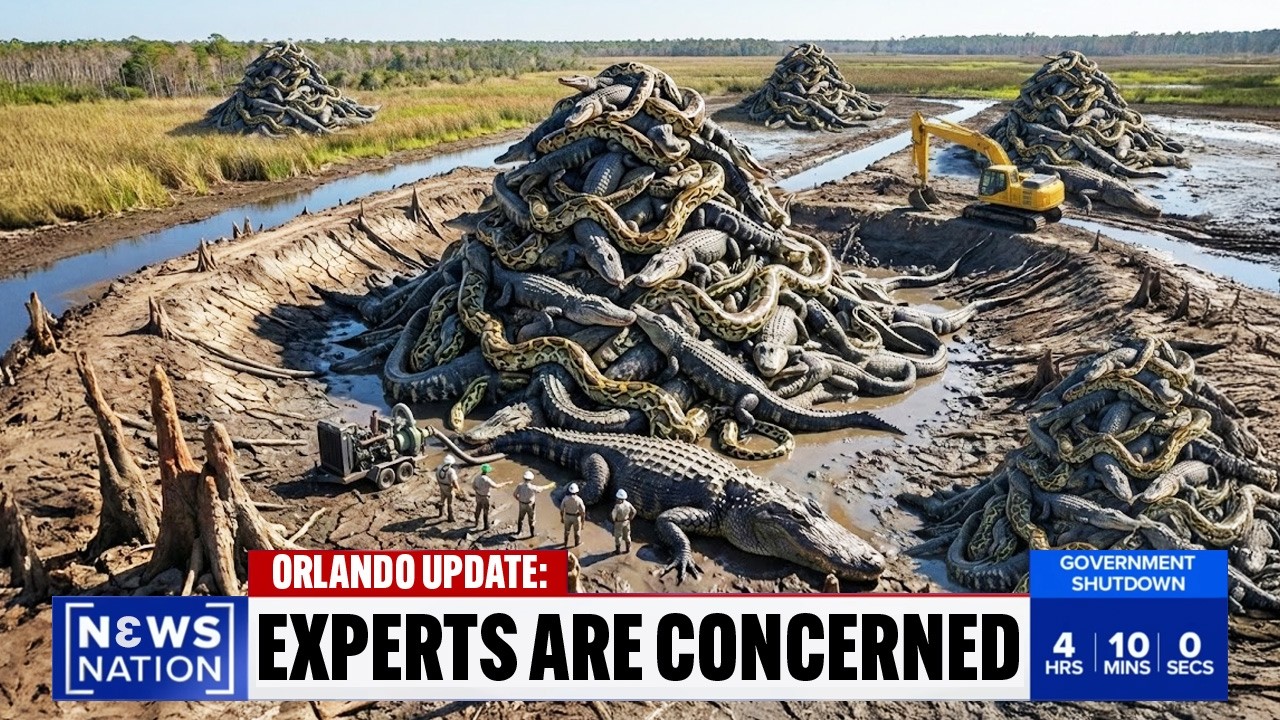
The drawdown also created what biologists call predator pits. As water receded, remaining fish concentrated in the deepest depressions in the limestone. Alligators followed the retreating water and gathered in large numbers, crowding into pools where territorial boundaries normally prevented such contact. Wading birds, including wood storks, herons, and spoonbills, also gathered to feed on the concentrated fish.
While the animals drew attention, researchers noted a separate concern beneath the exposed mud. Phosphorus from fertilizer runoff on surrounding sugarcane plantations has accumulated in wetland sediment for decades. When drained sediment is exposed to air, bacteria accelerate chemical reactions, releasing phosphorus into downstream water. High phosphorus levels fuel algae blooms that deplete oxygen, potentially killing fish and other aquatic life.
Researchers found elevated phosphorus concentrations in the exposed sediment, reflecting decades of agricultural runoff. The findings highlight risks associated with drainage projects, though similar events have occurred elsewhere in the state.
After the catfish were removed and the mud dried, Mitchell returned to assess the damage. She found native plants sprouting through the cracked earth, emerging from dormant seeds that had waited years for these conditions. Controlled drainage had reduced invasive plant cover by 40 percent in some treated areas, according to a 2023 study, without the need for replanting or herbicides.
Restoration costs for the Everglades have exceeded $20 billion, and python populations continue to expand into new territory. Phosphorus continues to accumulate in sediment, and sea level rise pushes saltwater further into freshwater systems.
Researchers continue to map python dens and catfish colonies, recording GPS coordinates and photographing tunnel entrances. They are analyzing soil samples and testing for phosphorus contamination. In the meantime, the Everglades supply drinking water to roughly 8 million Florida residents, buffer coastal communities from storm surge, and support commercial fishing along the Gulf Coast.






