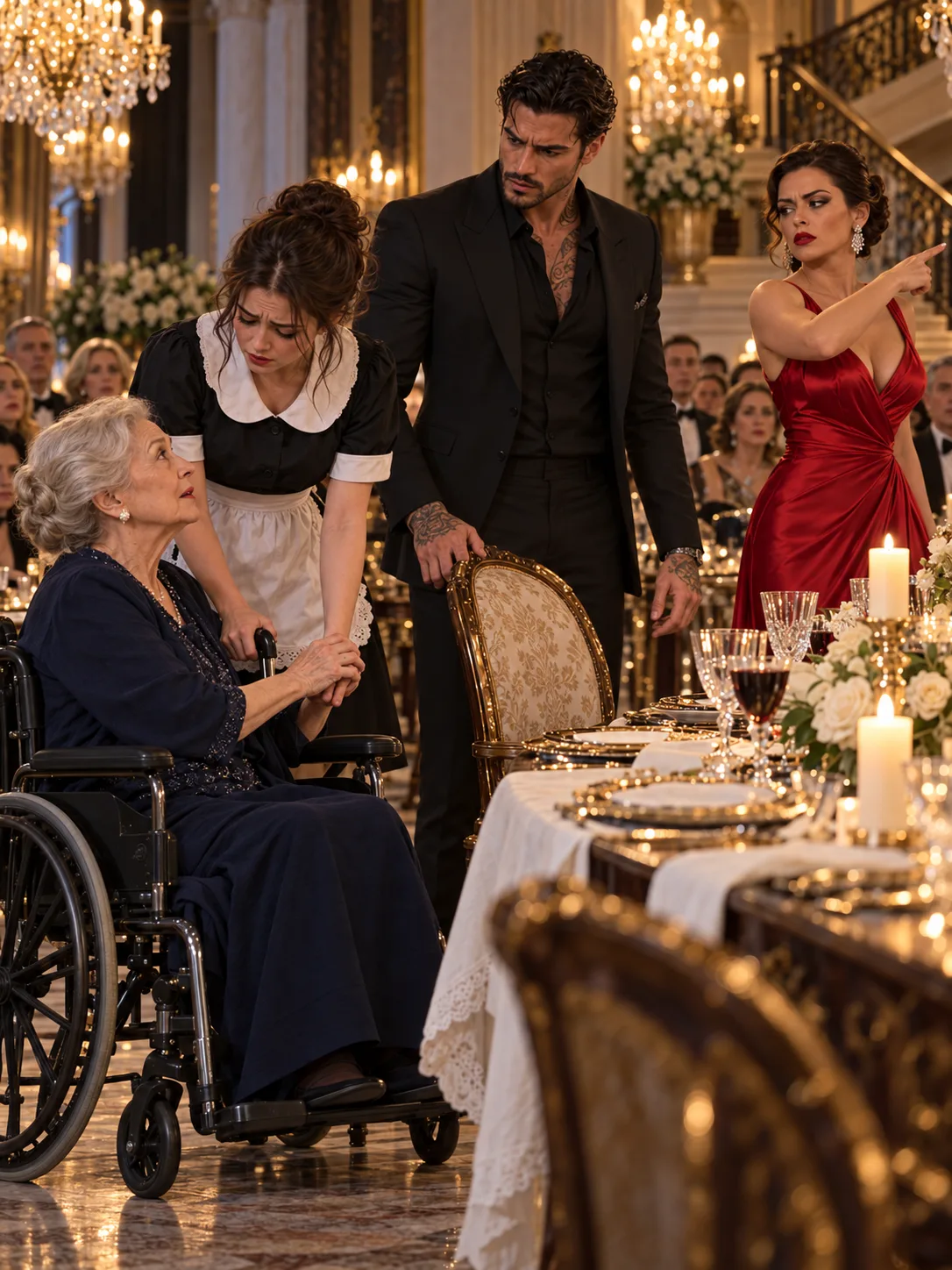
Chapter 11 – THE CHAIR THAT ALWAYS BELONGED
“Then it’s settled,” Teresa said.
She smiled at Luca across the dining table.
“Next Sunday, I’ll pull out your chair.”
Luca laughed.
“After thirty-eight years, I suppose it’s my turn.”
Teresa shook her head.
“Your father would have told you that a gentleman should never let his mother do the work.”
“And you’d have told him to stop fussing.”
“Exactly.”
They both laughed.
I stood near the sideboard, holding a tray of empty coffee cups.
For a moment, I watched them.
The foundation luncheon had been everything Teresa wanted.
There were no expensive speeches.
No dramatic announcement.
No one trying to prove that she was too old to make her own decisions.
Just people who had worked together for years, celebrating something they’d built.
And Teresa was sitting at the head of the table.
Not because Luca had rescued her.
Because it was her place.
When the last guests left, the mansion grew quiet.
I helped the kitchen staff finish cleaning.
Then I changed out of my uniform and returned to the dining room, where Teresa and Luca were having coffee.
Teresa looked up.
“Emily, there you are.”
I smiled.
“Everything’s finished, Mrs. Moretti.”
“Good. Sit down.”
I hesitated.
She caught herself.
“Would you like to sit down?”
I laughed softly.
“Yes, ma’am.”
She smiled.
“I’m still learning.”
Luca pulled out a chair for me.
I sat beside Teresa.
For the first time in my two years at the mansion, I wasn’t there to serve anyone.
I was simply having coffee with two people who had become important to me.
Teresa placed a small envelope on the table.
“Emily, this came for you.”
I looked at it.
The return address was the Moretti Family Foundation.
My stomach tightened.
I’d applied for the part-time outreach position two weeks earlier.
There had been an interview.
A review of my work experience.
And a practical assessment involving volunteer scheduling and community-assistance requests.
I’d gone home afterward convinced I’d answered half the questions badly.
Teresa smiled.
“Open it.”
I carefully unfolded the letter.
Then I read the first line.
Dear Ms. Carter,
We are pleased to offer you the position of Community Outreach Coordinator.
I stared at the words.
For a moment, I couldn’t speak.
Luca leaned forward.
“Good news?”
I nodded.
“Yes.”
Teresa smiled.
“I told you the foundation would make its own decision.”
I looked at her.
“You really didn’t interfere?”
She raised an eyebrow.
“Emily, after what happened with Vanessa, do you think I’d risk doing something foolish like that?”
I laughed.
“No, ma’am.”
She squeezed my hand.
“You earned it.”
I looked down at the letter again.
The salary was modest.
But it was a real opportunity.
There was training.
A clear schedule.
And a chance to build something beyond the work I’d been doing.
Luca smiled.
“Congratulations.”
“Thank you, sir.”
He leaned back.
“And before you worry, we’ll arrange your household schedule properly. You won’t lose income while the transition is being worked out.”
I looked at him gratefully.
“That means a lot.”
He nodded.
“You’ve done good work here, Emily. I’d rather help you move forward than make you feel you have to stay.”
I thought of my younger sister.
How excited she’d be when I told her.
How much it would mean to both of us to know that the years of sacrifice were leading somewhere.
For the first time in a long while, I felt as though my future wasn’t simply a list of bills I needed to pay.
Teresa noticed my expression.
“Are you happy?”
I looked up.
“Yes.”
She smiled.
“Then I’m happy too.”
The following Sunday, I arrived early to help prepare breakfast.
Teresa had insisted that she and Luca would eat in the small family breakfast room, just as they’d done for years.
No formal table.
No guests.
No special arrangements.
Only coffee, fresh bread, eggs, and the Sunday newspaper.
I set everything out.
Then I went to find Teresa.
She was standing beside her dressing table, fastening her pearl earrings.
Her navy cardigan lay across the back of a chair.
The little silver butterfly brooch was pinned near the collar.
She looked up when I entered.
“Good morning, Emily.”
“Good morning, Mrs. Moretti.”
“Is Luca downstairs?”
“Yes, ma’am. He’s reading the paper.”
She smiled.
“Of course he is.”
Then she reached for Antonio’s silver watch.
She fastened it around her wrist.
I’d never seen her wear it before.
It was slightly loose, and the old leather strap had softened with age.
“Are you comfortable wearing that?” I asked.
She looked at it.
“Yes.”
Then she smiled.
“I thought I’d take your advice and stop saving everything for a special occasion.”
I laughed.
“I don’t remember giving that advice.”
“No,” she said. “But you reminded me of it.”
We went downstairs together.
Luca was waiting in the breakfast room.
He wore a black sweater and dark trousers.
There was no trace of the intimidating businessman whose name carried so much weight around Chicago.
He was simply a son waiting for breakfast with his mother.
When Teresa entered, he stood.
“Morning, Mom.”
She smiled.
“Good morning, sweetheart.”
He moved toward her chair.
But she held up a hand.
“Not today.”
He stopped.
Then remembered.
“Oh.”
She laughed.
“Go on. Sit down.”
Luca looked at me.
I tried not to smile.
He walked to his usual chair and stood beside it.
Teresa came around the table.
She placed one hand on the backrest and carefully pulled it out.
Her knee was still stiff.
She moved slowly.
But Luca didn’t interfere.
When the chair was ready, she looked up.
“There you are.”
Luca smiled.
“Thank you, Mom.”
He sat down.
Teresa leaned forward and kissed his cheek.
Then he stood again.
She laughed.
“Luca.”
“What?”
“Sit down.”
He shook his head.
“I still have to pull out yours.”
She looked at him.
Then smiled.
“All right.”
He moved to her chair.
The same familiar gesture he’d performed since Antonio died.
But this time, it felt different.
It wasn’t a son taking over his father’s responsibilities.
It was two people caring for each other.
And allowing each other to do it.
When Teresa sat, Luca poured her coffee.
She added a little cream.
Then she reached for the newspaper.
“Anything interesting?”
“Mostly bad news.”
She smiled.
“Then find something good.”
He turned the pages.
After a moment, he stopped.
“Actually, there is.”
He showed her a small article about the foundation’s winter assistance program.
It described the restoration of delayed payments and the new procedures introduced to protect charitable funds.
The article also mentioned the foundation’s upcoming community outreach project.
Teresa read it carefully.
Then she set down the paper.
“That’s nice.”
Luca smiled.
“Just nice?”
She looked at him.
“Sweetheart, I don’t need strangers to tell me we did the right thing.”
He nodded.
“I know.”
She looked toward the window.
“I’m glad the families received their assistance.”
“Me too.”
Then she picked up her cup.
“And I’m glad we didn’t let someone else’s mistakes decide what happened to the foundation.”
Luca was quiet.
After a moment, he said, “Mom, I’m sorry.”
She looked at him.
“For what?”
“For not noticing what Vanessa was doing sooner.”
Teresa studied his face.
“Luca.”
He looked up.
“You can’t spend your life watching every person you love in case someone hurts them.”
He smiled sadly.
“I know.”
“But you can listen when they tell you something is wrong.”
He nodded.
“I will.”
She reached across the table and took his hand.
“And I can tell you when something is wrong instead of trying so hard not to upset you.”
He squeezed her fingers.
“That sounds fair.”
They sat quietly for a while.
Then Teresa looked down at her watch.
“Your father would have liked this morning.”
Luca smiled.
“Why?”
“Because we’re sitting here arguing over coffee instead of money.”
He laughed.
“Dad argued about money plenty.”
“Yes,” she said. “But only when you left the lights on.”
They both laughed.
I was standing near the doorway, waiting to clear the breakfast dishes.
Teresa looked toward me.
“Emily, are you working at the foundation tomorrow?”
“Yes, ma’am. My first training day.”
She smiled.
“Are you nervous?”
“A little.”
“Good.”
I laughed.
“Good?”
She nodded.
“It means you care.”
Then she reached into her cardigan pocket.
She removed something small.
A gold pin.
The same one she’d shown me in the sitting room after the engagement dinner.
The one Antonio had given her when they founded the organization.
She held it between her fingers.
For a moment, I thought she was going to offer it to me.
But she didn’t.
Instead, she fastened it to her cardigan.
“I’ve decided to keep wearing this,” she said.
Luca smiled.
“You should.”
Teresa looked at the little engraved words.
“Your father gave it to me because he believed ordinary people could do extraordinary things when they worked together.”
She glanced toward me.
“Not because they had money.”
Then toward Luca.
“Not because they had power.”
Finally, she looked around the room.
“But because they noticed when someone needed help.”
I felt my throat tighten.
Teresa smiled.
“That’s what I want our foundation to remember.”
Luca nodded.
“It will.”
The weeks that followed weren’t perfect.
There were still financial reviews to complete.
There were difficult conversations about the governance failures that had allowed Vanessa’s proposal to progress so far.
And there were moments when Teresa grew tired or Luca worried too much.
But they talked.
They listened.
They disagreed without letting someone else speak for them.
The foundation’s winter program continued under stronger oversight.
The sixty-three households received their approved assistance, and the outreach team followed up with families who needed repairs, groceries, or help understanding their bills.
Mrs. Foster wrote another letter.
This time, she included a small knitted scarf for Teresa.
It was pale blue.
Teresa wore it proudly whenever she visited the foundation office.
My younger sister passed her next nursing examination.
When I told Teresa, she insisted we celebrate with lemon cake in the kitchen.
And every Sunday, Luca came to breakfast.
Sometimes he pulled out Teresa’s chair.
Sometimes she pulled out his.
Sometimes they forgot whose turn it was and laughed about it.
But nobody ever questioned whether she belonged at that table again.
One Sunday evening, after the household had grown quiet, I found Teresa in the dining room.
She was standing beside the gold chair that had been removed during the engagement dinner.
Her hand rested on its carved wooden back.
For a moment, I wondered whether she was remembering that terrible evening.
“Mrs. Moretti?”
She turned.
“Oh, Emily.”
“Are you all right?”
She smiled.
“Yes, sweetheart.”
I approached.
She looked at the chair.
“Funny, isn’t it?”
“What is?”
“How something so ordinary can mean so much.”
I nodded.
She ran her fingers over the polished wood.
“Antonio used to say that when you invited someone to your table, you were telling them they mattered.”
Her eyes grew bright.
“That’s why he always pulled out my chair.”
I smiled.
“I remember you telling me.”
She looked toward the doorway.
Then back at me.
“That night, when you brought this chair back, I thought you were simply being kind.”
I shook my head.
“You needed somewhere to sit.”
She smiled.
“Yes.”
Then her voice softened.
“But what you really gave me was the courage to ask why I’d been made to stand.”
I couldn’t speak.
Teresa reached for my hand.
“You helped me remember that I still had a voice.”
My eyes filled.
She squeezed my fingers.
“And I intend to use it for as long as I can.”
I laughed through my tears.
“I think Mr. Moretti would agree.”
She smiled.
“Oh, he’ll have to.”
Then she looked toward the head of the table.
The candles had been cleared.
The guests were long gone.
The room was quiet.
But the chair remained.
Teresa straightened her shoulders.
“Come along, Emily.”
“Where are we going?”
“To the kitchen.”
I smiled.
“Why?”
“Because Luca’s coming for supper, and I promised him lemon cake.”
I laughed.
“You made the cake?”
She gave me a mischievous look.
“Not yet.”
I shook my head.
“Then we’d better hurry.”
She took my arm.
And together, we walked toward the kitchen.
Not because she was too weak to manage alone.
But because sometimes the nicest thing in the world is having someone beside you.
As we reached the doorway, Teresa stopped.
She looked back at the dining table.
Then she smiled.
“Emily, dear, leave that chair right where it belongs.”
I followed her gaze.
The gold chair stood beside Luca’s.
Waiting.
Not for an announcement.
Not for a ceremony.
Just for a woman who had spent thirty years giving other people a place to belong.
And who had finally remembered that she deserved one too.
THE END.
Share