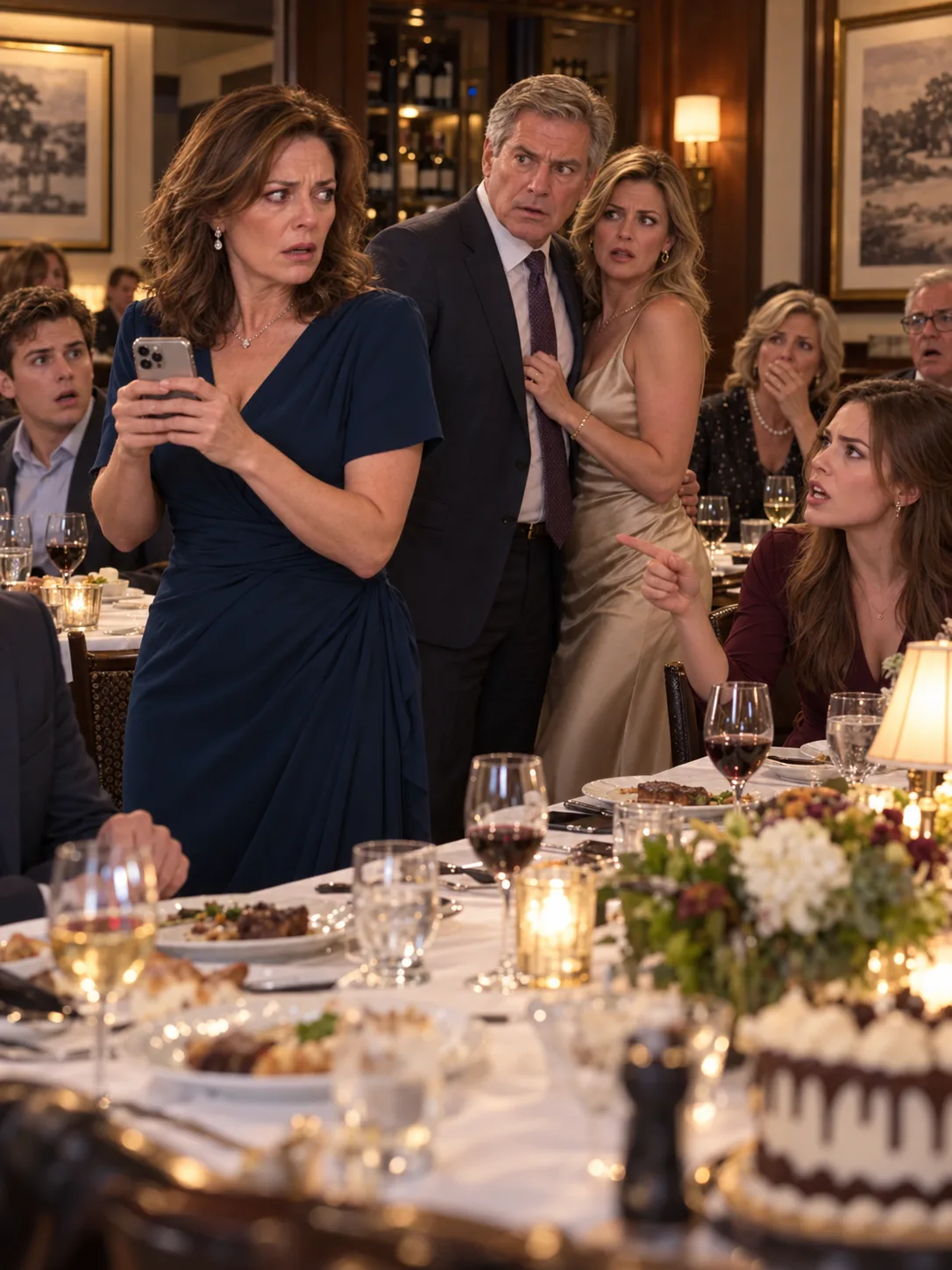
Chapter 2 – THE DAYS SHE COULD REMEMBER
“Anna knew they were making her confused.”
Luca said it as though saying the words aloud might make them less terrible.
I looked at the notebook.
“She knew she was having episodes after treatment,” I corrected gently. “We still don’t know what caused them.”
He turned toward me.
“Emma, my wife wrote that she couldn’t trust what she said after an injection.”
“I know.”
“And twelve years later, somebody brings the same kind of device into my dining room.”
I didn’t argue with that.
But the distinction mattered.
Anna had been genuinely ill. She’d undergone cancer treatment, and certain medications could affect appetite, concentration, and energy.
What concerned me was the repeated connection between injections and symptoms resembling severe hypoglycemia.
It was a pattern that needed independent medical review.
Marco was studying the old cabinet.
“There’s more paperwork here.”
He lifted a stack of folders without opening them.
I stopped him.
“Leave them together. We need to know where each item came from.”
Marco gave me a tired look.
“You always this particular?”
“Only when people’s lives depend on it.”
Luca glanced at me.
The faintest trace of his old amusement returned.
Then it disappeared.
“Marco, secure the room. Nothing gets removed without being documented.”
Maria stood.
“Mr. Moretti, may I go?”
Luca looked at her.
“Not yet.”
She lowered herself onto the stool again.
I could understand why she was frightened.
For sixteen years, she’d lived with memories nobody had asked her to explain.
Now all of them were being dragged into the light.
I sat beside her.
“Maria, did Anna ever tell you why she scratched her initials onto the injection pens?”
She shook her head.
“I never saw her do that.”
“Did she keep her medication in that black case?”
“No.”
I looked up.
“What did she use?”
“A brown leather medicine bag. Her mother gave it to her.”
“Where is it?”
Maria hesitated.
“Dr. Harris took it after she died.”
That made me look at Luca.
“Do you remember that?”
He shook his head.
“I barely remember the funeral.”
Maria stared at her hands.
“Anna didn’t want him taking the bag.”
“How do you know?” I asked.
“She told me.”
“When?”
“Two weeks before she died.”
I felt the story shift.
We’d been looking at the beginning of Anna’s illness.
But Maria knew something about the end.
“Tell us,” I said.
Maria twisted her wedding ring.
“By then, Mrs. Anna spent most days upstairs. Dr. Harris said she needed rest. Her father came almost every afternoon.”
“Victor Bellini?” Luca asked.
She nodded.
“He was always very pleasant to me. Asked about my children. Remembered my birthday.”
Her mouth trembled.
“But when Mrs. Anna disagreed with him, his voice changed.”
“What did they argue about?”
“The treatments. Her papers. Sometimes money.”
“What papers?”
“I never saw them.”
Luca pulled out a chair.
“Maria, you worked for my family for thirty-one years. You don’t have to protect Victor.”
She looked directly at him.
“I wasn’t protecting him.”
“Then why didn’t you tell me?”
“Because he told me you’d lose the house if I interfered.”
Luca stared.
“What?”
“He said your businesses were in trouble. That Anna’s medical expenses were being paid through arrangements you didn’t understand.”
She wiped her face.
“He said if I caused a scandal, you’d lose everything.”
I watched Luca absorb that.
His expression was no longer only angry.
He looked ashamed.
“You believed him?”
“I believed the man who paid the doctors and controlled the appointments.”
She looked toward the doorway.
“And I believed you were already suffering enough.”
Luca sat quietly.
Then he said, “I wish you’d trusted me.”
Maria’s eyes filled.
“So do I.”
We left the room secured and returned to the library.
Marco had obtained the hospital discharge summary from Luca’s emergency treatment earlier that night.
With Luca’s permission, I reviewed the medical findings.
His glucose had been critically low when I checked him. The hospital had stabilized him and recommended further investigation into the cause.
“Did they confirm the contents of the pens?” Luca asked.
“Not yet. They need proper analysis.”
“Could I have been poisoned?”
I looked at him.
“Someone may have given you a medication you didn’t need. That’s serious enough without choosing the final word before the tests come back.”
He leaned back.
“Anna used to speak to me like that.”
“How?”
“Like being rich didn’t make me less foolish.”
I almost smiled.
“Sounds like a sensible woman.”
“She was.”
For a moment, he looked at the photograph on the desk.
Then he asked, “Do you think she knew what was happening?”
“I think she knew something was wrong.”
That was all I could honestly say.
The next morning, Luca authorized requests for Anna’s historical hospital records and an independent review of the treatment-room materials.
It would take time.
Her old private medical records were incomplete, and Dr. Harris had controlled most of her care.
But we had another source.
Maria remembered Anna keeping a personal calendar.
Not a medical chart.
A little calendar she used to mark appointments, birthdays, and ordinary household matters.
“She used to write everything down,” Maria said. “Especially after her memory got worse.”
“Where is it?” Luca asked.
“In her things.”
Luca went still.
He had kept Anna’s belongings in a cedar wardrobe upstairs.
He’d never been able to give them away.
We opened it together.
Her dresses still hung beneath protective covers.
A gray winter coat.
Two silk blouses.
A yellow cardigan that matched the one in the photograph.
The room smelled faintly of cedar.
Luca touched the cardigan.
“She wore this when we went to the lake.”
Maria found the calendar in a coat pocket.
It was small, with a blue elastic band.
Most entries were ordinary.
Lunch with Luca.
Call Aunt Rose.
Pick up birthday cake.
Then the treatment appointments began.
Anna had drawn little circles around the days she felt confused.
On the days without appointments, she’d written words like good, clear, and walked outside.
Near the end of July, one entry was underlined three times.
Dr. Porter’s office. Results.
“Who’s Dr. Porter?” I asked.
“My wife’s oncologist,” Luca answered.
“Not Harris?”
“No. Harris coordinated her care, but Porter treated the cancer.”
I turned the page.
Anna had written something beneath the appointment.
The writing was unusually firm.
No evidence of active disease. Follow-up in six months.
I looked at Luca.
“Did you know about this?”
He frowned.
“I knew she had a good scan that summer.”
“How good?”
He looked confused.
“Harris said it was temporary. That we shouldn’t get our hopes up.”
Maria crossed herself.
I examined the calendar again.
Four years before Anna died, she’d recorded a major improvement.
Yet the household’s account of her final illness treated every subsequent symptom as progression of cancer.
There could have been a recurrence.
We needed the records to know.
Then I noticed a folded appointment card tucked into the calendar.
It was from Dr. Porter’s office.
On the back, Anna had written another sentence.
I read it twice before showing Luca.
“Ask for a second opinion. Harris says there isn’t time. But I don’t understand why my cancer doctor says I’m getting better.”
Share