Chapter 9 – THE PRICE OF TELLING THE TRUTH
“Then you have to let the truth belong to Anna.”
I said it gently.
Luca looked up from the photograph.
“What does that mean?”
“It means you can’t turn her story into another decision made by people who think they know what’s best for her.”
He considered that.
“You think I shouldn’t tell anyone?”
“I think the investigators need everything. After that, you should consider what Anna would have wanted made public.”
He looked down.
“She wanted people to know.”
“She wanted to be believed. That’s not necessarily the same thing as having every painful detail of her illness published.”
Luca remained quiet.
I watched him struggle with something I’d seen in families many times.
When someone they loved was harmed, they wanted to repair everything at once.
They wanted witnesses.
Consequences.
A declaration that the person they’d lost had mattered.
But grief rarely followed the schedule of justice.
And justice didn’t happen because a powerful man demanded it.
Eventually, Luca nodded.
“Anna hated being discussed like she wasn’t in the room.”
I smiled sadly.
“Then perhaps we should start by respecting that.”
He folded her letter.
“I’ll give the investigators what they need.”
Over the following days, the mansion changed.
The locked treatment room was secured for the investigation.
The old medical materials were formally documented.
Maria provided a statement about Anna’s requests and the letters Victor had intercepted.
Marco supplied the current security records and the documented evidence from the night Luca collapsed.
I completed my own clinical incident report.
It was the most important report I’d written in years.
I included the time I first noticed Luca’s confusion, the symptoms I’d observed, his blood glucose result, the unidentified injection device, and the sequence of events that followed.
I didn’t write that Vanessa had tried to murder him.
I didn’t write that Harris had killed Anna.
Those were conclusions for investigators and qualified reviewers.
I wrote what I’d seen.
What I’d measured.
And what I’d done.
Then I signed my name.
The next morning, Marco came into the kitchen while I was making tea.
“Ms. Reed, Mr. Moretti wants to know if you’ll join him for breakfast.”
I looked at the tray in front of me.
“Has he eaten?”
“Half a banana.”
“That’s not breakfast.”
Marco shrugged.
“He said it counts.”
“It doesn’t.”
Marco actually smiled.
He was a large, intimidating man, but I was beginning to suspect he spent most of his time managing an extraordinarily stubborn employer.
I carried the tray into the breakfast room.
Luca was reading the newspaper.
There was no black injection case beside his plate.
No mysterious nightly treatment.
Just coffee, toast, and a bowl of fruit.
It shouldn’t have seemed remarkable.
But it did.
“You’re late,” he said.
“I wasn’t aware we had an appointment.”
“Breakfast.”
“You’ve been sitting here for twenty minutes with half a banana.”
He glanced at his plate.
“Marco talks too much.”
I set down the tea.
“Someone has to.”
He folded the newspaper.
“Did you submit your report?”
“Yes.”
“Good.”
He reached for the toast.
Then he stopped.
“Emma, I need to apologize.”
I looked at him.
“For what?”
“For telling you to take your hand off Vanessa.”
“You were confused.”
“I was also arrogant.”
That surprised me.
He continued.
“You asked reasonable questions about medication being given to me. I dismissed them because I didn’t like being challenged.”
I sat opposite him.
“Most people don’t.”
“Most people don’t have three armed men ready to remove someone who challenges them.”
He looked at me.
“I saw what happened. Vanessa struck you. I should have addressed that immediately.”
I touched my cheek.
The bruising had nearly faded.
“You were becoming critically ill.”
“That doesn’t make it acceptable.”
I appreciated the distinction.
He wasn’t apologizing because he’d learned Vanessa was guilty.
He was apologizing for something he’d done himself.
“Thank you,” I said.
He nodded.
Then he pushed the fruit bowl toward me.
“You should eat too.”
I raised an eyebrow.
“Now who’s the nurse?”
He almost smiled.
Later that day, Maria asked to speak with me.
We sat in the pantry, where the shelves smelled of coffee and lemon soap.
She’d spent decades organizing that room.
Everything had a place.
Even the little jar of mismatched buttons she kept for emergencies.
“I heard Mr. Moretti apologized to you,” she said.
“Yes.”
She looked down.
“I wish I knew how to ask him to forgive me.”
I didn’t answer immediately.
Maria had kept terrible secrets.
But she’d also been manipulated by people who held enormous power over her livelihood.
“I think you should tell him what you’ve told me.”
“I’ve told him about the letters.”
“Tell him how you felt.”
She pressed her palms together.
“He trusted me.”
“Yes.”
“And I didn’t protect his wife.”
I looked at her.
“You were not responsible for Anna’s medical care.”
“I was responsible for telling him when something was wrong.”
Her voice cracked.
“I knew something was wrong.”
I reached across the table.
“Then tell him that.”
She shook her head.
“What if he sends me away?”
“He might be angry.”
“He is angry.”
“Then he deserves to be.”
Maria looked hurt.
I continued gently.
“And you deserve the chance to explain without having your entire life reduced to that one failure.”
She sat quietly.
Then she nodded.
That afternoon, I received notice through my nursing agency’s secure portal.
A formal complaint had been filed concerning my conduct during the dining-room emergency.
I opened it, expecting a routine incident review.
Instead, I found allegations that I’d acted aggressively toward a patient’s family member, interfered with prescribed treatment, and exceeded my professional authority.
The complaint requested an immediate suspension of my agency assignments pending review.
I stared at the screen.
Then I read it again.
I’d known Vanessa might complain about the physical confrontation.
I hadn’t expected the allegations to be presented without any reference to Luca’s dangerously low glucose.
The report also questioned whether I had a legitimate reason to remove the medication device.
I printed the notice.
My hands were shaking.
I could lose the work that paid for my aunt’s care.
I could spend months defending my actions.
And I had only been in Chicago for a little more than a week.
I looked toward the doorway.
For the first time since entering the Moretti mansion, I was genuinely frightened for myself.
Then I reached the final page.
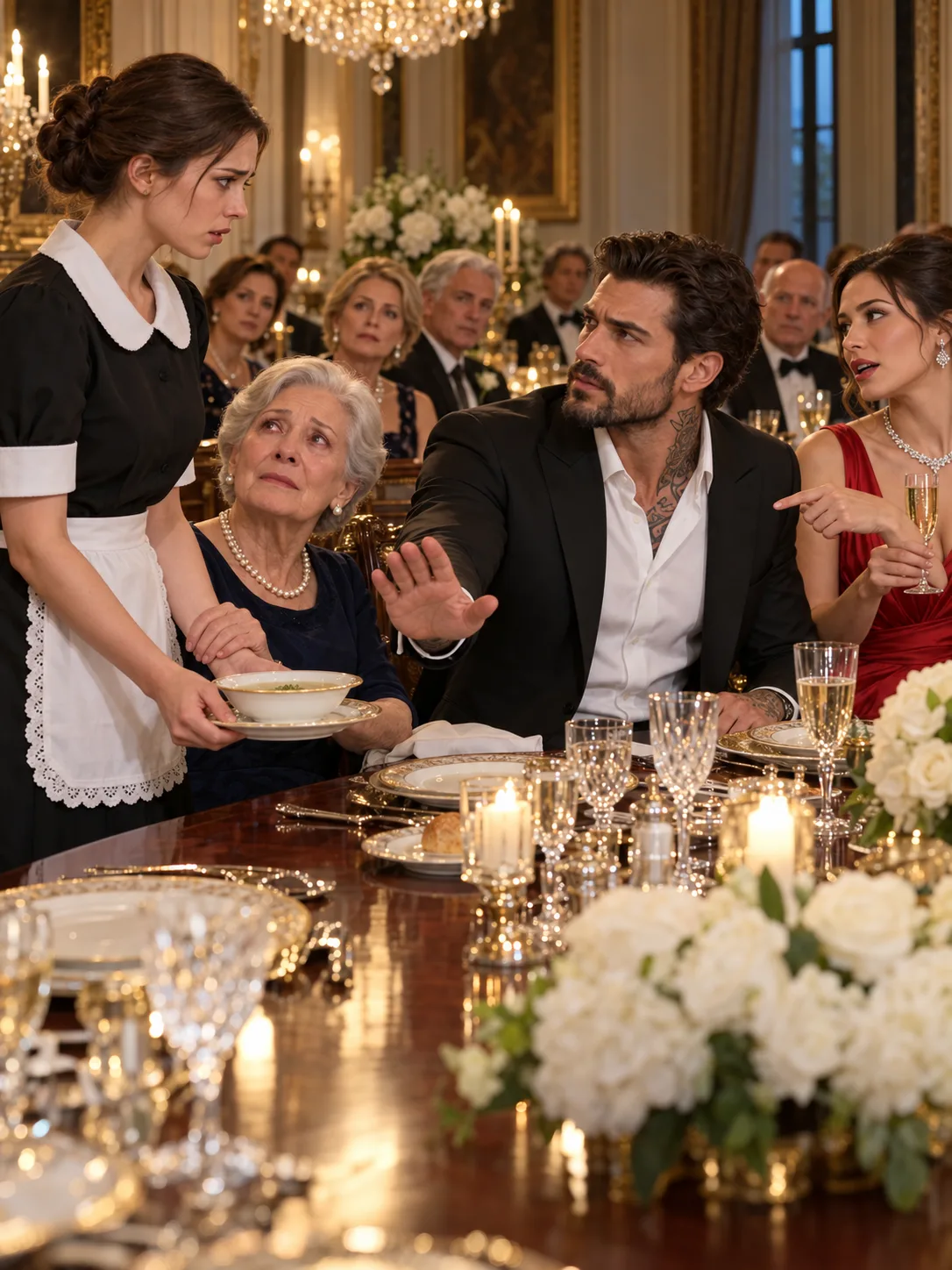
Under Witnesses Supporting Initial Complaint, there was a statement attributed to the patient.
It quoted his words from the dining room:
“Emma. Take your hand off my fiancée.”
The report identified those words as evidence that Luca had objected to my intervention.
At the bottom was the name of the witness whose account would carry the greatest weight.
Luca Moretti.
Share