A biologist tracking a Burmese python in the Florida Everglades received a signal that led her to a native cottonmouth with a large bulge in its body. X-rays later showed the cottonmouth, a species native to Florida, had swallowed the tagged python whole. The incident was one of several signs that native wildlife is beginning to prey on the invasive snakes.
The Burmese python is not native to Florida. Its natural range is in Southeast Asia, where it evolved alongside predators and competitors like tigers and king cobras. In Florida, those natural checks were absent. Between 1975 and 2018, more than 180,000 Burmese pythons were imported to the United States for the exotic pet trade. Some of these animals were released by owners who could no longer care for them, and others escaped during Hurricane Andrew in 1992, when breeding facilities were destroyed.
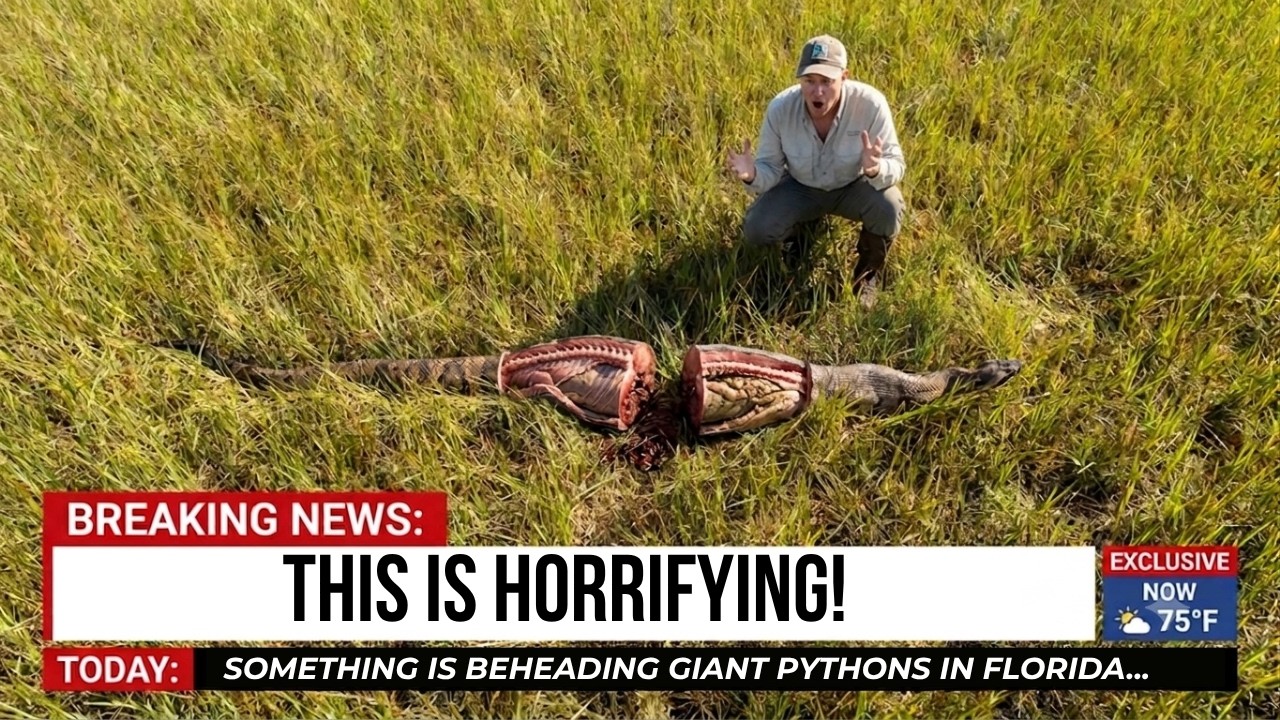
South Florida’s climate closely resembles the python’s homeland, and without natural predators, the population became established across more than a thousand square miles. Female pythons can lay between 50 and 100 eggs per year. Research has documented serious declines in native species associated with the python’s spread. Surveys found that raccoons dropped by more than 99 percent, opossums by similar amounts, and bobcats by around 88 percent. Marsh rabbits, foxes, and other animals disappeared entirely from some survey areas.
One factor that contributed to this decline is that native prey species did not recognize the python as a danger. Animals that were adapted to avoid alligators, bobcats, and hawks had no instinctive response to an ambush predator that could remain motionless in the grass.
For about two decades, no native species was documented regularly killing pythons. Alligators were the most likely candidates, and large alligators have occasionally drowned pythons in fights. But in some documented encounters, pythons successfully killed alligators. In one 2015 case, a large python died after swallowing an alligator that ruptured its gut. Both animals died as a result of the encounter.
Evidence of native predation on pythons began to emerge in recent years. In June 2021, a camera set up at a python nest in the Big Cypress Preserve recorded a bobcat eating the eggs. When the female python returned, the bobcat stood its ground. Researchers also found python carcasses with injuries consistent with bobcat attacks, and there is a recorded account of a bobcat killing a 10-foot male python.
Biologists have also documented several other native species preying on pythons. The eastern indigo snake, which naturally hunts other snakes, has consumed python hatchlings. Radio-tagged hatchlings were found inside indigo snakes during tracking studies. Four vultures were recorded puncturing eggs in a python nest in May 2023, the first documented case of a bird preying on python eggs in Florida. A Florida black bear was also observed attacking a full-grown python. The cottonmouth that swallowed the radio-tracked python is another example of a native snake preying on an invasive one.
These documented cases involve eggs, hatchlings, juveniles, and some adults, but researchers do not yet know whether native predation will become significant enough to control the python population. The attacks documented so far mostly affect the most vulnerable stages of the python life cycle, and female pythons still produce large numbers of eggs each year. Native predators are also themselves under pressure; indigo snakes, for example, have been found infected with a parasite carried by pythons.
The recent observations represent a change from the previous understanding that the Everglades had no native species capable of preying on pythons at multiple life stages. Whether this will translate into long-term population control remains an open question for researchers.






