
Invasive Burmese pythons have caused severe declines in mammal populations across the Florida Everglades, and wildlife managers have considered a drastic response modeled on a successful eradication
Invasive Burmese pythons have caused severe declines in mammal populations across the Florida Everglades, and wildlife managers have considered a drastic response modeled on a successful eradication program in Guam. That program involved dropping thousands of medicated dead mice from helicopters, a method that proved effective on Guam but faces significant obstacles in Florida.The python invasion…

A helicopter conducting routine post-fire wildlife surveys in the Everglades singled out an unusual feature in the burned landscape. After three hours of scanning for damage, the crew noticed a dark,
A helicopter conducting routine post-fire wildlife surveys in the Everglades singled out an unusual feature in the burned landscape. After three hours of scanning for damage, the crew noticed a dark, raised formation with straight edges rising from the gray, ash-covered marsh. Natural peat mounds typically have rounded contours, but this structure had angular lines suggesting deliberate constructi…

After lightning-sparked wildfires swept through the sawgrass prairies of Everglades National Park, researchers and park staff walking the charred ground encountered something they had not expected
After lightning-sparked wildfires swept through the sawgrass prairies of Everglades National Park, researchers and park staff walking the charred ground encountered something they had not expected based on decades of official surveys. The fires had burned away the dense grassy cover that had concealed the landscape for years, and the exposed earth revealed an invasive predator present in numbers f…

The Everglades is commonly described as a swamp, but it is more accurately a slow-moving river roughly 60 miles wide and only inches deep, flowing from Lake Okeechobee to Florida Bay. This
The Everglades is commonly described as a swamp, but it is more accurately a slow-moving river roughly 60 miles wide and only inches deep, flowing from Lake Okeechobee to Florida Bay. This 18,000-square-mile system is the only place on Earth where wild alligators and crocodiles share the same water, with about 200,000 alligators in the freshwater marshes and roughly 2,000 crocodiles along the salt…
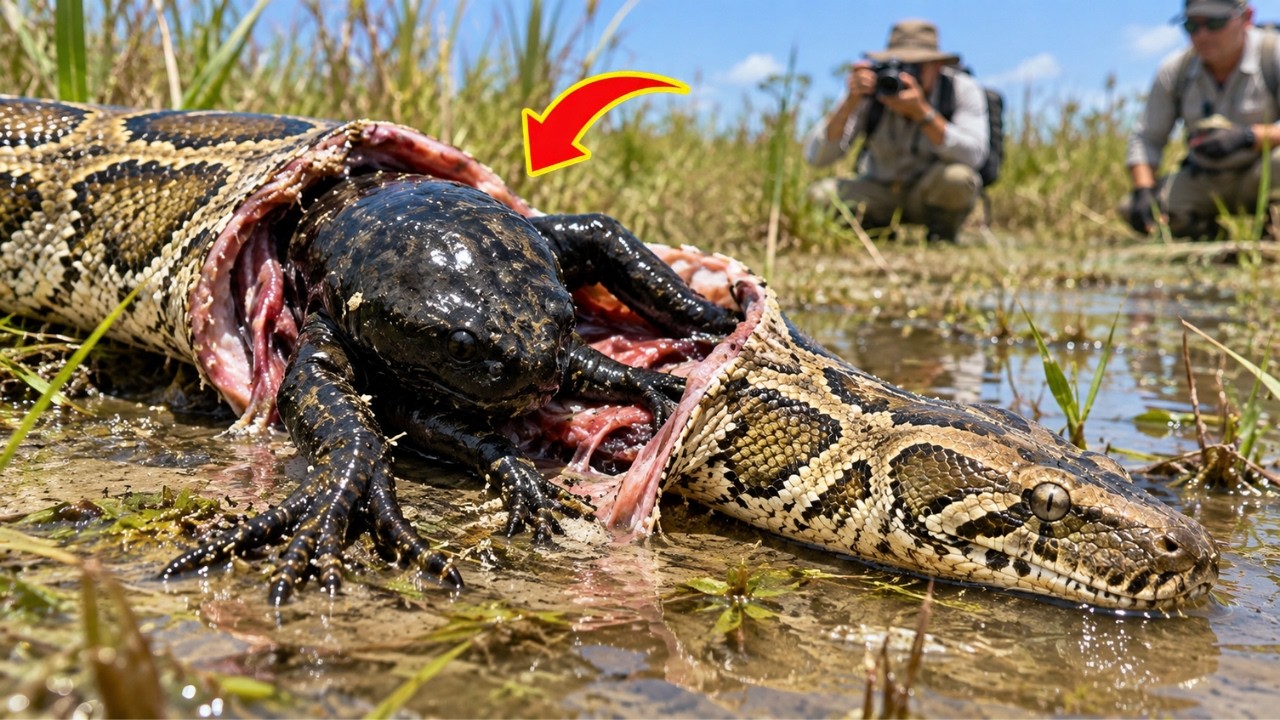
In the sawgrass wetlands of southern Florida, an estimated 300,000 Burmese pythons now live. For scale, that is roughly the population of a city like Orlando. The snakes, which can grow to 16 feet
In the sawgrass wetlands of southern Florida, an estimated 300,000 Burmese pythons now live. For scale, that is roughly the population of a city like Orlando. The snakes, which can grow to 16 feet and are capable of swallowing a full-grown deer, have spread across the Everglades largely out of sight. For more than two decades, they were considered nearly unstoppable.The python’s hunting method is…
Researchers tracking Burmese pythons in the Florida Everglades noticed something unexpected over several years: many of the snakes they had fitted with transmitters stopped moving and died. The
Researchers tracking Burmese pythons in the Florida Everglades noticed something unexpected over several years: many of the snakes they had fitted with transmitters stopped moving and died. The deaths occurred in clusters, and the animals showed no signs of injury, predation, or struggle. With no external cause identified, the research team, led by Dr. Michael Kirkland, brought the bodies into a l…

Florida wildlife officials have spent decades trying to control the Burmese python population in the Everglades, an invasive species that has caused severe declines in native mammal populations. In
Florida wildlife officials have spent decades trying to control the Burmese python population in the Everglades, an invasive species that has caused severe declines in native mammal populations. In recent years, researchers tested an experimental approach using robotic decoy rabbits designed to lure the snakes into range for capture. The project was a technological failure in its primary mission,…

For more than two decades, Burmese pythons have established themselves across the Florida Everglades. These large, nonnative snakes have spread through the wetlands, consuming local wildlife and
For more than two decades, Burmese pythons have established themselves across the Florida Everglades. These large, nonnative snakes have spread through the wetlands, consuming local wildlife and contributing to sharp declines in several mammal populations. Scientists have documented the damage while searching for ways to slow the invasion.Recent camera footage from the Everglades has recorded some…
Burmese pythons in the Florida Everglades have caused a major decline in native mammal populations, and researchers have identified a parasitic worm as an additional threat to the ecosystem. The
Burmese pythons in the Florida Everglades have caused a major decline in native mammal populations, and researchers have identified a parasitic worm as an additional threat to the ecosystem. The pythons, introduced decades ago through the exotic pet trade, now number in the hundreds of thousands and have reduced raccoon populations by over 99 percent in core areas. Other mammals, including opossum…

The Florida Fish and Wildlife Conservation Commission has spent years searching for effective ways to control the Burmese python population in the Everglades. One of the more unusual methods involved
The Florida Fish and Wildlife Conservation Commission has spent years searching for effective ways to control the Burmese python population in the Everglades. One of the more unusual methods involved robotic decoy rabbits designed to attract the snakes into monitored areas. The initiative combined existing knowledge about python behavior with new technology, though its results were mixed.The Everg…