
Florida has been using prescribed burns as part of its efforts to manage the Burmese python population in the Everglades. In December 2025, crews from the Florida Forest Service conducted controlled
Florida has been using prescribed burns as part of its efforts to manage the Burmese python population in the Everglades. In December 2025, crews from the Florida Forest Service conducted controlled fires designed to flush out the invasive snakes, which have become a significant ecological problem in the region.The technique relies on removing the thick vegetation and thatch where pythons typicall…
Invasive Burmese pythons have caused significant ecological damage in the Florida Everglades since they first appeared there in the late 1970s and early 1980s, likely after escaping or being released
Invasive Burmese pythons have caused significant ecological damage in the Florida Everglades since they first appeared there in the late 1970s and early 1980s, likely after escaping or being released by pet owners. Over the decades, their presence has led to dramatic declines in native mammal populations, with surveys showing near-total losses of rabbits and foxes in some areas and severe drops in…
The discovery of a radio transmitter from a studied Burmese python inside the stomach of a native cottonmouth snake has provided researchers with a rare piece of evidence in the ongoing conflict
The discovery of a radio transmitter from a studied Burmese python inside the stomach of a native cottonmouth snake has provided researchers with a rare piece of evidence in the ongoing conflict between invasive pythons and native wildlife in the Florida Everglades. A biologist tracking the signal from the implanted transmitter found a swollen cottonmouth in the saw grass containing the transmitte…
Burmese pythons are vanishing from Florida, and scientists now know what’s hunting them. For years, the invasive snakes dominated the Everglades, swallowing native wildlife and evading every control effort.
For seven years, ecologist Elena Marsh conducted python population surveys in Big Cypress National Preserve under a contract with the University of Florida. She used a consistent methodology and tracking network, and observed stable or increasing python presence across her monitored areas. Over four consecutive field seasons, however, three specific zones in the Fakahatchee Strand management unit…
Florida’s giant pythons finally have a new enemy, and it isn’t another predator. For years, hunters have battled the invasive snakes that have devastated the Everglades, but a surprising weapon is now changing the fight.
For two decades, the Burmese python faced no natural predators in the Florida Everglades. Neither alligators, nor hunters, nor the millions of dollars spent on eradication programs were able to stop the spread of the invasive species. In large areas of the wetlands, the snakes eliminated about 90 percent of small and medium-sized mammals before any native species began to mount an effective respon…

Florida shipped robot rabbits into the Everglades to hunt pythons, and what happened next stunned wildlife officials. The fake rodents were designed to lure massive invasive snakes into the open, where teams could finally track their movement.
During the 1980s and 1990s, baby Burmese pythons were sold in Florida pet stores as small, manageable pets. Many owners were unprepared for how large the snakes would become, and some released them into the wild when they grew to considerable sizes. Hurricane Andrew in 1992 also damaged reptile breeding facilities, allowing an unknown number of snakes to escape.The Everglades provided ideal condit…

State wildlife officials rushed to Florida’s swamps after disturbing leaked footage surfaced online, showing a scene that immediately triggered a massive investigation. The video captures the aftermath of an incident so severe that authorities temporarily sealed off the area, refusing to release details to the public.
Efforts to control Burmese pythons in the Florida Everglades have expanded beyond the visible predator to address a secondary threat that is spreading more quickly than the snakes themselves. State wildlife managers have hired 25 hunters to capture and remove pythons from South Florida, a program that has removed dozens of snakes in recent weeks. The initiative addresses an invasion that has signi…
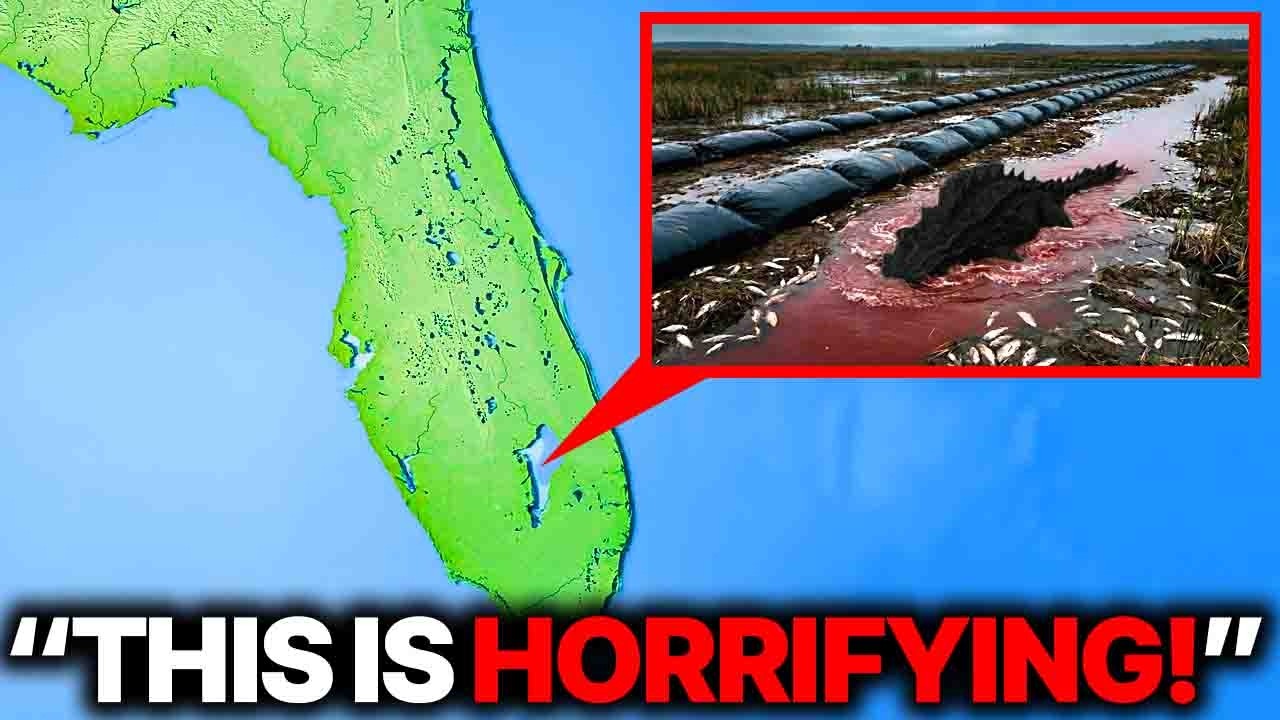
After Florida drained a massive wetland, biologists uncovered something far more disturbing than anyone expected. The project, meant to reshape the landscape, exposed hidden dangers beneath the surface.
A recent water drawdown at Stormwater Treatment Area 1 West in South Florida exposed a larger than expected population of invasive armored catfish, signaling that current control efforts are falling short. The event occurred when the area was deliberately drained for maintenance, leaving fish concentrated in shallow pools where biologists could survey them.The Florida Everglades functions as a slo…
Invasive pythons are swallowing Florida’s wildlife whole, and new footage shows just how bad it’s gotten. Hunters have been tracking the massive snakes for years, but the latest cameras captured something they never expected.
Biologists at a wildlife research facility in southwest Florida discovered that native predators in the Everglades have begun killing and consuming invasive Burmese pythons, a finding that challenges the long-standing belief that the pythons had no natural enemies in the region.For years, experts generally agreed that Burmese pythons, which can weigh up to 90 kilograms and reach more than six mete…
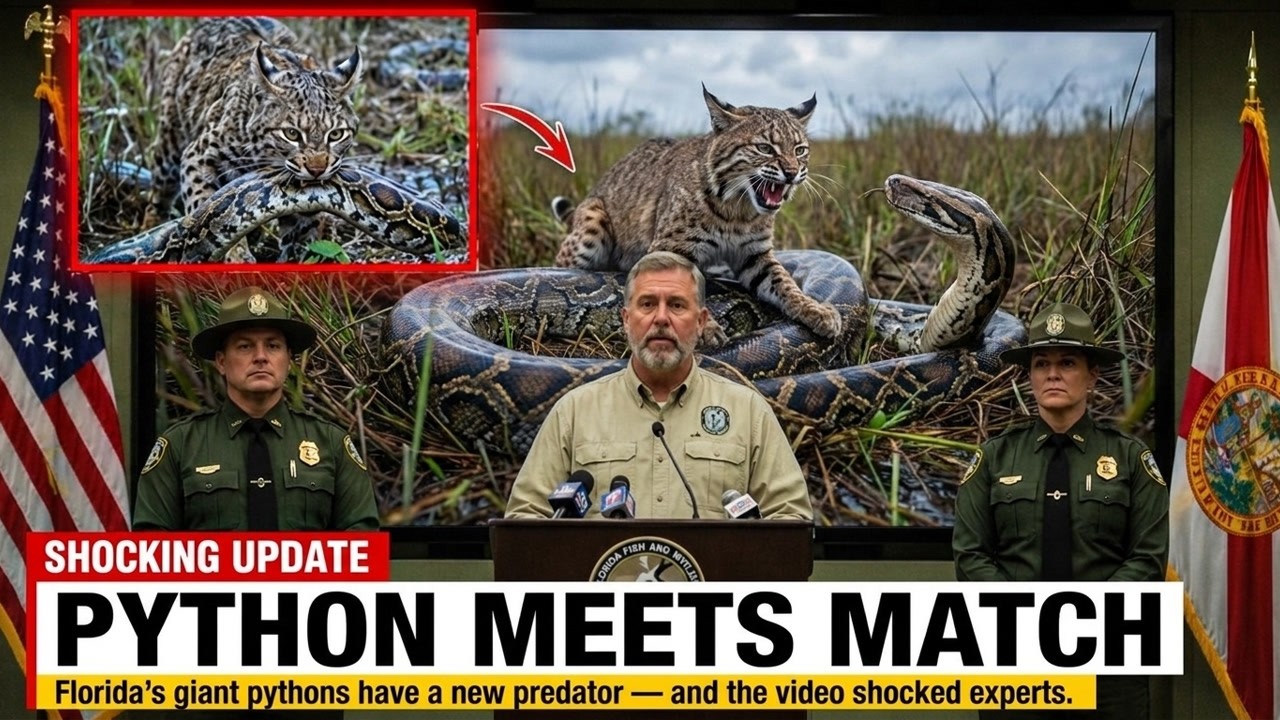
Florida’s giant pythons have a new predator, and the video stunned wildlife experts. For years, the invasive snakes have decimated local wildlife with no natural enemy strong enough to stop them.
In the summer of 2021, researchers reviewing footage from a trail camera in the Big Cypress National Preserve in southern Florida watched something they had not recorded before. A Florida bobcat approached the nest of an adult Burmese python, a protected clutch of eggs, and began to eat them. The animal then cached the remaining eggs, a behavior suggesting it intended to return. The footage marked…