
Florida’s giant pythons were disappearing—then scientists finally discovered the predator behind it. For years, invasive Burmese pythons had devastated the Everglades, swallowing everything from raccoons to alligators, and researchers assumed nothing could challenge them.
Burmese pythons had dominated southern Florida for roughly twenty years, preying on deer, wading birds, and even alligators. They helped empty large sections of Everglades National Park of raccoons, opossums, and rabbits. In 2021, however, researchers encountered something they had never documented: a mammal killing a full-grown python on land.A 13-foot, 52-pound male python, tagged with a radio t…
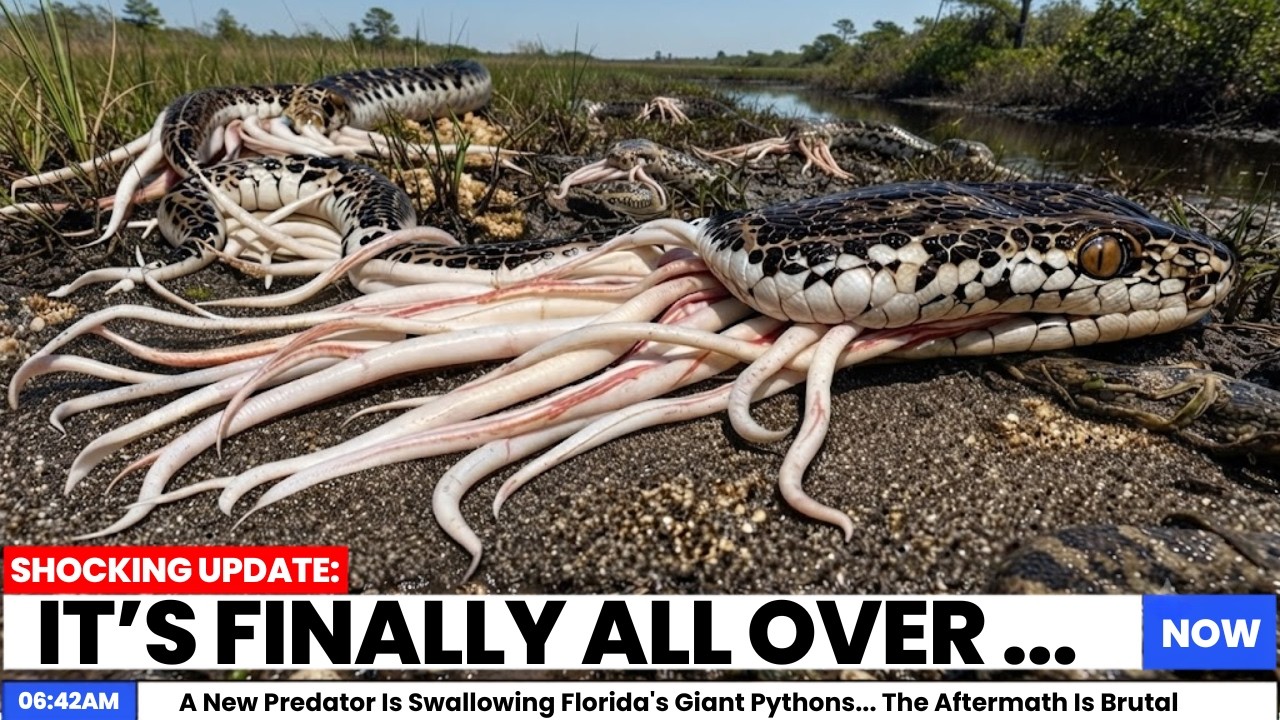
Burmese pythons are vanishing from Florida, and scientists say seven other species are already hunting them back. The invasive snakes once thrived unchecked across the Everglades, wiping out native wildlife.
A wildlife researcher tracking invasive Burmese pythons in the Florida Everglades has documented what appears to be a significant shift in the ecosystem: seven native predator species are independently preying on pythons in ways not previously recorded.Dr. Elena Marsh had conducted systematic python density surveys in the Big Cypress National Preserve for seven years under a contract with the Univ…

Deep in the Everglades, scientists finally identified what’s been hunting Florida’s giant pythons—and it’s not another snake. For years, massive invasive pythons have devastated local wildlife, and researchers suspected an unexpected predator was pushing back.
The Burmese python has been an established apex predator in the Florida Everglades for roughly two decades. The invasive species, which can reach lengths of 20 feet, has contributed to significant declines in native mammal populations across the wetland ecosystem.Eradication efforts have spent millions of dollars and involved thousands of hunter hours, but specialists describe the results as limit…

A Florida robot rabbit squad was designed for one brutal job—luring invasive pythons out of hiding—and the footage of what it triggered is genuinely terrifying. The decoy bunnies mimic real prey, moving to draw massive snakes into open ground, where the team planned to capture or cull them.
Officials in Florida have invested in a range of methods to address the population of invasive Burmese pythons in the Everglades, including an experimental effort involving robotic decoys designed to attract the snakes. The program used artificial rabbits equipped with heating elements, scent emitters, and cameras to lure pythons into monitored areas where removal teams could be dispatched.The Eve…
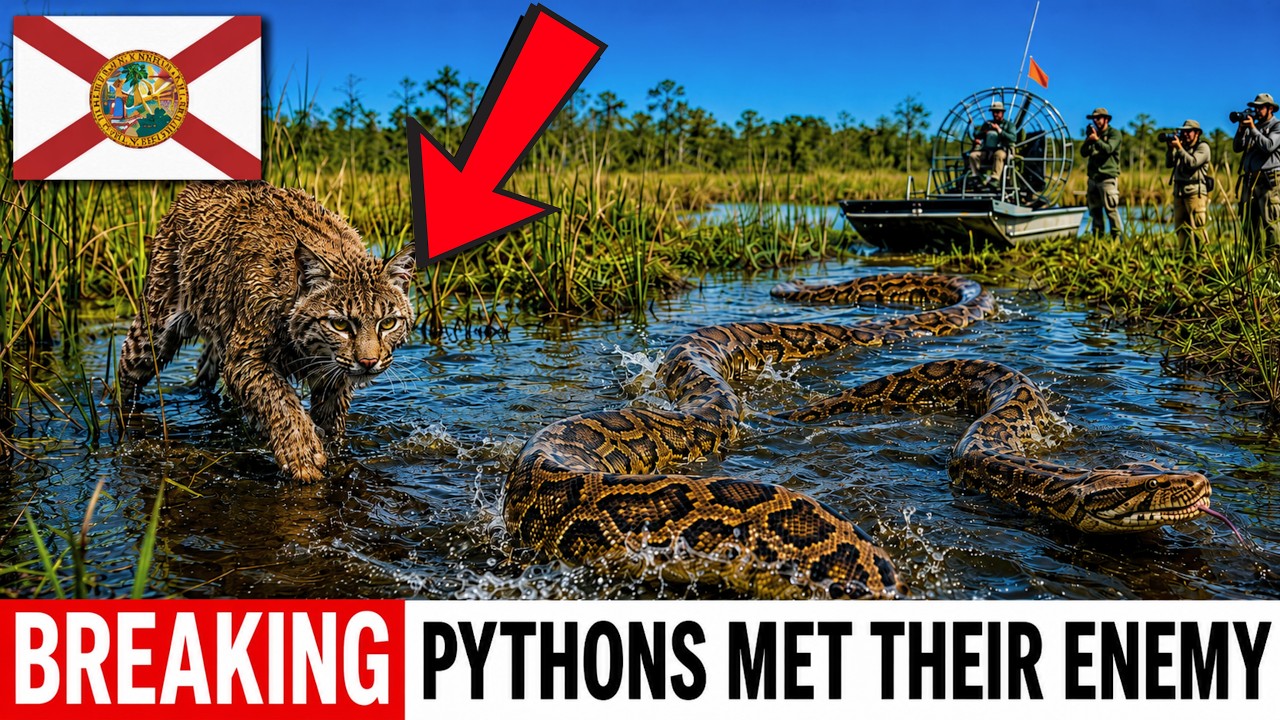
Florida spent millions on hunts and radio-tracked “scout snakes” to fight invasive Burmese pythons, yet nature may have quietly found a $0 solution. For over a decade, the Everglades seemed defenseless—raccoon sightings plummeted 99.3 percent as the constrictors spread.
In June 2021, a camera placed near a Burmese python nest in Big Cypress National Preserve recorded a bobcat eating the python’s eggs. The incident was the first documented case of a native Florida animal preying on python eggs.The Burmese python population in the Everglades has grown since the snakes began breeding in the wild around 2000. Many were released pets or escapees. Native animals had no…

Researchers returned to the Everglades after the fires expecting to confirm what twenty years of study had supposedly proven—that the Burmese python had won—but the charred ground revealed a hidden story that contradicted everything they thought they knew. For decades, the invasive snakes had erased over 99% of raccoon sightings and pushed native wildlife toward collapse, despite removal programs capturing more than 20,000 pythons.
Everglades wildfires burn nearly every year, but what they reveal in their aftermath has changed how researchers understand one of the most studied ecological invasions in North America. When sawgrass disappears and standing water becomes exposed, survey teams enter areas that are normally impossible to read. For years, the expectation was that fire would confirm a grim picture researchers had alr…
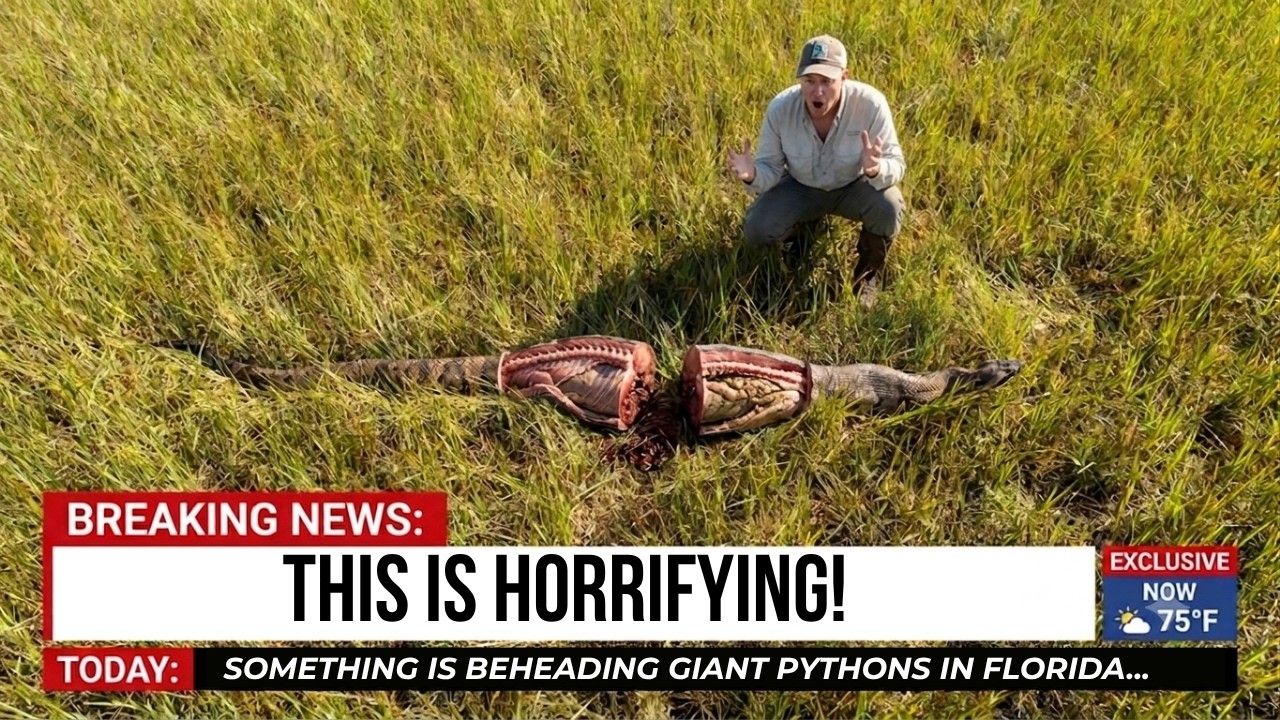
A cottonmouth just swallowed a 5-foot python—with its tracking transmitter still sending signals. It started as a routine ping in the Florida Everglades, but the signal led straight into the belly of a native snake.
A biologist tracking a Burmese python in the Florida Everglades received a signal that led her to a native cottonmouth with a large bulge in its body. X-rays later showed the cottonmouth, a species native to Florida, had swallowed the tagged python whole. The incident was one of several signs that native wildlife is beginning to prey on the invasive snakes.The Burmese python is not native to Flori…

Wildlife researchers in the Florida Everglades have documented a sharp decline in mammal populations over the past two decades, and they attribute much of the damage to Burmese pythons, an invasive
Wildlife researchers in the Florida Everglades have documented a sharp decline in mammal populations over the past two decades, and they attribute much of the damage to Burmese pythons, an invasive species that has adapted well to the region. The snakes were introduced to the area primarily through the exotic pet trade, with many owners releasing unwanted animals into the wild beginning in the 199…