Kudzu first arrived in the United States in 1876 at the Centennial Exposition in Philadelphia, where Japan displayed it as a garden ornamental. For the next half century, it grew mainly on southern porches, cultivated for shade and its purple flowers. Farmers largely ignored it, and they had practical reasons. A kudzu field took years to establish, the tangled vines were difficult to cut and bale into hay, and cattle quickly wore out a kudzu pasture.
The Dust Bowl changed that. Dust storms stripped the Great Plains, and years of cotton farming had left southern hillsides so eroded that heavy rain washed topsoil into rivers. In 1935, Congress created the Soil Conservation Service, led by North Carolina soil scientist Hugh Hammond Bennett. His agency needed a plant that could cover bare, gullied ground quickly, and kudzu could grow nearly a foot a day in a southern summer.
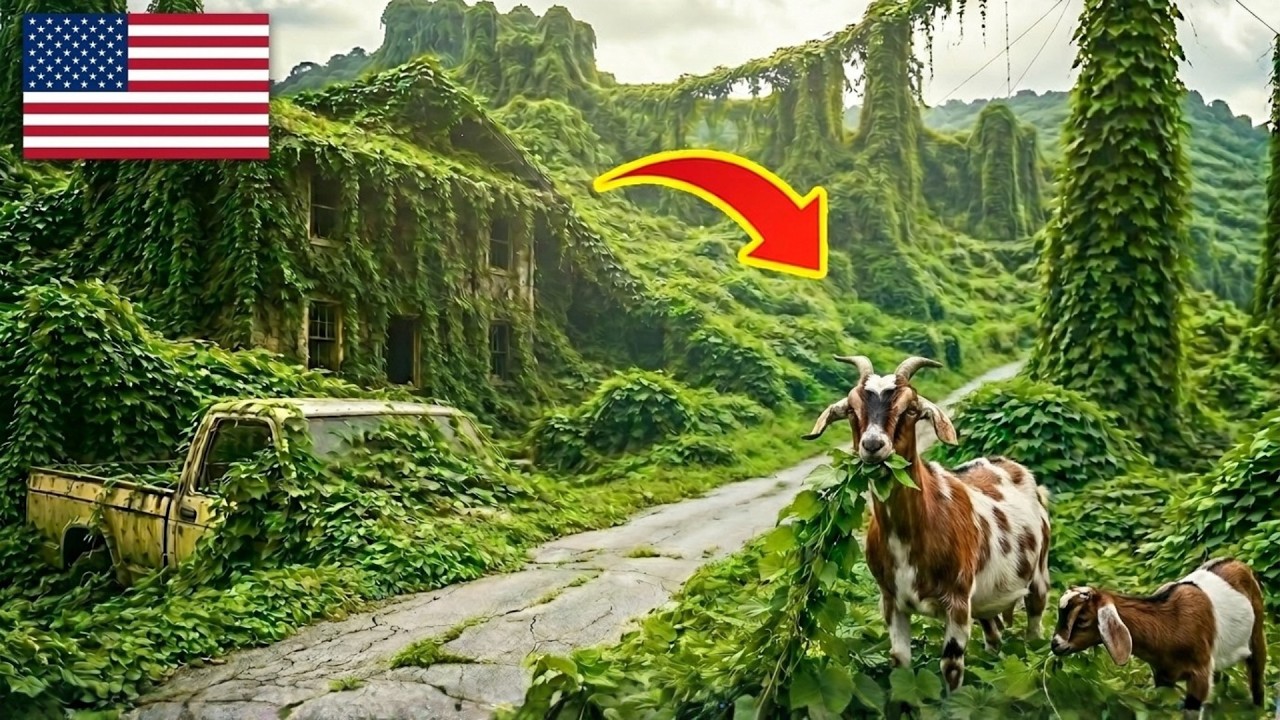
The agency grew more than 70 million kudzu seedlings in its nurseries, and crews with the Civilian Conservation Corps helped plant them. Farmers remained skeptical, so the government paid them up to $8 an acre to plant the vine. On some of the worst gullies, it did hold the red clay in place. Railroad and highway crews also planted kudzu on the steep road cuts they were carving through the hills.
A radio host in Atlanta turned the federal program into a regional phenomenon. Channing Cope, who hosted a popular show and wrote for the Atlanta Constitution, called kudzu the miracle vine and said it would revive dying southern farms. In the early 1940s, he founded the Kudzu Club of America, which attracted about 20,000 members with a goal of planting 8 million acres across the South. There were kudzu queens and planting contests, and for a few years the vine became a point of southern pride.
The club never approached its acreage goal. By 1945, just over a million acres had been planted, and once federal payments stopped, farmers grazed it out or plowed it under for more profitable crops. The kudzu that survived was the kudzu that cattle could not reach, growing on steep railroad banks, highway cuts, and climbing trees along roadsides. By 1953, the USDA dropped kudzu from its recommended cover plants. In 1970 it was listed as a weed, and by the late 1990s it was on the federal noxious weed list.
Herbicide campaigns followed. Highway departments, power companies, railroads, and timber owners sprayed kudzu extensively, with power companies alone estimated to spend around $1.5 million a year keeping it off their lines. Lost forest productivity was estimated at $100 million to $500 million a year. Still, the green walls along major highways remained a familiar sight.
For decades, widely repeated figures claimed kudzu covered 7 to 9 million acres and spread by 150,000 acres a year. Researchers tracing the origin of those numbers found they went back to a garden club publication, a kudzu craft book, and a guide to cooking with kudzu. The legend had gained its own literature by then, including a poem by Georgia poet James Dickey imagining southern families shutting their windows to keep the vine out.
The U.S. Forest Service took a slower approach, using thousands of permanent survey plots across southern forests. Their count found about 227,000 acres of forest land with kudzu, roughly one-sixth the size of Atlanta, spreading by no more than 2,500 acres a year. That is about a tenth of one percent of the South’s 200 million forest acres. The same survey found Asian privet, a shrub few people noticed from a car, on about 3.2 million acres, 14 times more ground than kudzu.
The explanation for the discrepancy is largely a matter of perspective. Kudzu needs full sun, so it grows best on road cuts, railroad banks, power line corridors, and old fence rows. An interstate provides mile after mile of those conditions. From a car at highway speed, a wall of vine draped over the treeline looks endless. But kudzu cannot thrive in the deep shade of a closed forest canopy, so the green curtain along the road often runs only a few trees deep.
Kudzu also spreads slower than it appears. It produces relatively few seeds that sprout in the United States, so it mainly advances by sending runners across the ground that root wherever a leaf joint touches soil. A patch can bury the same fence line every summer and still take decades to move far from it.
The vine still causes real problems. It is heavy enough to snap power lines and pull down the trees it climbs, and crushed vines have been blamed for train wheels slipping on tracks. Because kudzu is a legume, bacteria in its roots pull nitrogen from the air and push it into the soil. A 2010 study by a Stony Brook University team measured kudzu patches in Madison County, Georgia, and found the invaded soil released more than twice as much nitric oxide as nearby soil without kudzu. Nitric oxide is one of the gases that forms ground-level ozone, and the researchers’ most extreme computer model suggested a heavy kudzu invasion could add up to seven high-ozone days a summer in parts of the Southeast. They called that a worst case, but it showed the vine reaching well past the roadside.
Kudzu is also a close relative of the soybean, so farm scientists watched it as a winter refuge for soybean rust, a fungal disease that attacks soybean fields.
Around 2007, a forester in Maryland named Brian Knox tried an approach that sounded unlikely. A friend had a herd of about 50 goats he did not want to sell for meat. Knox had read about ranchers out west using goats on weeds, so he turned the herd loose on a patch of invasive vines on a property he managed. The goats ate it down. Local reporters picked up the story, and Knox’s company, Eco Goats, began booking jobs from Virginia to New York. On some city jobs, he hires a night security guard to watch the herd.
Cattle had killed kudzu in the 1940s on flat pasture where a farmer could fence them in and let them graze it down. The kudzu that became a problem was the kudzu cattle could never reach, hanging off steep road cuts and filling ravines. Goats are browsers, so they prefer leaves and vines to grass, and they are built for steep, broken ground a cow will not touch. Their narrow muzzles and flexible lips let them pick leaves out of a tangle one bite at a time, and they stand on their back legs to strip vines off tree trunks. In Knoxville, Tennessee, an NPR reporter watched a herd using their horns and hooves to drag kudzu down out of shrubs.
The part that actually kills kudzu happens underground. A mature plant stores energy as starch in a thick root crown, and old roots can weigh hundreds of pounds. Cutting the vine once allows the crown to send up fresh shoots. Grazing it repeatedly across several seasons starves the crown until it runs dry. Timing matters, because if the vine is left alone for a summer, it refills the crown, so skipping a season is nearly starting over.
The goat business grew from there. Goats can work slopes where a mower would roll over and creek banks where herbicide near water is a problem. The grazing company gets paid to feed its own herd, and the goats fertilize the ground as they go. Knox has said a herd of about 30 goats can work through roughly half an acre of dense brush in three or four days. One of the larger grazing networks, Goats on the Go, now has more than 70 affiliates around the country.
Every goat job needs a fence, a water trough, a livestock trailer, and someone checking on the herd. Nobody is fencing thousands of miles of interstate shoulder and railroad bank, which is exactly where kudzu grows best. For that ground, a different solution was needed.
In October 2009, one quietly arrived at the busiest passenger airport in the world. In its home range in Japan, China, and Korea, kudzu has specialist enemies, insects and diseases that evolved to feed on it. None of those enemies came across the Pacific with the vine in 1876, an absence ecologists call enemy release.
That changed when homeowners in northeast Georgia reported swarms of small olive-brown bugs clustered on the sides of their houses. They gathered by the thousands on white and tan siding, squeezed around window frames, and gave off a sharp odor when crushed. Wayne Gardner, an entomologist at the University of Georgia, traced them to kudzu growing in nine counties around Atlanta’s Hartsfield-Jackson International Airport.
The insect was Megacopta cribraria, a round relative of the stink bug known in Asia as the bean plataspid, and the first member of its insect family ever found in the Western Hemisphere. Genetic testing traced the entire American population to a single female lineage from the Kyushu region of Japan, suggesting one female bug or her eggs stowed away in cargo or on a plane. Female kudzu bugs also tuck tiny brown capsules under their eggs, packed with gut bacteria, which the young eat as soon as they hatch.
The bugs spread into 117 more Georgia counties and all of South Carolina within about two years, eventually reaching 13 states plus Washington, D.C. They went straight to work on the vine, piercing stems and draining sap. At one study site, kudzu biomass dropped by about a third in less than two years.
Then the calls started coming from soybean country. A bean plataspid eats beans, and soybeans and kudzu are close cousins in the legume family. Researchers in Japan had shown that the bacteria in those capsules decide a lot about whether the bugs can thrive on soybeans. The population that landed in Atlanta carried the soybean kind. In Georgia and South Carolina, infested soybean fields lost 20 to 47 percent of their yield, with the worst fields losing as much as 60 percent.
Federal scientists already had a suspect in mind for the next fix. At a USDA biological control lab in Mississippi, researchers were studying a tiny Asian wasp called Paratelenomus saccharalis as a candidate to release against the bug. The wasp lays its own eggs inside kudzu bug eggs, and its larva eats the developing bug from the inside. Before anyone could release it, the wasp showed up on its own. In 2013, wild populations turned up separately in Georgia and Alabama, and in the first Georgia samples it had destroyed between 47 and 95 percent of kudzu bug eggs.
A common soil fungus called Beauveria bassiana also started killing bugs in their winter clusters, and in 2016 a second egg-eating wasp from Asia was found in Alabama. Starting in 2014, kudzu bug numbers across the Southeast fell hard, and most soybean fields now seldom need treatment for them.
The third kudzu killer was working on the vine decades before the goats or the bugs showed up, and it is the largest of the three. Kudzu leaves are rich in protein, which is why the government originally sold the vine as livestock feed. That pitch failed because nobody could harvest kudzu and pastured cattle wore it out. Nearly 90 years later, demand for goat meat in America has been climbing, driven largely by families from the Caribbean, Africa, Latin America, and South Asia. Some grazing herds are meat breeds like Boer and Kiko goats, so a herd can earn once for clearing a hillside and again at market. Kudzu root starch, called kuzu in Japan, has also been a prized thickener for sauces and sweets for centuries.
The third killer is loblolly pine. In the 1930s, much of the South was covered in worn-out cotton fields, the same open, sunny, eroded ground the government was paying farmers to plant with kudzu. Over the following decades, the boll weevil, falling cotton prices, and tractors built for big flat farms out west pushed millions of southern acres out of crops for good. Across much of the South, forest cover grew back through the 20th century. Loblolly and shortleaf pines seeded themselves in from the edges, and oaks and hickories followed. As the trees grew and their crowns closed overhead, the forest floor fell into shade that a sun-loving vine cannot live on. Kudzu underneath lost its light, and patch after patch shrank away without a drop of herbicide. That is why the Forest Service found kudzu mostly along forest edges, road corridors, and clearings, and so little of it inside the South’s 200 million acres of woods.
Put the three together and each one reaches ground the other two cannot. Goats handle fenced ground, the steep backyards, city parks, hillsides, and creek banks where somebody can park a livestock trailer. The kudzu bug, held in check by its wasp, works the open miles of roadside and railroad bank that nobody will ever fence. And the pines take the old farm fields and the deep woods, closing the canopy over whatever kudzu is left underneath.
There is a larger lesson in those Forest Service numbers. While the country was staring at the green curtain along the interstate, Asian privet, cogon grass, and invasive roses were spreading through the woods behind it with far less attention. Cogon grass crowds out pine seedlings and burns hotter than the native grasses it replaces. The privet story does not have a happy ending yet.
On the red clay hillside in north Georgia, the goats file up a ramp into a livestock trailer headed for the next job. The farmer walks the bare slope where his grandfather’s kudzu stood, and a few green shoots are already pushing up from the old root crowns, which is why the goats will be back in the spring. His family’s story is one version of a story told on thousands of southern farms. The government paid his grandfather $8 an acre to plant a vine that was supposed to feed cattle and hold the soil. Nearly 90 years later, it is feeding a herd of goats, and the soil on this hill is holding, just not the way anybody in Washington drew it up.






