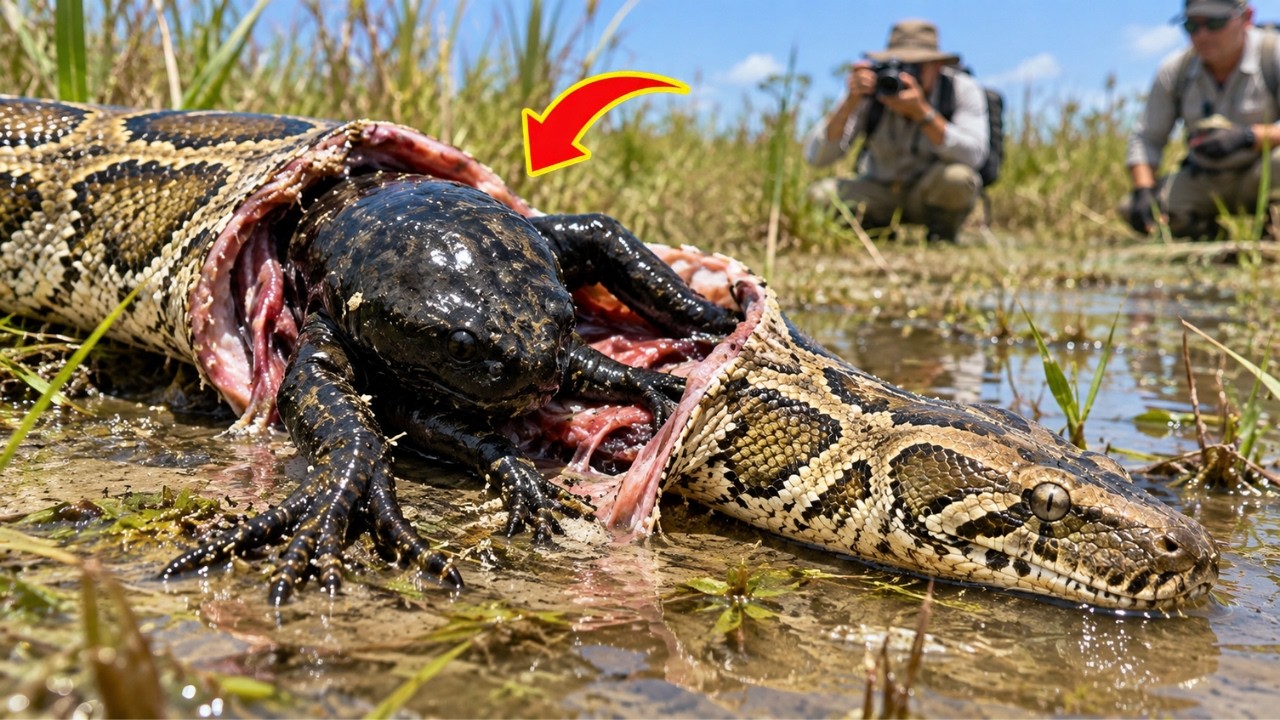
In the sawgrass wetlands of southern Florida, an estimated 300,000 Burmese pythons now live. For scale, that is roughly the population of a city like Orlando. The snakes, which can grow to 16 feet
In the sawgrass wetlands of southern Florida, an estimated 300,000 Burmese pythons now live. For scale, that is roughly the population of a city like Orlando. The snakes, which can grow to 16 feet and are capable of swallowing a full-grown deer, have spread across the Everglades largely out of sight. For more than two decades, they were considered nearly unstoppable.The python’s hunting method is…
Researchers tracking Burmese pythons in the Florida Everglades noticed something unexpected over several years: many of the snakes they had fitted with transmitters stopped moving and died. The
Researchers tracking Burmese pythons in the Florida Everglades noticed something unexpected over several years: many of the snakes they had fitted with transmitters stopped moving and died. The deaths occurred in clusters, and the animals showed no signs of injury, predation, or struggle. With no external cause identified, the research team, led by Dr. Michael Kirkland, brought the bodies into a l…
Florida wildlife officials have spent decades trying to control the Burmese python population in the Everglades, an invasive species that has caused severe declines in native mammal populations. In
Florida wildlife officials have spent decades trying to control the Burmese python population in the Everglades, an invasive species that has caused severe declines in native mammal populations. In recent years, researchers tested an experimental approach using robotic decoy rabbits designed to lure the snakes into range for capture. The project was a technological failure in its primary mission,…
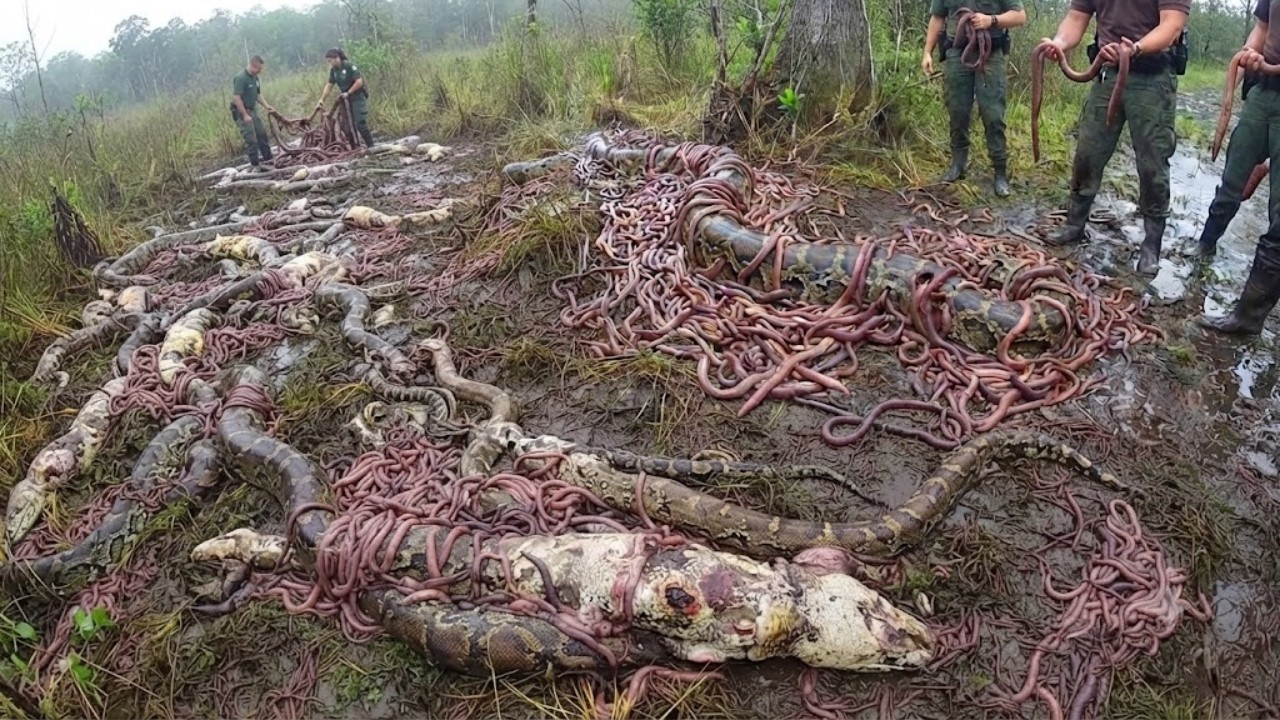
In the fall of 2019, Dr. Melissa Faroh, a herpetologist, was performing a necropsy on a dead eastern indigo snake recovered from a wildlife corridor in Kier County, Florida. Inside its lungs, she
In the fall of 2019, Dr. Melissa Faroh, a herpetologist, was performing a necropsy on a dead eastern indigo snake recovered from a wildlife corridor in Kier County, Florida. Inside its lungs, she found dozens of small, segmented worm-like parasites. Faroh had conducted hundreds of these procedures and recognized a parasitic infection, but she did not recognize the parasite itself. It was not a spe…
For more than two decades, Burmese pythons have established themselves across the Florida Everglades. These large, nonnative snakes have spread through the wetlands, consuming local wildlife and
For more than two decades, Burmese pythons have established themselves across the Florida Everglades. These large, nonnative snakes have spread through the wetlands, consuming local wildlife and contributing to sharp declines in several mammal populations. Scientists have documented the damage while searching for ways to slow the invasion.Recent camera footage from the Everglades has recorded some…
Burmese pythons in the Florida Everglades have caused a major decline in native mammal populations, and researchers have identified a parasitic worm as an additional threat to the ecosystem. The
Burmese pythons in the Florida Everglades have caused a major decline in native mammal populations, and researchers have identified a parasitic worm as an additional threat to the ecosystem. The pythons, introduced decades ago through the exotic pet trade, now number in the hundreds of thousands and have reduced raccoon populations by over 99 percent in core areas. Other mammals, including opossum…
In May 2016, DNA testing of tissue samples from three young crocodiles captured in South Miami canal systems between 2009 and 2014 returned an unexpected result. Herpetologists at the University of
In May 2016, DNA testing of tissue samples from three young crocodiles captured in South Miami canal systems between 2009 and 2014 returned an unexpected result. Herpetologists at the University of Florida had anticipated the samples would trace to Cuba or Central America, or perhaps represent a hybrid or misidentified species. Instead, the genetic material was a 100% match for Crocodylus niloticu…

The Florida Fish and Wildlife Conservation Commission has spent years searching for effective ways to control the Burmese python population in the Everglades. One of the more unusual methods involved
The Florida Fish and Wildlife Conservation Commission has spent years searching for effective ways to control the Burmese python population in the Everglades. One of the more unusual methods involved robotic decoy rabbits designed to attract the snakes into monitored areas. The initiative combined existing knowledge about python behavior with new technology, though its results were mixed.The Everg…

Florida has spent years trying to control its population of Burmese pythons, an invasive species that has caused significant damage to the Everglades ecosystem. One proposed solution, the aerial
Florida has spent years trying to control its population of Burmese pythons, an invasive species that has caused significant damage to the Everglades ecosystem. One proposed solution, the aerial distribution of acetaminophen-laced bait, has proven effective on the island of Guam against another invasive snake species. However, the same method carries serious risks for Florida’s native wildlife, in…

Florida has been using prescribed burns as part of its efforts to manage the Burmese python population in the Everglades. In December 2025, crews from the Florida Forest Service conducted controlled
Florida has been using prescribed burns as part of its efforts to manage the Burmese python population in the Everglades. In December 2025, crews from the Florida Forest Service conducted controlled fires designed to flush out the invasive snakes, which have become a significant ecological problem in the region.The technique relies on removing the thick vegetation and thatch where pythons typicall…