
He slithered through swamp water, but Florida wildlife officers now warn this hunter does not chase rodents—it stalks humans. The invasive species, initially dismissed as another python threat, has triggered a statewide alert after documented encounters near residential canals.
In 2016, genetic testing confirmed that Nile crocodiles, a species not native to the Americas, had established a breeding population in the Florida Everglades. The discovery marked the end of a years-long investigation that began with sightings of unusually aggressive crocodilians in canals south of Miami. Researchers concluded that the animals were descendants of specimens brought into the state…
A mysterious force is devastating Florida’s Everglades, and the culprit has wildlife experts bracing for an ecological disaster. Pythons, invasive predators that can grow over twenty feet long, are strangling the natural food chain, and state officials have declared an all-out war.
The Everglades, a vast wetland at the southern tip of Florida, is often described as a swamp, but it is technically a slow-moving river. The area is a complex ecosystem shaped by a unique set of conditions, and its history includes both natural phenomena and human intervention.The region is the only place on Earth where American alligators and American crocodiles share the same habitat. Alligators…

England released four bison into a dead forest, and what the animals did with bark and hooves stunned researchers. The rewilding project dropped the giants into woodland that had lost nearly all its trees, leaving an empty, silent landscape.
In July 2022, England released four European bison into West Blean and Thornden Woods near Canterbury, marking the first time wild bison had roamed Britain in 6,000 years. A bull joined the three females a few months later, but the females had already begun altering the landscape on their own. Within hours, the matriarch pushed through a thicket of rhododendron and stripped bark from a willow tree…

Florida’s giant pythons were disappearing—then scientists finally discovered the predator behind it. For years, invasive Burmese pythons had devastated the Everglades, swallowing everything from raccoons to alligators, and researchers assumed nothing could challenge them.
Burmese pythons had dominated southern Florida for roughly twenty years, preying on deer, wading birds, and even alligators. They helped empty large sections of Everglades National Park of raccoons, opossums, and rabbits. In 2021, however, researchers encountered something they had never documented: a mammal killing a full-grown python on land.A 13-foot, 52-pound male python, tagged with a radio t…

They released 11 beavers into a dead Scottish river, and what followed stunned scientists. The waterway had run dry, its wildlife gone, the land scarred by erosion.
In May 2009, a rewilding trial began in Scotland with the release of eleven Eurasian beavers into Knapdale Forest in Argyll. It was the first licensed mammal reintroduction in British history. The animals, captured in Norway and quarantined for several months, were released into freshwater lochs over two days. The species had not lived in Scotland for over 400 years.The project followed more than…
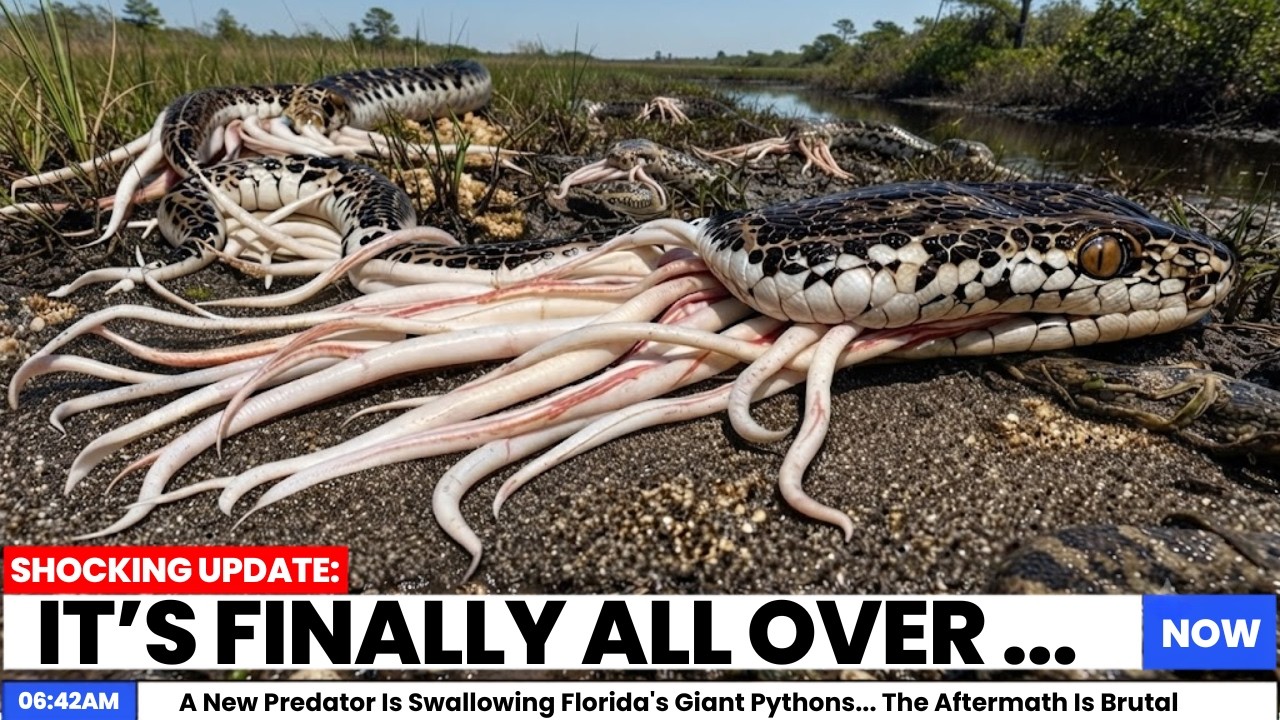
Burmese pythons are vanishing from Florida, and scientists say seven other species are already hunting them back. The invasive snakes once thrived unchecked across the Everglades, wiping out native wildlife.
A wildlife researcher tracking invasive Burmese pythons in the Florida Everglades has documented what appears to be a significant shift in the ecosystem: seven native predator species are independently preying on pythons in ways not previously recorded.Dr. Elena Marsh had conducted systematic python density surveys in the Big Cypress National Preserve for seven years under a contract with the Univ…
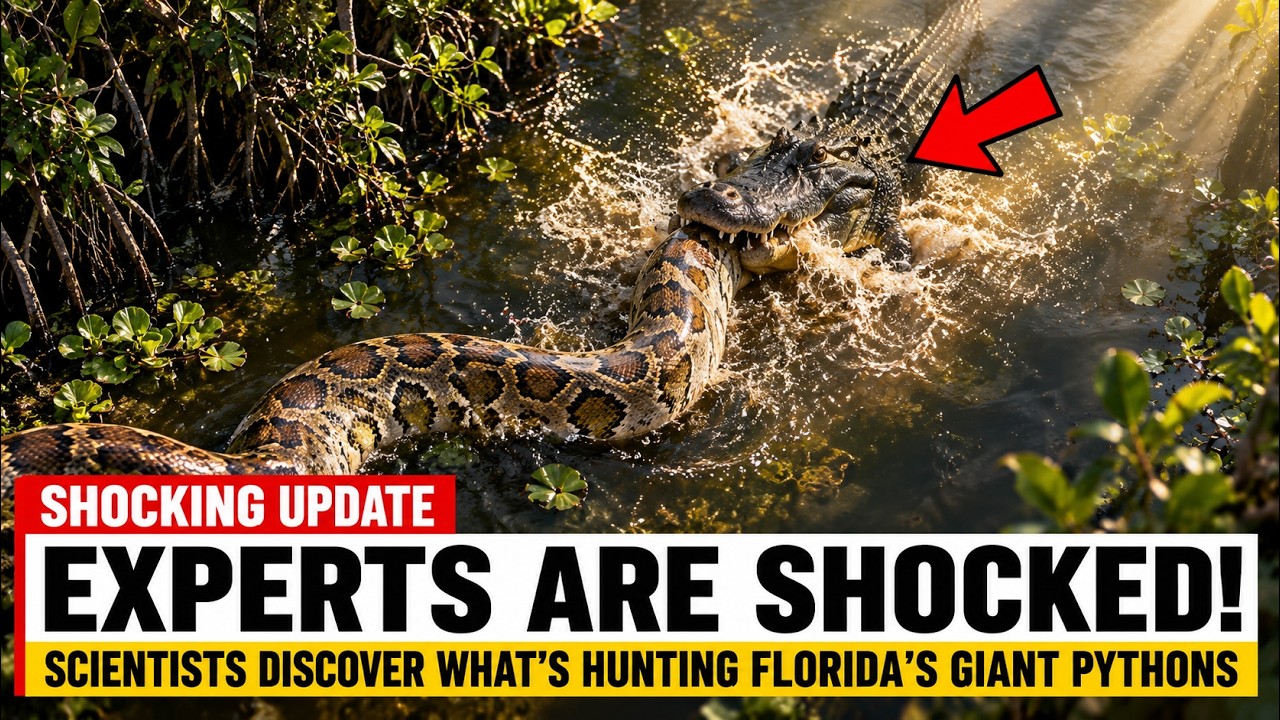
Deep in the Everglades, scientists finally identified what’s been hunting Florida’s giant pythons—and it’s not another snake. For years, massive invasive pythons have devastated local wildlife, and researchers suspected an unexpected predator was pushing back.
The Burmese python has been an established apex predator in the Florida Everglades for roughly two decades. The invasive species, which can reach lengths of 20 feet, has contributed to significant declines in native mammal populations across the wetland ecosystem.Eradication efforts have spent millions of dollars and involved thousands of hunter hours, but specialists describe the results as limit…

In Arizona, crews tore down a 96-year-old dam—and then the desert river came back to life. For nearly a century, the concrete structure had blocked the waterway, strangling the ecosystem downstream and leaving a dry, barren channel where wildlife once thrived.
A camera mounted on a rusted metal pole above a dry riverbed in Arizona recorded only cracked mud, heat, and drifting sand for years. Then, on a spring morning, it captured 14 seconds of footage showing water moving through the frame. A hydrologist reviewing the footage stopped and remained silent for nearly a minute. What had appeared in the recording was something she had never seen in that loca…

A Florida robot rabbit squad was designed for one brutal job—luring invasive pythons out of hiding—and the footage of what it triggered is genuinely terrifying. The decoy bunnies mimic real prey, moving to draw massive snakes into open ground, where the team planned to capture or cull them.
Officials in Florida have invested in a range of methods to address the population of invasive Burmese pythons in the Everglades, including an experimental effort involving robotic decoys designed to attract the snakes. The program used artificial rabbits equipped with heating elements, scent emitters, and cameras to lure pythons into monitored areas where removal teams could be dispatched.The Eve…
Beneath Lake Tahoe’s pristine blue surface, divers found something they never expected. For decades, the lake’s incredible clarity made it seem virtually untouched, a natural wonder millions visit yearly.
On September 5, 2025, a remotely operated vehicle became the first camera-equipped craft to reach the bottom of Lake Tahoe, the second-deepest lake in the United States. The vehicle, named Deep Emerald, descended roughly 1,600 feet to the lake bed and transmitted live 4K footage to researchers and more than 3,500 viewers. The dive was organized by the Restoring the Lake Depths Foundation, a small…