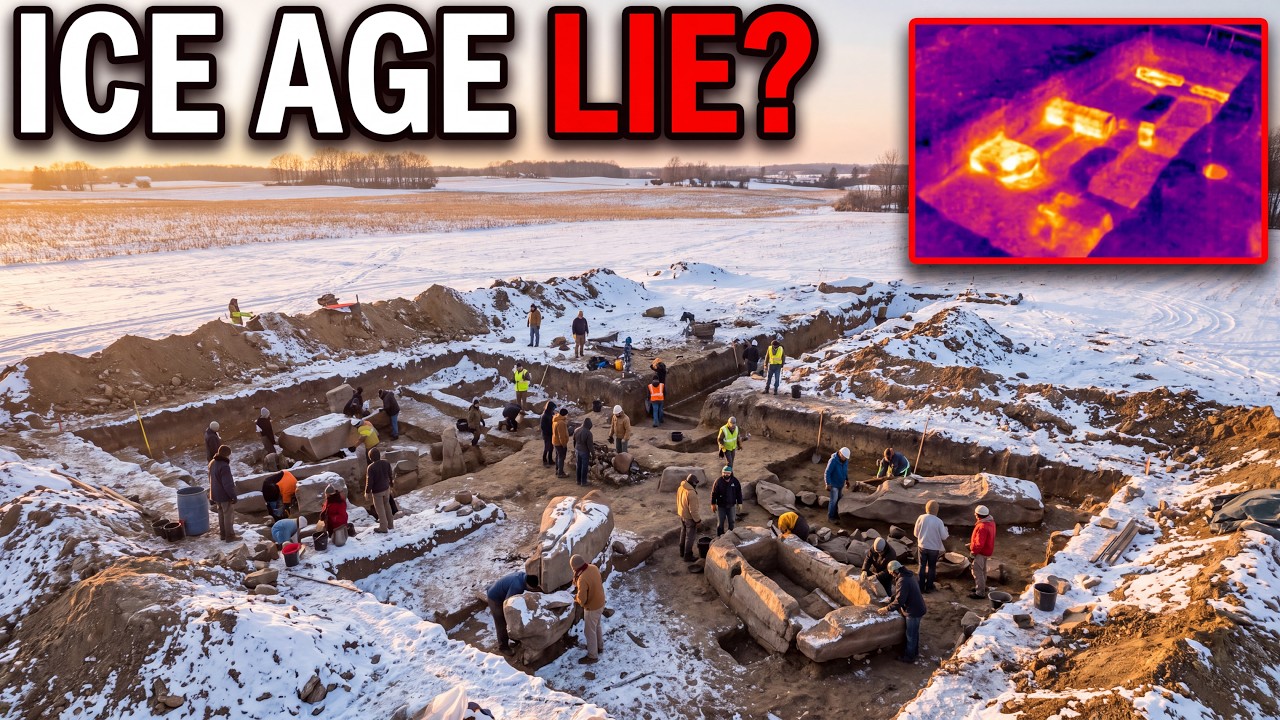
Archaeologists in Wisconsin unearthed something that doesn’t match the accepted Ice Age timeline. The discovery, pulled from layers of sediment that should remain untouched for another ten thousand years, has scientists questioning everything they assumed about when humans first arrived in North America.
In 1964, a contractor cutting a drainage ditch through a marshy field in Kenosha County, Wisconsin, struck a large bone buried in the mud. The bone was a mammoth femur, and the farmer who owned the land, Frank Schaefer, allowed a local amateur archaeologist to document the site before donating the remains to the Kenosha Public Museum. For more than two decades, the bones sat in storage as an unrem…
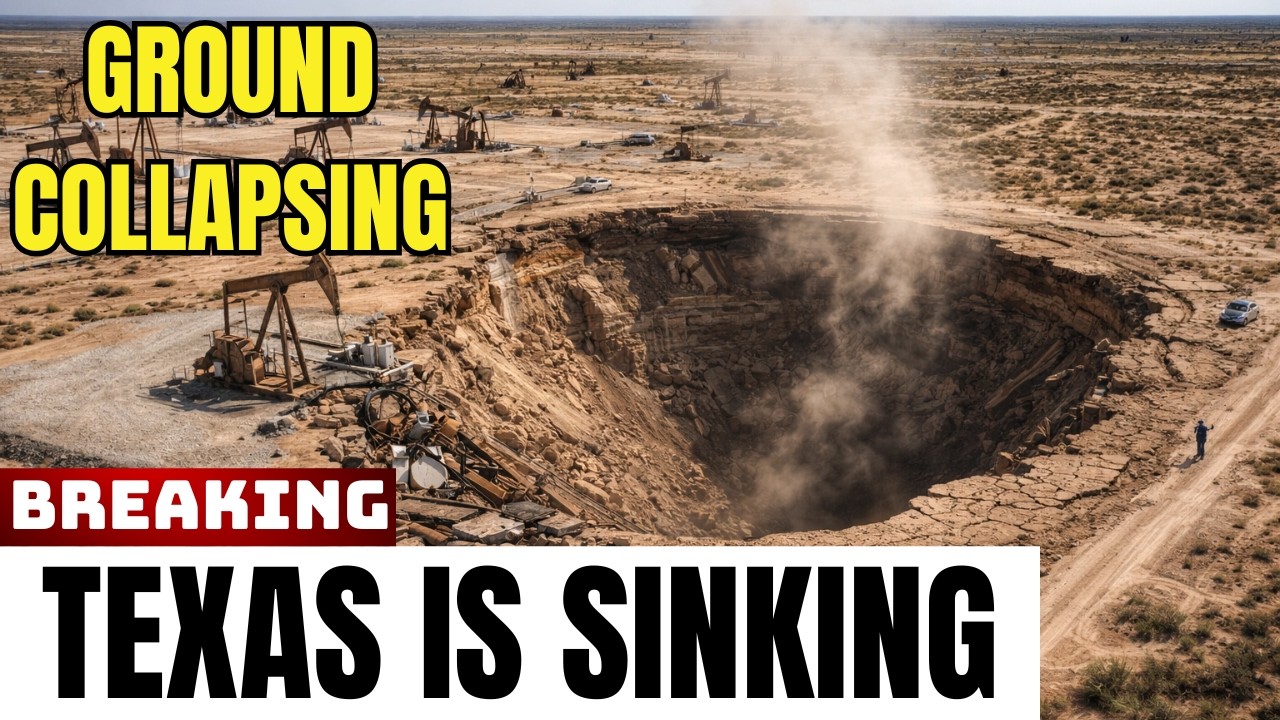
A massive sinkhole is swallowing the Texas Permian Basin, expanding over abandoned oil wells. Officials say the ground collapse has grown significantly, forcing emergency crews to secure the area as cracks spread through the region.
In early 2024, a ground deformation instrument at a monitoring station in Winkler County, Texas, recorded a sudden vertical spike after nearly 11 months of stability. No earthquake, storm, or industrial accident had been reported in the area, and surrounding sensors showed normal readings. Initially treated as a possible data error, the spike was later identified as the first indication of a broad…

They released just 30 predators into the wild—then the snakes started vanishing. Wildlife teams had spent years tracking an invasive snake population that was devastating local species, and the plan seemed straightforward: introduce a limited number of natural hunters to regain control.
In 1979, Japan released about 30 small mongooses on Amami Oshima, a remote island in the warm waters between Kyushu and Okinawa. The animals were intended to control the local population of the habu, a venomous pit viper responsible for hundreds of bites each year across the Amami Islands.The habu is a nocturnal snake that can grow past two meters. It hunts using heat-sensing pits between its eyes…

Armored catfish are vanishing from Florida’s rivers, and scientists have finally identified what’s preying on them. These invasive fish, protected by tough bony plates, seemed nearly untouchable in the state’s waterways.
For four years, Dr. Ryan Allisson had been conducting population density surveys in Florida’s Peace and Hillsborough rivers. He knew what the numbers should look like, having established the monitoring protocol himself, with fixed stations and consistent survey lines walked the same way each field season so that real changes would appear as trends rather than noise.In the winter of 2022, three sur…
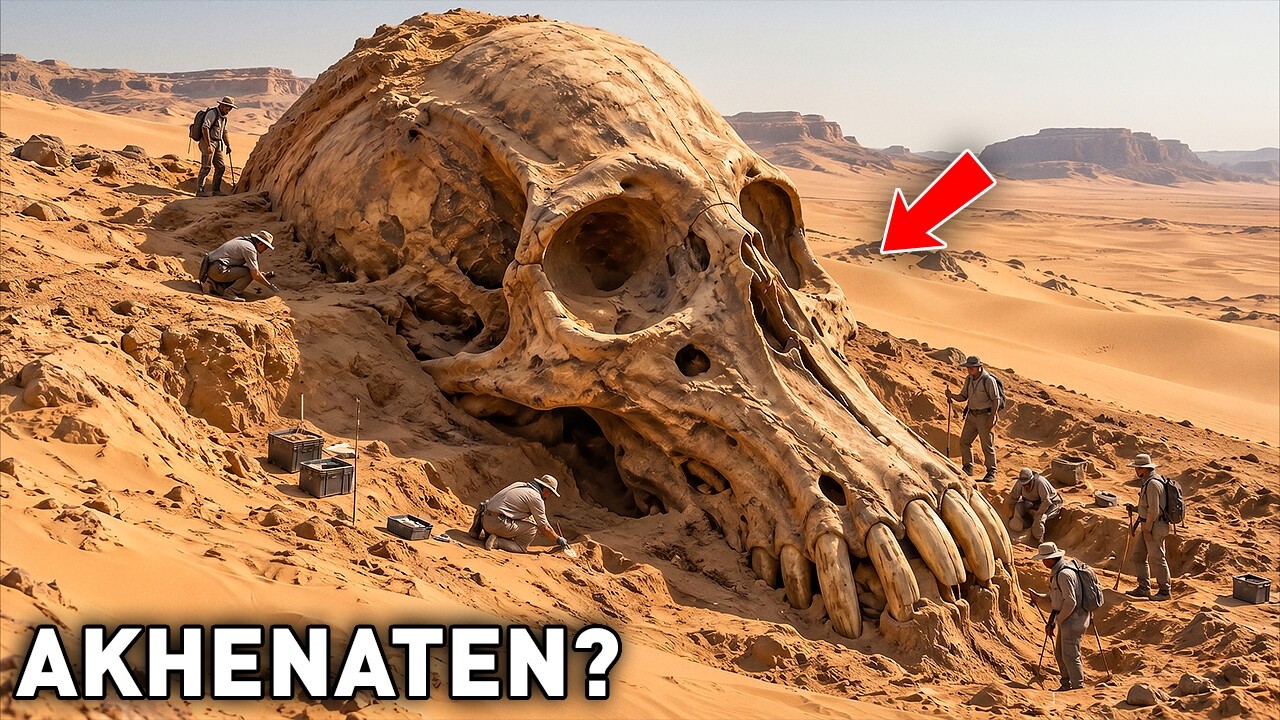
Archaeologists digging in Egypt’s desert unearthed a giant elongated skull that defies explanation. The discovery emerged from a burial site unlike anything nearby, with the strange cranium buried alone and deliberately angled.
Thousands of years ago, the Sahara Desert was not the arid expanse it is today. It was a green region with rivers, lakes, and vegetation, inhabited by pastoralist communities. Recent analysis of two mummies found in a rock shelter called Takarkori has provided new insight into how knowledge and culture spread in the ancient world.The mummies, estimated to be about 7,000 years old, belonged to wome…
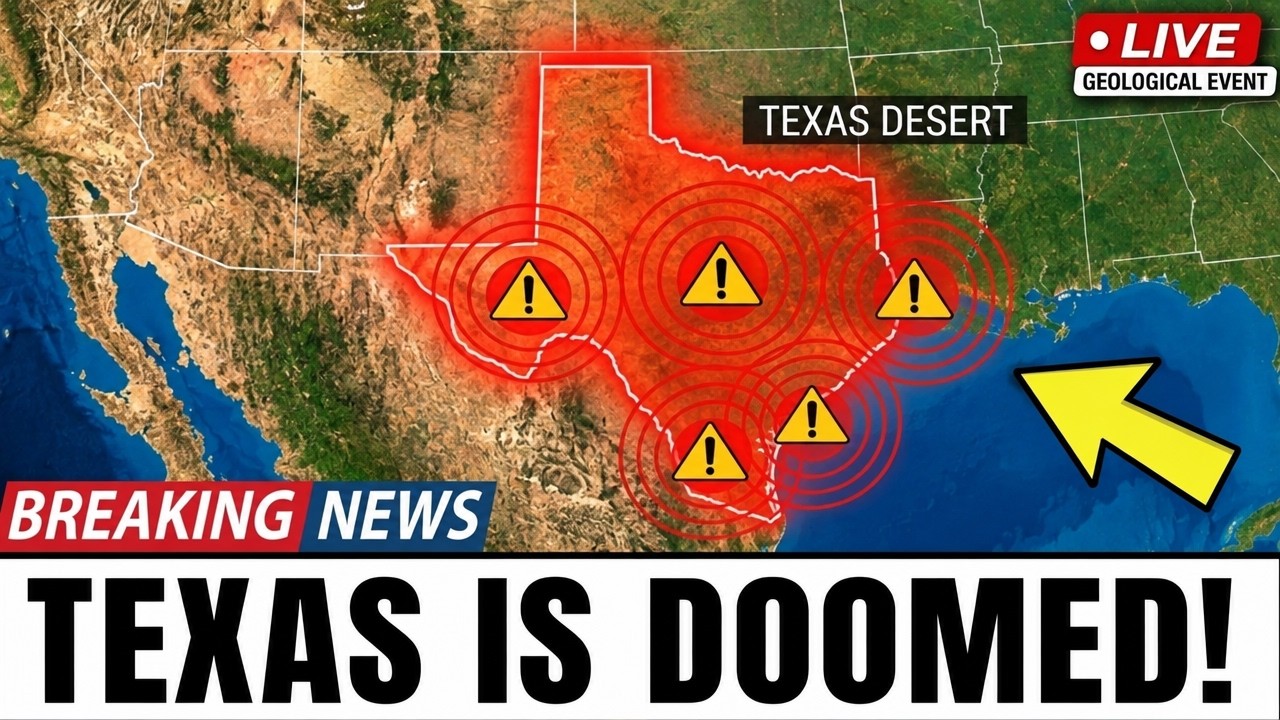
Scientists probing a remote Texas desert site expected ancient rock layers. Instead, they hit something that forces a complete rewrite of the region’s geological history.
Texas has produced a steady stream of scientific discoveries in 2025, with findings spanning archaeology, paleontology, geology, and biology. Researchers working across the state have reported results that add detail to the region’s deep history and its modern ecosystems.Archaeologists have identified a site in Texas dating back more than 13,000 years, which may predate the long-established Clovis…
Greenland’s ancient landscape just emerged from beneath the ice—frozen in time for thousands of years. What scientists uncovered beneath the melting sheet wasn’t just rock, but a startling, well-preserved world that challenges everything experts thought about the island’s history.
Researchers studying ice cores from central Greenland have identified fossilized plant and insect material buried beneath roughly three kilometers of ice, evidence that the island’s interior was ice-free at least once within the past 1.1 million years. The discovery, published in 2024 in the Proceedings of the National Academy of Sciences, suggests that the Greenland ice sheet has been less stable…
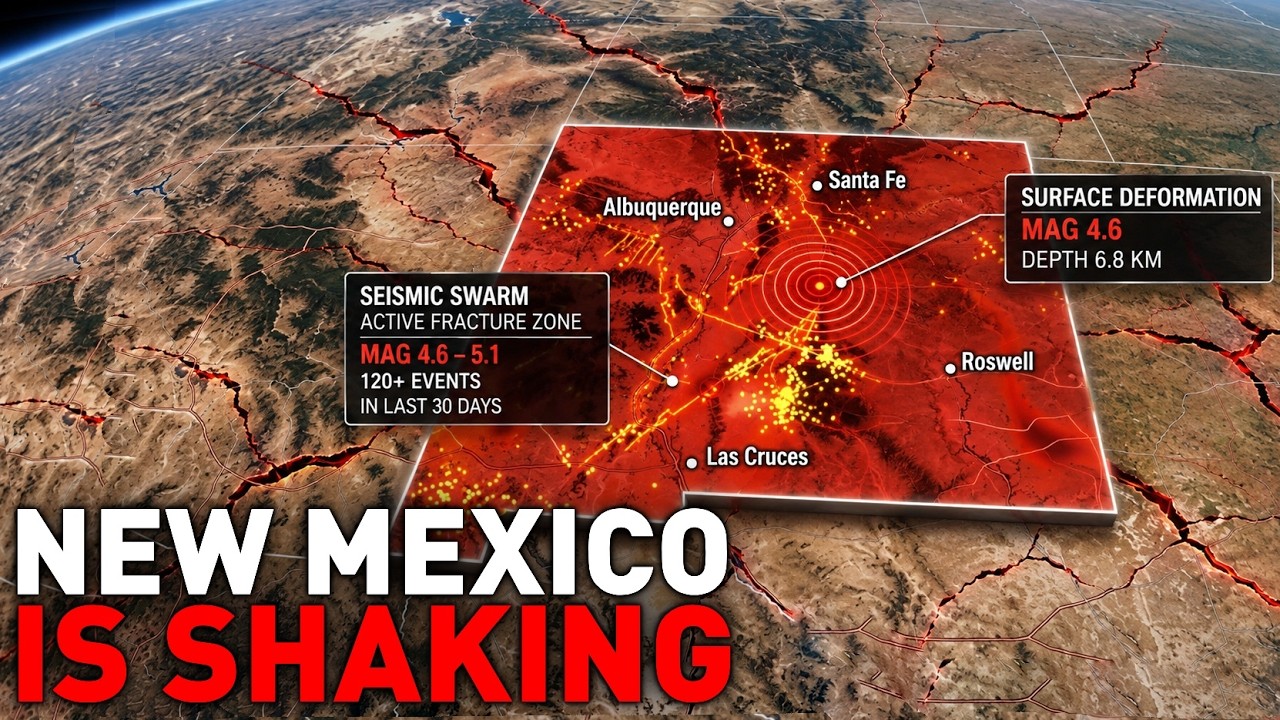
A massive anomaly just appeared beneath New Mexico, and scientists are scrambling to explain it. Ground-penetrating scans revealed a vast, unexplained structure deep below the desert surface, far larger than any known natural formation.
The ground beneath Cornwall contains more than 20,000 abandoned mine shafts, relics of the region’s 18th- and 19th-century mining boom. Many were never properly mapped or secured, and some have begun to fail. In February 2020, a section of garden in Camborne collapsed after a storm toppled a tree. The hole initially measured about three feet wide but grew over the following days to the size of a s…

Experts finally explained the Baltic Sea Anomaly—and the answer is genuinely wild. For over a decade, the strange circular object discovered deep beneath the ocean puzzled researchers worldwide, sparking theories ranging from alien technology to a lost secret military installation.
For more than a decade, every expert who examined the object resting on the floor of the Baltic Sea reached a similar conclusion after years of study. The experience reportedly unsettled them, despite their professional backgrounds. Geologists, engineers, and divers who had spent their careers interpreting underwater formations and inspecting shipwrecks could not easily categorize what they had fo…

Ten years after billions of oysters were dumped into the Chesapeake Bay, scientists returned to measure the results—and what they found completely defied expectations. The massive restoration project was launched to revive a species nearly wiped out by overfishing and pollution.
The Chesapeake Bay’s oyster population had fallen to roughly 0.3 percent of its historical levels by 2011, a decline that contributed to the collapse of the estuary’s broader ecosystem. The loss of oysters, which once filtered the bay’s water and built the structure of its floor, led to murky water, oxygen depletion, the disappearance of underwater grasses, and a sharp decline in commercial fisher…