Florida officials are using controlled burns to address the invasive Burmese python population in the Everglades, a method that has revealed the scale of the infestation while also serving as a tool to manage it. Governor Ron DeSantis discussed the state’s latest actions in Stuart, outlining plans to curb the growth of the python population in the region.
For years, Burmese pythons have been a persistent problem in the Everglades. The snakes, which are not native to the area, have thrived in the warm, wet environment, where they face no natural predators. Their presence has had a significant effect on local wildlife, with populations of mammals such as raccoons, opossums, and marsh rabbits dropping sharply in areas where pythons are established.
The use of controlled burns, also known as prescribed fires, is a long-standing land management technique. Historically, lightning strikes would naturally ignite fires in the Everglades, clearing out dead brush and preventing trees from overtaking the grassy landscape. Fire managers now conduct planned burns during the dry season, typically between December and May, when humidity and wind conditions are suitable. The burns reduce the buildup of dead vegetation, which lowers the risk of larger, uncontrolled wildfires.
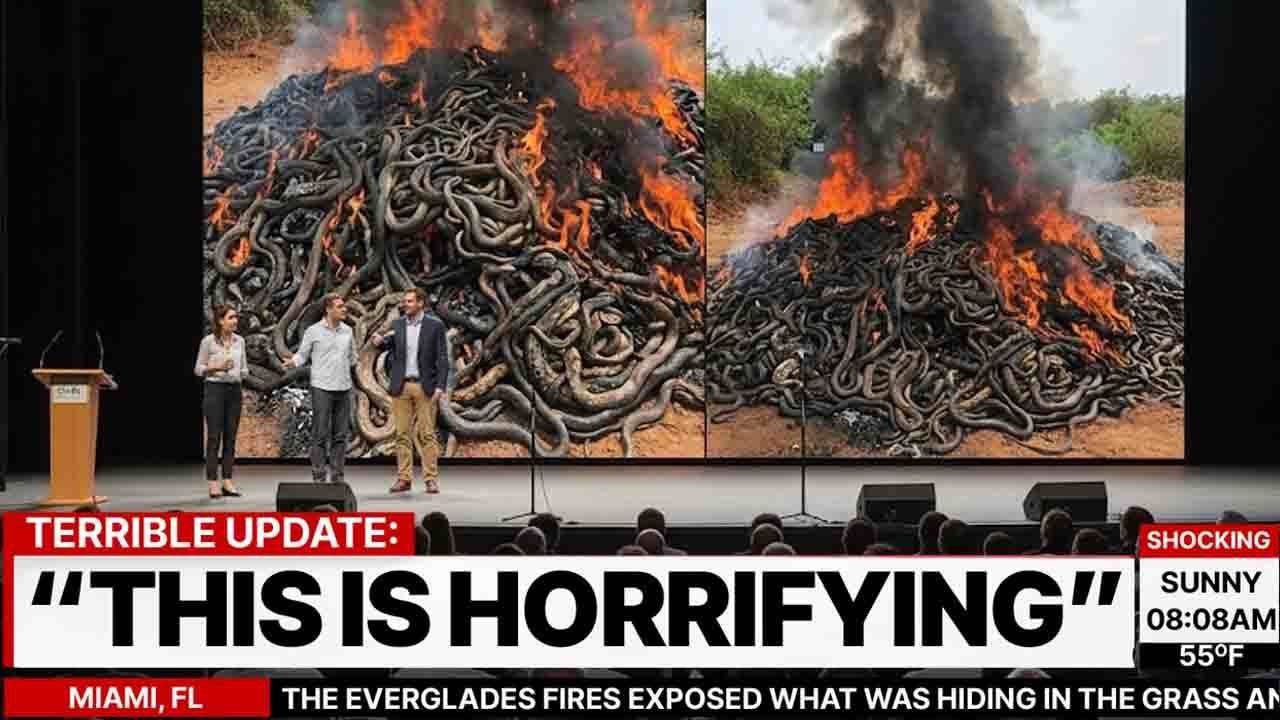
In the context of python management, the fires serve an additional purpose. The burns remove the thick layer of thatch and vegetation where pythons typically hide. Without that cover, the snakes are forced to move toward open water, tree islands, or canals, where they can be more easily spotted and removed. Land managers have observed this effect directly. During a burn in Palm Beach County in April 2025, crews reported seeing multiple snakes emerging from the burned areas as their camouflage became ineffective against the charred ground.
The scale of the burns can be substantial. Aerial ignition, involving helicopters dropping incendiary devices, allows crews to cover thousands of acres in a single afternoon. Projects such as the boundary burn have covered more than 150,000 acres. These operations also help clear out other invasive plants, such as the melaleuca tree, and can restore the natural flow of water in the region.
The origin of the python problem dates back several decades. During the 1980s and 1990s, South Florida was a hub for the exotic pet trade. Burmese pythons were sold as small, manageable pets, but they grow rapidly and can reach lengths of ten feet or more within a few years. As they became harder to care for, some owners released them into the wild. Hurricane Andrew in 1992 also contributed to the problem, as the storm damaged breeding facilities and pet shops, releasing many snakes into the surrounding environment.
Since then, the pythons have established a large and self-sustaining population. Estimates of the total number of pythons in the region range from tens of thousands to over 100,000, though no one knows the exact figure. Female pythons can lay up to 100 eggs per year, and the snakes are adaptable, having expanded from the swamps into mangrove areas and other habitats.
The presence of pythons has disrupted the natural food chain. The snakes prey on the same animals that native predators, such as the Florida panther, rely on for food. In some areas, the decline in populations of small mammals has been severe, with some species nearly disappearing from python-heavy regions.
Controlled burns are not without challenges. Fire managers must carefully time the burns to avoid conditions that are too dry or too wet. Smoke management is also a consideration, as crews aim to keep smoke away from roads and populated areas. The terrain itself poses difficulties for personnel, who navigate uneven limestone and areas where the ash can obscure hazards.
The long-term effectiveness of using controlled burns to manage the python population remains under assessment. The fires create conditions that make the snakes more visible and easier to remove, but pythons continue to reproduce and expand their range. The effort is one component of a broader set of measures the state has implemented to address the invasive species.






