In 1994, approximately 450 island foxes lived on San Miguel Island off the California coast. Five years later, only 15 remained. Graduate student Gary Roemer began finding fox carcasses on neighboring Santa Cruz Island during his research there. Over two years, he found 21 dead foxes, 19 of them with similar wounds indicating predation from above.
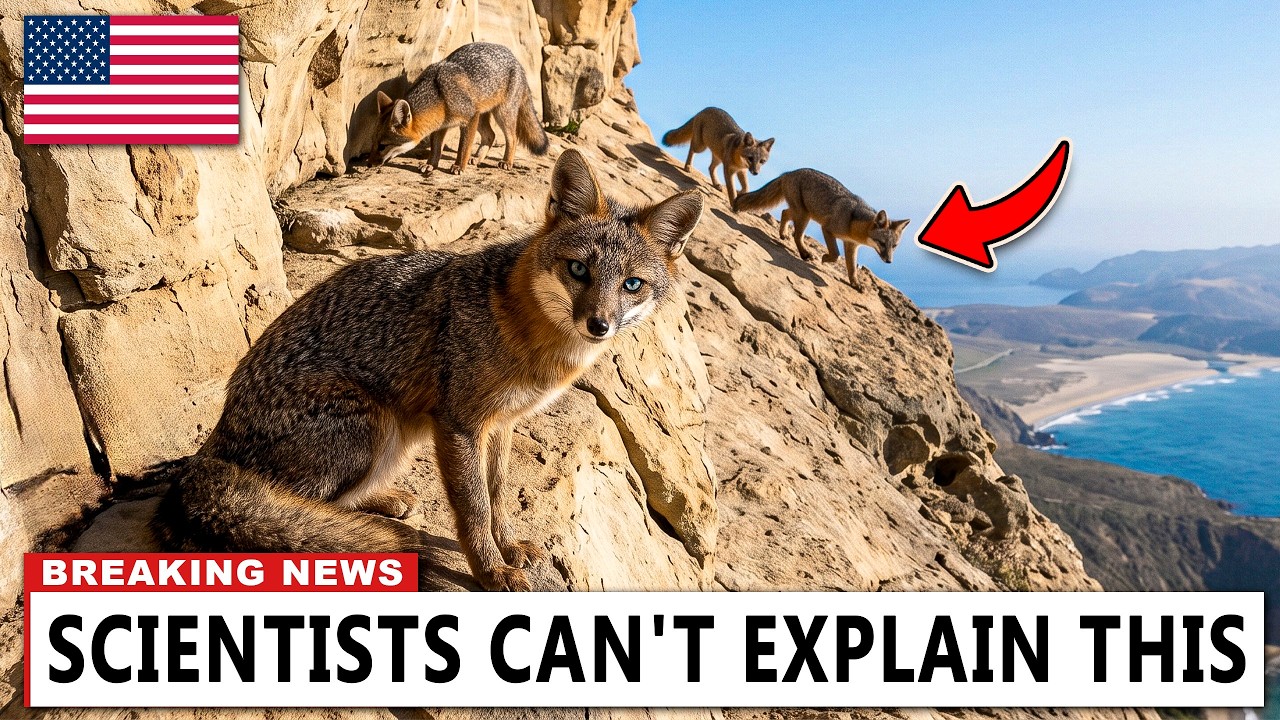
The island fox, about the size of a house cat, lives on only six islands off the California coast. It is the smallest canid in North America and had survived on the islands for roughly 6,000 years without facing aerial predators.
The chain of events began decades earlier with DDT contamination. After World War II, the Montrose Chemical Corporation dumped DDT into the ocean off California. The chemical entered the food chain through fish, and bald eagles that ate those fish produced eggs with shells too thin to survive incubation. The last successful bald eagle nesting on the northern islands occurred in 1950, and by the 1960s few bald eagles remained on the archipelago.
Bald eagles had served an important secondary function: they kept other large birds away from the islands. With bald eagles gone, the islands became accessible to golden eagles from the mainland. Feral pigs, present on Santa Cruz since 1853 and numbering in the thousands by the 1990s, provided an easy food source. Around 1994, the first golden eagle established permanent residence on Santa Cruz.
Golden eagles weigh four times as much as island foxes and can dive at high speed. Foxes that had never faced aerial predators had no defense against attacks from above.
The population decline was steep across the northern islands. On Santa Rosa, a population of nearly 2,000 foxes dropped to 15. By 2004, scientists estimated the three affected subspecies had a 50% chance of extinction.
Roemer had arrived on Santa Cruz in 1993 to study island fox behavior. In May 1994, he found the first carcass, then three more by December. After winter rains, he found three more bodies on his return. Examination of the wounds confirmed golden eagle attacks. He later noted that he spotted a golden eagle feeding on a piglet near his research site.
Meanwhile, Tim Coonan, a Channel Islands National Park biologist, noticed declining fox numbers in annual monitoring surveys on San Miguel starting in 1995. Disease tests were negative, and food was plentiful. The cause remained unclear until the fall of 1998, when he placed radio collars on foxes. Within two months, half were dead.
When Roemer and Coonan compared notes, they found the same pattern of decline occurring at similar rates on all three northern islands. The first golden eagle nest on Santa Cruz was found in 1999, containing fox remains.
The decision was made to remove every fox from the wild on the three northern islands and maintain them in captivity until the threat could be addressed. In 1999, 15 San Miguel foxes and 14 Santa Rosa foxes were brought into captivity. Fewer than 70 were captured on Santa Cruz.
Breeding in captivity presented challenges. Among the first 15 San Miguel foxes caught, only four were males. Island foxes form monogamous pairs, and matching animals in captivity was difficult with limited data. In the first breeding season, only one pair produced offspring: two pups.
Foxes in captivity faced additional difficulties, including aggression between mates, females abandoning pups, and health issues. Biologists worked in shifts through breeding seasons on the islands.
By 2003, captive populations had grown to 21 breeding pairs on Santa Rosa and 20 on San Miguel. But release was not yet possible because golden eagles remained on the islands.
Relocating golden eagles was the only legal option, as the species is federally protected. The first year of trapping produced 12 birds, more than expected. The remaining eagles became increasingly wary, and only five to eight of the wariest birds continued to evade capture. These birds continued to prey on foxes. Chicks from the last remaining nests were removed by hand.
By the end of 2003, 29 golden eagles had been relocated from Santa Cruz and two from Santa Rosa. Initial fox releases had poor outcomes. In 2002–2003, 12 foxes were released on Santa Cruz, and seven were killed by golden eagles within five weeks. In November 2003, another nine were released, and five were killed within three weeks. The surviving foxes were returned to captivity.
The remaining golden eagles stayed on the island because the pigs remained, providing a reliable food supply. Removing the pig population became necessary. The National Park Service and The Nature Conservancy contracted Prohunt Incorporated of New Zealand. The contract paid $3.9 million on the condition that every pig was eliminated by 2007. Trapping, helicopter shooting, and hunting with dogs were used. A lawsuit seeking sterilization instead of extermination was dismissed.
The last boar was shot on July 5, 2006, with 5,036 animals removed over 15 months.
Before the pigs were fully eliminated, wild fox breeding resumed. In the spring of 2004 on Santa Rosa, a pair of foxes released at the end of 2003 produced two pups, the first wild litter on the island since 2000. Coonan visited the den and observed the parents foraging with the pups in a manner consistent with normal island fox behavior.
Mass releases across all three islands took place from 2004 to 2005. Foxes were released in batches with radio collars and tracked daily. Survival rates exceeded projections, reaching 96% on Santa Cruz.
Parallel work aimed to restore bald eagles. From 2002 to 2006, 60 bald eagle chicks were released using a method called hacking, where young birds were placed in open cages on cliffs and left to fledge on their own. Satellite tracking showed birds ranging from British Columbia to San Diego.
In 2006, a pair on Santa Cruz produced the first natural clutch of bald eagle eggs in over 50 years. Those eggs did not hatch due to residual DDT in the female’s system. Biologists removed the eggs, incubated them artificially, and returned the chick to the nest. In 2007, the same pair nested again, and the egg hatched naturally, demonstrating that bald eagles could reproduce despite DDT still present in the food chain.
The chick was designated A49. Four years later, it returned to Santa Cruz and nested on its own. As of 2012, the islands hosted between 60 and 70 bald eagles and 15 active breeding pairs.
Fox populations recovered as well. By 2012, Santa Cruz had over 1,300 foxes, San Miguel around 500, and Santa Rosa over 600. The last breeding pair of golden eagles was relocated in 2006, and satellite transmitters on 12 relocated birds confirmed none returned.
On August 11, 2016, the U.S. Fish and Wildlife Service removed all three island fox subspecies from the endangered species list, 12 years after they were listed. This is the fastest mammal recovery in the 43-year history of the Endangered Species Act.
Coonan acknowledged the speed of the recovery, noting that no one expected full recovery in such a short time.
Several questions about the approach have been raised over the years. Golden eagles were relocated rather than killed because they are protected. Removing all foxes from the wild was necessary because leaving them in place would have meant continued losses. Eliminating the pig population entirely was required because control measures would not have removed the steady food source for golden eagles.
The bald eagle program appears to have kept golden eagles from reestablishing, as the northern islands had at least six active bald eagle nests and no resident golden eagles as of 2016.
Monitoring continues because the threat could recur. Foxes are trapped, checked, vaccinated, and released annually. The program is overseen by Coonan, who now leads Friends of the Island Fox.
Recovery has been slower on Santa Catalina Island, where the fox population was severely reduced by canine distemper introduced by domestic dogs in 2000. That population remains listed as vulnerable, and researchers continue to study why recovery has differed there.
More than 5,000 island foxes now live across the six islands. On Santa Cruz, foxes can often be seen near the ferry landing at Scorpion Anchorage, going about their business as visitors pass.






