
AI decoded the hieroglyphs inside the Great Pyramid—and found what looks like a warning. The carvings, long dismissed as simple religious text, were re-analyzed by a machine-learning model that flagged a hidden, repetitive phrase.
The Great Pyramid of Giza has stood in silence for over 4,500 years. Inside its largest chamber, a granite box without a lid rests in darkness. No inscriptions cover the walls. No carvings depict gods or guide a dead king toward the afterlife. Every other royal tomb in Egypt is covered in texts and artwork. The Great Pyramid, the most precisely built structure of the ancient world, contains none.F…
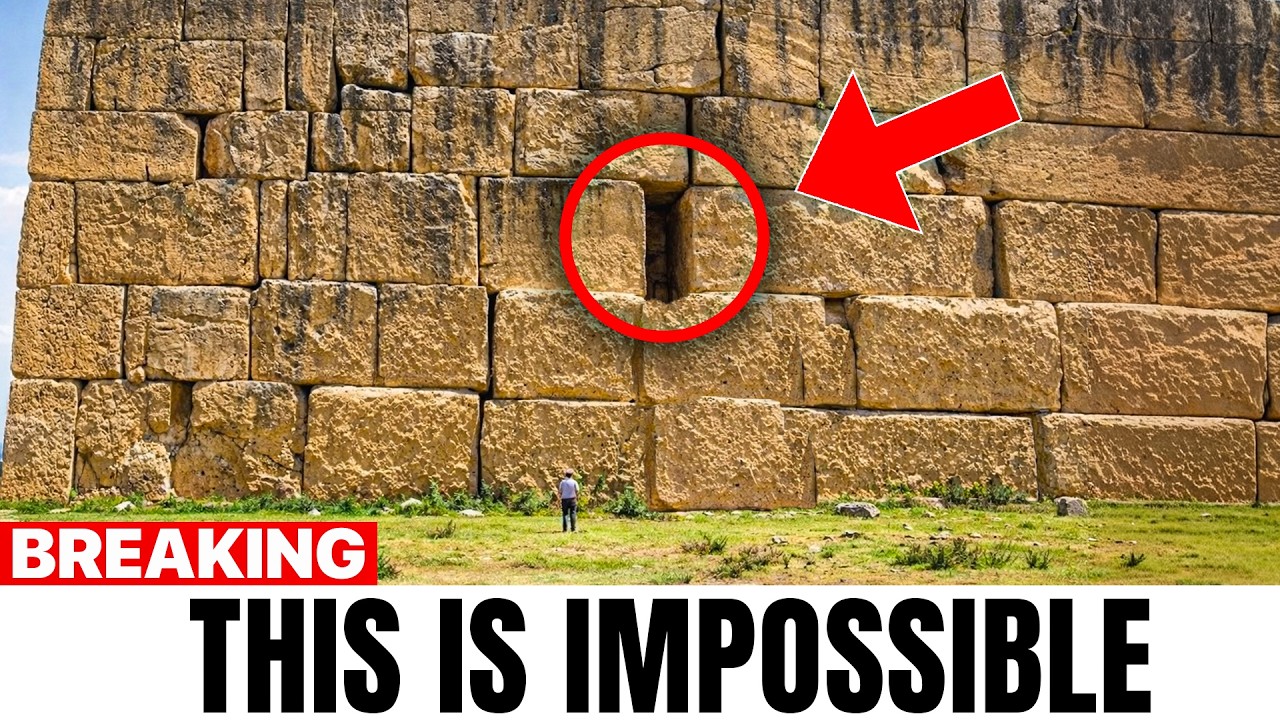
Baalbek’s colossal stones have baffled engineers for centuries, yet new analysis just upended the leading explanation. The famed 1,000-ton blocks at the ancient temple site were long thought to have been dragged by massive Roman labor, but researchers now point to a detail that contradicts the entire theory.
The temple complex at Baalbek in Lebanon contains the largest stone blocks ever quarried in human history. Three stones known as the trilithon form part of the foundation platform, each roughly 19 meters long, 4 meters high, and 3.5 meters thick, weighing between 750 and 800 tons. They are fitted together with gaps so narrow that a sheet of paper cannot pass between them.For comparison, the heavie…

Fragments of enormous pyramid-like structures resting on the Mediterranean floor are shaking the foundations of archaeology. Sonar scans first hinted at geometric anomalies at depths no civilization was supposed to have built at, dating back thousands of years before accepted timelines.
Robert Sarmast spent years searching for Atlantis, a pursuit that generally drew skepticism from the scientific community. Recently, however, he applied artificial intelligence to analyze seafloor data between Cyprus and Syria and identified a series of geometric structures that he cannot explain.The structures sit on the floor of the Mediterranean Sea. They include two triangular mounds that appe…

Grok AI finally revealed a startling explanation for how ancient Egyptians cut granite—and the evidence is turning the history of engineering upside down. The claim centers on a tool that early Egyptologists once dismissed as myth, yet new analysis of quarry marks appears to align perfectly with its unusual cutting pattern.
For over a century, archaeologists have told a consistent story about how the ancient Egyptians cut granite. Workers kneeled in narrow trenches, hammering one of the hardest rocks on Earth with dolerite balls, repeating the motion hundreds of thousands of times until the stone gave way. Every engineer or stonecutter who examined the actual marks in the Aswan quarries recognized a problem with this…
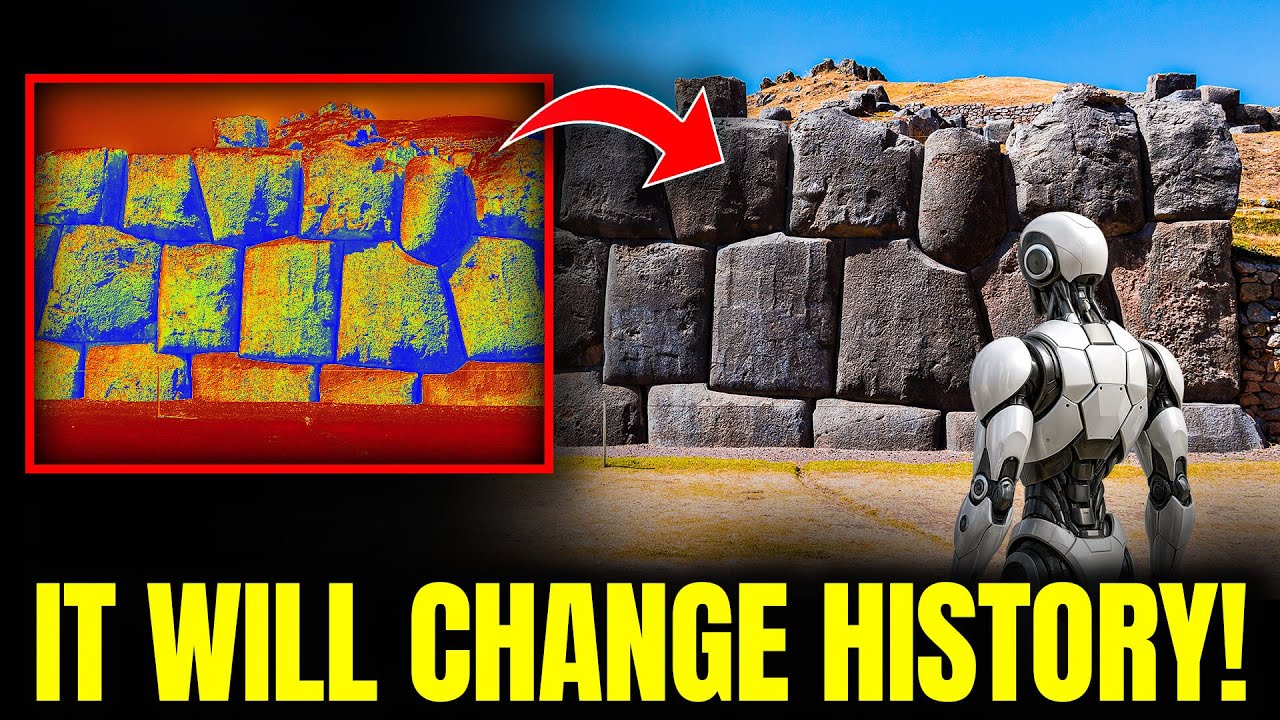
AI scanned Peru’s megalithic ruins and the findings left scientists stunned. For decades, researchers assumed the massive stone walls of sites like Sacsayhuamán were carved and fitted purely by manual labor.
Researchers using artificial intelligence have identified more than 300 previously unknown geoglyphs in Peru’s Nazca Desert, doubling the number of known symbols and raising new questions about the ancient culture that created them.The project, led by scientists from Japan’s Yamagata University, used machine learning algorithms trained on satellite imagery to detect subtle variations in soil color…
Archaeologists unearthed something in America that doesn’t match human history, igniting a fierce debate. The discovery surfaced at a site long studied by experts, who assumed they understood its timeline.
Archaeologists in Peru have confirmed that the ancient city of Caral, located in the Huaura province north of Lima, was part of the oldest known civilization in the Americas. The site, abandoned more than 3,000 years ago, has been the subject of extensive excavation and conservation work over the past eight years, leading to new insights into its history and purpose.Caral was a central hub of the…
Wissenschaftler glauben, endlich Ägyptens Geheimnis zum Schneiden von Granit gelöst zu haben — und die Theorie wirft Fragen auf, die alles bisher Bekannte in Frage stellen. Historiker rätselten jahrzehntelang, wie die massiven Steinblöcke ohne moderne Maschinen so präzise bearbeitet wurden.
Die ägyptische Granitverarbeitung fasziniert Forscher seit Jahrzehnten. Vor allem die Frage, wie die Handwerker vor über 4000 Jahren mit Kupfer, Bronze, Sand und Stein unbearbeitbare Gesteine wie Granit so präzise bearbeiten konnten, beschäftigt die Wissenschaft bis heute. Die Steinoberflächen sind regelmäßig und glatt, teils spiegeln sie das Licht zurück. Einige Wissenschaftler sehen Ähnlichkeite…

Ancient Egyptians just revealed how they cut granite, and the method challenges everything we thought we knew. For decades, experts assumed massive stone blocks were shaped with copper tools and brute force.
Workers serving the pharaoh Djoser were nearing completion of one of the largest construction projects of the ancient world: a pyramid. A single discovery has led to the collapse of decades of academic dismissal. For years, researchers such as Graham Hancock were ridiculed for suggesting that ancient peoples possessed advanced technology. However, new surveys of drill cores taken from ancient site…
Scientists investigating Göbekli Tepe have uncovered a discovery that has archaeologists stunned, forcing a rethink of what we know about ancient human civilization. The massive stone pillars, dating back over 11,000 years, were long believed to be a simple ceremonial site built by hunter-gatherers.
Göbekli Tepe, a Neolithic site in southeastern Turkey, has been the subject of intense archaeological study since its discovery in the 1990s. While mainstream archaeology regards it as a major ceremonial center built by hunter-gatherers, some researchers have proposed alternative interpretations involving a hidden underground chamber. Recent excavations beneath the main enclosure have reportedly u…
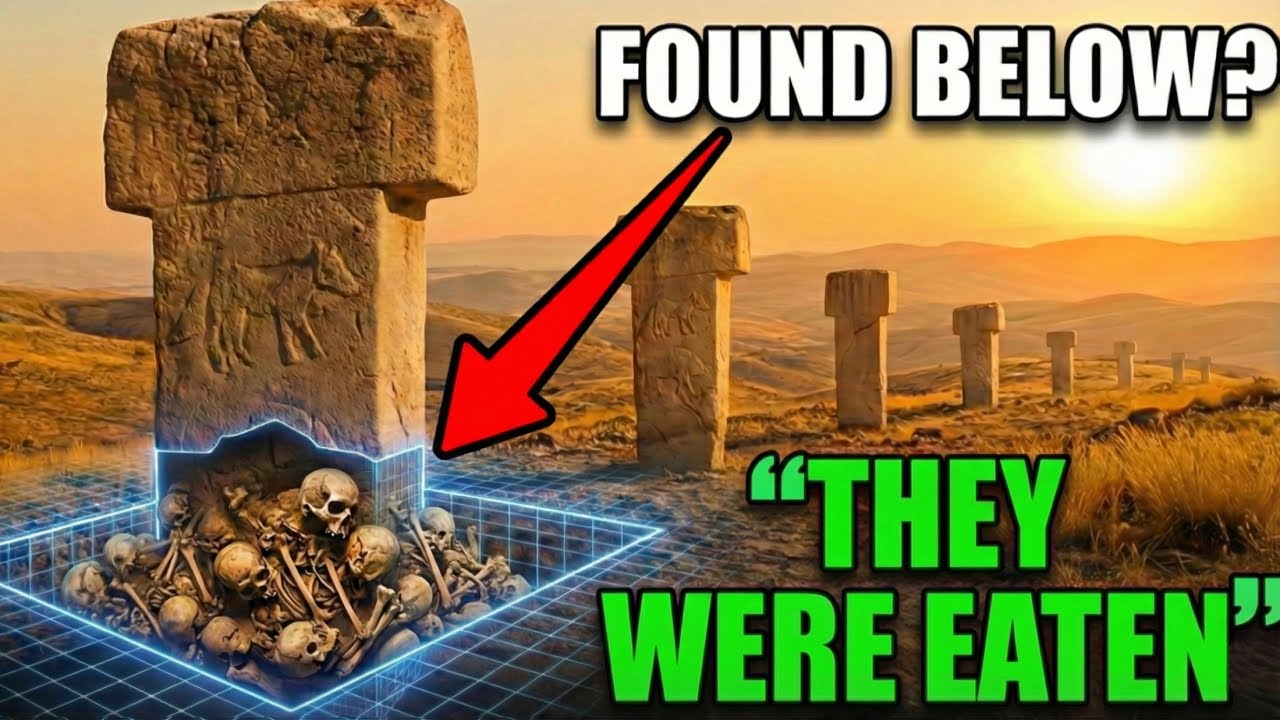
AI 3D-scans finally exposed Göbekli Tepe’s underground anomaly, and the truth is horrifying. For decades, researchers believed the 12,000-year-old site was simply a ritual center, its famous T-shaped pillars carved by early farmers.
Ground-penetrating radar surveys at Göbekli Tepe, the ancient stone complex in southeastern Turkey, have identified a large engineered void beneath one of its main enclosures. The space, roughly eight meters long and four meters wide, sits below the site’s central pillars and appears to have been deliberately carved into the bedrock rather than formed by natural processes.The scans also detected o…