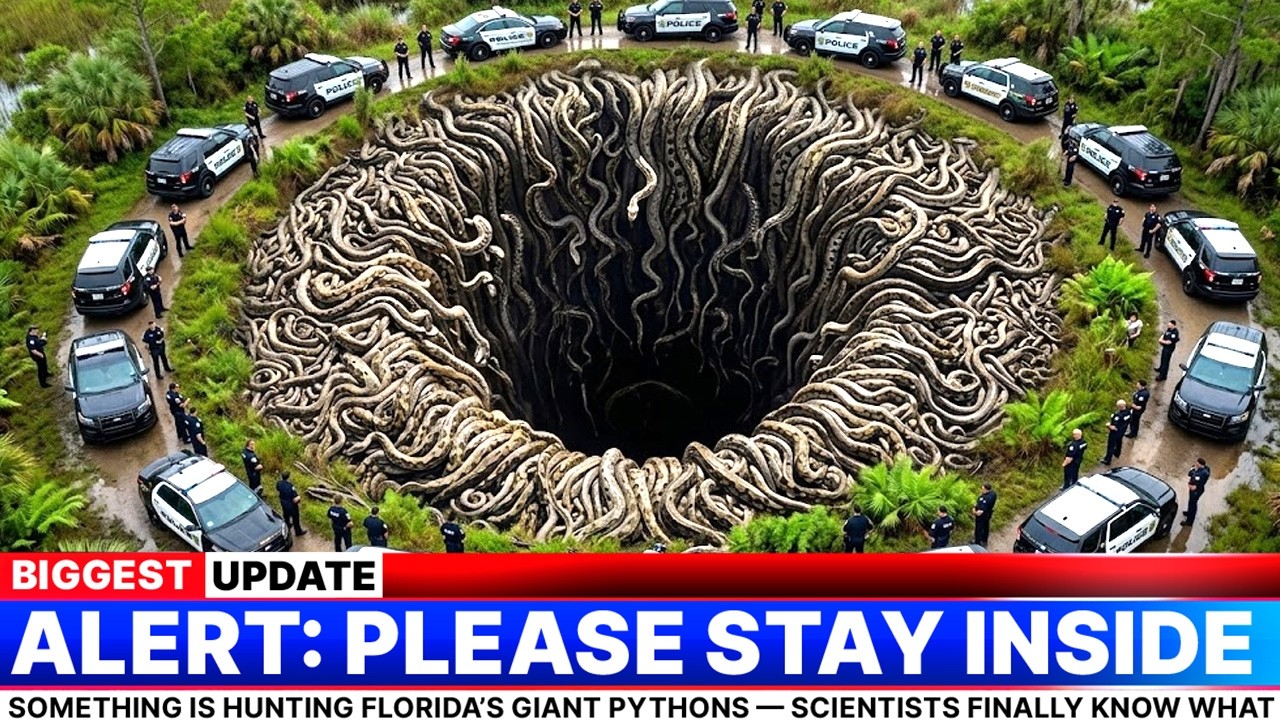
Florida’s invasive giant python population has been under attack—and scientists say a surprising hunter is responsible. Officials have tracked something killing massive pythons, leaving their bodies in ways no predator was expected to manage.
The population of Burmese pythons in the Florida Everglades has declined significantly in recent years. Governor Ron DeSantis attributed this reduction to a partnership with a Miami-based company that manufactures clothing and accessories from python skin. The pythons, an invasive species native to Southeast Asia, have caused extensive damage to the ecosystem of South Florida over the past four de…

The Everglades fires didn’t just scorch the grass—they dragged something hidden into the open, and it wasn’t only the snakes that had everyone talking. As flames tore through the dry marshland, authorities moved in expecting routine wildlife rescues, but what they started finding beneath the ash and smoke shifted the entire operation into something far more serious.
In 2011, researchers in the Florida Everglades found a 15-foot Burmese python that had consumed an 80-pound deer. While alligators are often considered the primary danger in Florida swamps, Burmese pythons have become a significant threat to mammal populations in the region. Since 2000, Florida has removed more than 23,000 of these snakes from the wild, and a single female can lay up to 100 eggs a…
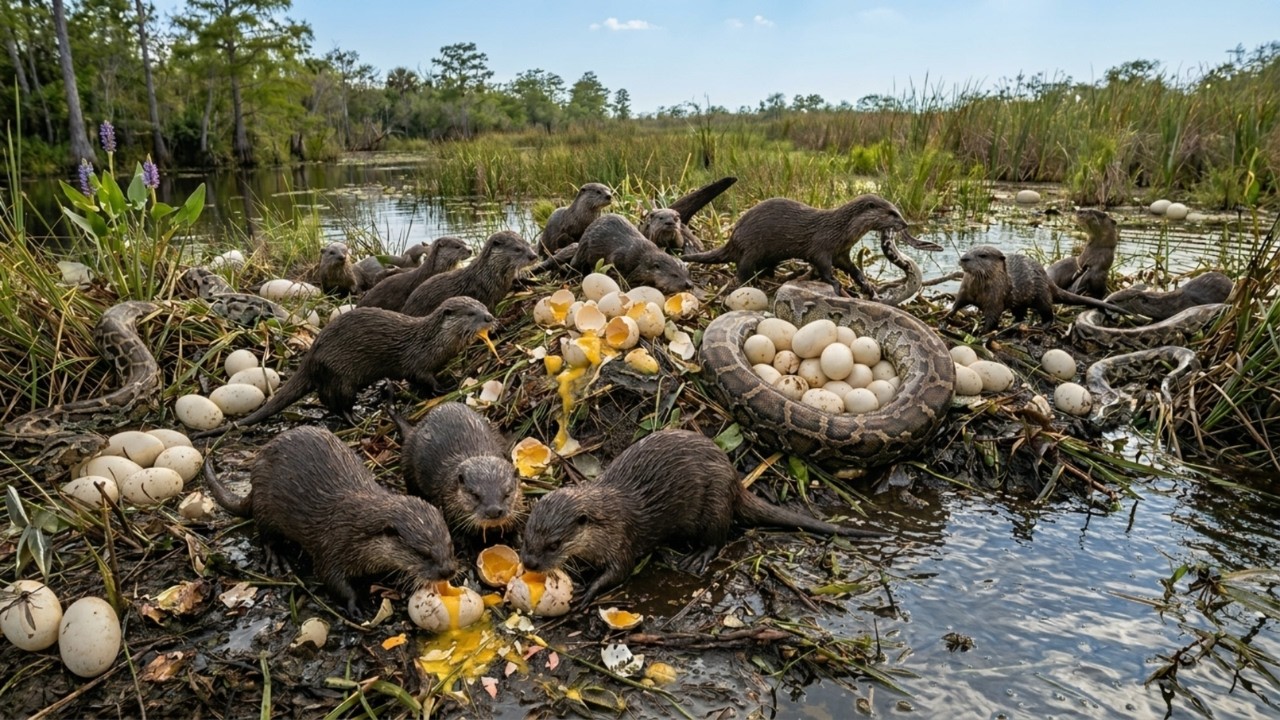
Scientists are watching Florida’s Burmese python nests vanish at an alarming rate, and the culprit isn’t what anyone expected. These massive invasive snakes, already notorious for devastating local wildlife, are suddenly seeing their eggs disappear before they can hatch.
A python nest camera deployed in the Loxahatchee River corridor of the Florida Everglades recorded 37 hours of footage during a single incubation window before the monitoring team reviewed it. The nest had been flagged six days earlier when a transmitter signal stopped moving in open water habitat where no python had previously remained stationary for that long. A graduate researcher pulled the fo…
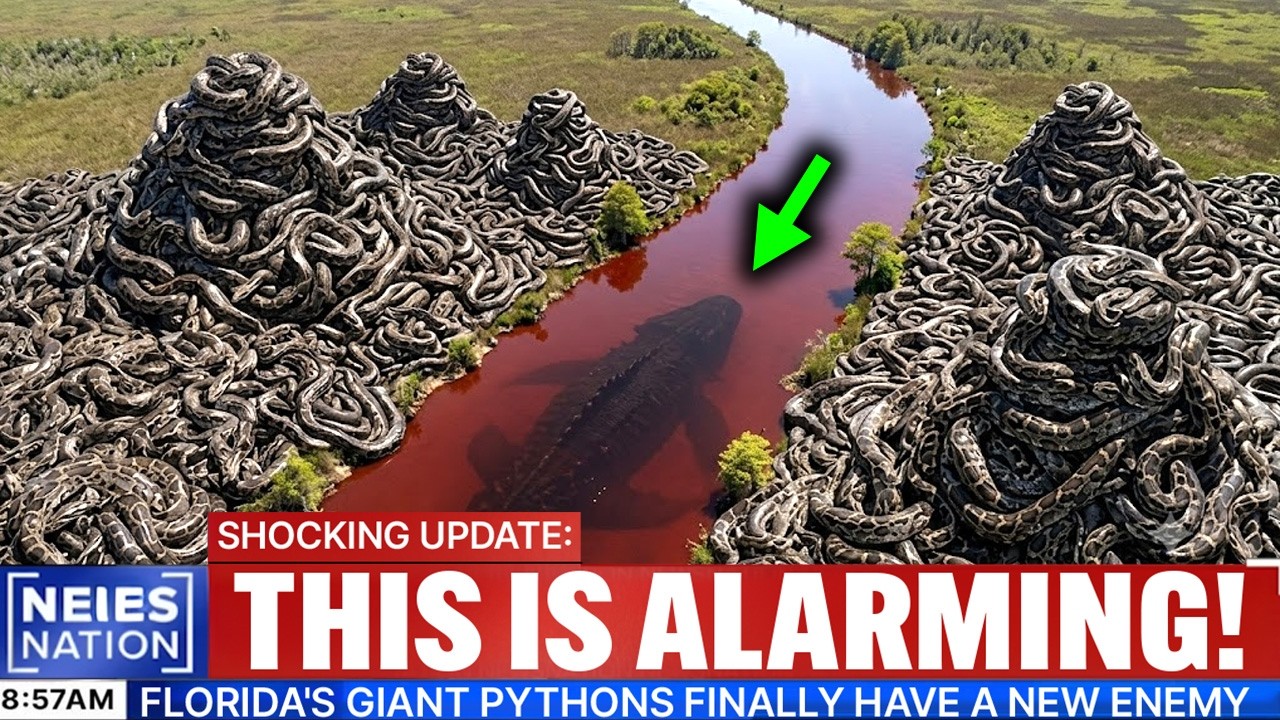
Invasive Burmese pythons have terrorized Florida’s Everglades for decades, wiping out mammals and baffling experts. Now, officials have unveiled a surprisingly simple new weapon against the massive snakes, which can grow over twenty feet long.
The Everglades in Florida have seen a significant decline in wildlife over the past two decades, a period during which the Burmese python has become a dominant invasive species. The large constrictor snakes, which can weigh nearly 90 kilograms and exceed six meters in length, have been linked to a reduction of over 90 percent of small and medium-sized mammals in certain marsh areas. For a long tim…

Texas officials are sounding the alarm over seven invasive animals they say must be eliminated at all costs, warning the threat is far worse than most residents realize. The list includes species that devastate crops, outcompete native wildlife, and in some cases pose direct dangers to pets and even children.
Texas faces a significant ecological and economic challenge from a range of invasive species that have established themselves across the state. These organisms, introduced through trade, travel, and changing climate conditions, are causing damage to agriculture, native wildlife, and public health. The following is a summary of seven species of particular concern to Texas officials and researchers….

The leaked footage from Florida’s swamps is being called “bad news” by experts, but the horrifying aftermath it reveals is only the beginning of the story. The video, reportedly recorded by a local, shows a scene that has stunned wildlife officials as they assess the damage.
Burmese pythons have caused a severe decline in native wildlife across the Florida Everglades, with recent data showing that mammal populations in the southern region have dropped dramatically. Raccoon numbers have fallen by more than 99 percent, opossums by nearly 99 percent, and marsh rabbits have disappeared from areas where they were once common. Bobcats have declined by approximately 87 perce…

After Florida drained a wetland, biologists made a baffling discovery deep in the exposed muck. The massive project, designed to reshape the landscape, revealed something they never expected lurking beneath the surface.
A recent drawdown at Stormwater Treatment Area 1 West in South Florida gave biologists an unusually clear look at the ecological state of the wetlands. When water levels were lowered for routine maintenance, the exposed marsh revealed a larger presence of invasive fish than researchers had anticipated. Among the native largemouth bass and bluegill, teams found significant pockets of armored catfis…
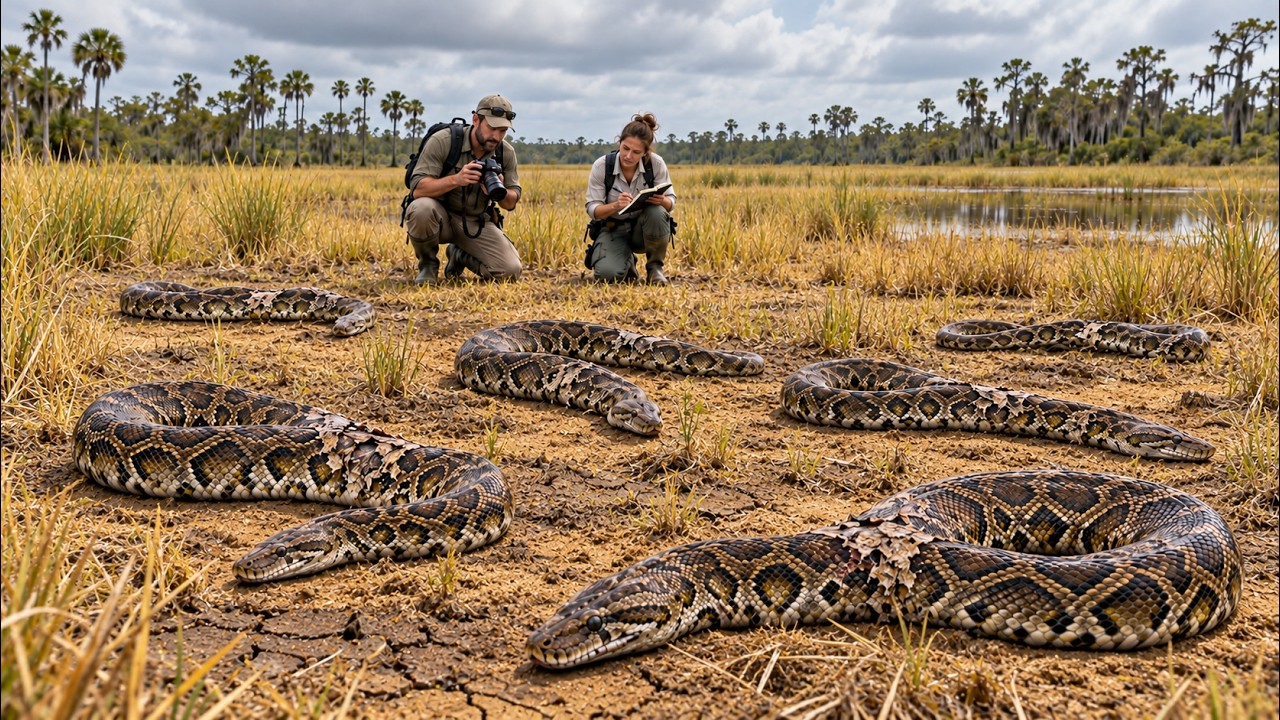
Ein neuer Gegner der Burma-Pythons in Florida ist aufgetaucht – und er ist winzig. Während die invasiven Schlangen jahrzehntelang die Everglades beherrschten, entdeckten Forscher nun überraschend einen Räuber, der deutlich kleiner ist als seine Beute.
In den Sümpfen Südfloridas hat sich eine invasive Schlangenart in den vergangenen Jahrzehnten stark ausgebreitet. Bermudadschungel, wie er in Teilen der Region vorkommt, bietet den Tieren nahezu ideale Lebensbedingungen. Die Tiere, die ursprünglich aus Südostasien stammen, haben sich in dem neuen Lebensraum etabliert und beeinflussen das Ökosystem erheblich.Die Ausbreitung begann nicht erst in den…
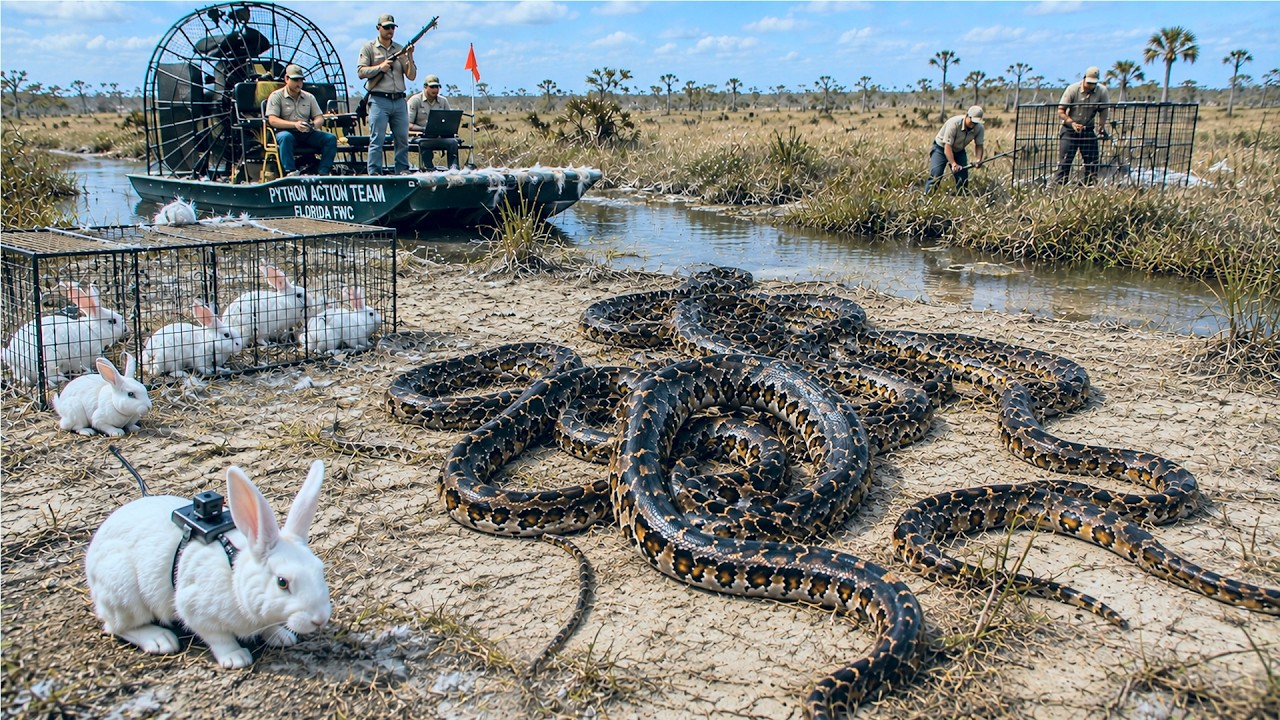
Um 2 Uhr nachts verschwindet das Signal einer besenderten Burma-Python in den Everglades. Biologen finden den 40 Kilo schweren Körper — doch der Kopf fehlt komplett, ohne Kampfspuren.
Im 2 Uhr nachts im Februar 2024 verschwand das Ortungssignal einer mit einem Sender versehenen Burma-Python in den Everglades von Florida. Als Biologen den Ort erreichten, fanden sie den Körper des rund 40 Kilogramm schweren und viereinhalb Meter langen Tieres. Der Rumpf war unversehrt, der Kopf fehlte jedoch vollständig. Es gab weder Anzeichen eines Kampfes noch eine längere Blutspur. Der Kadaver…
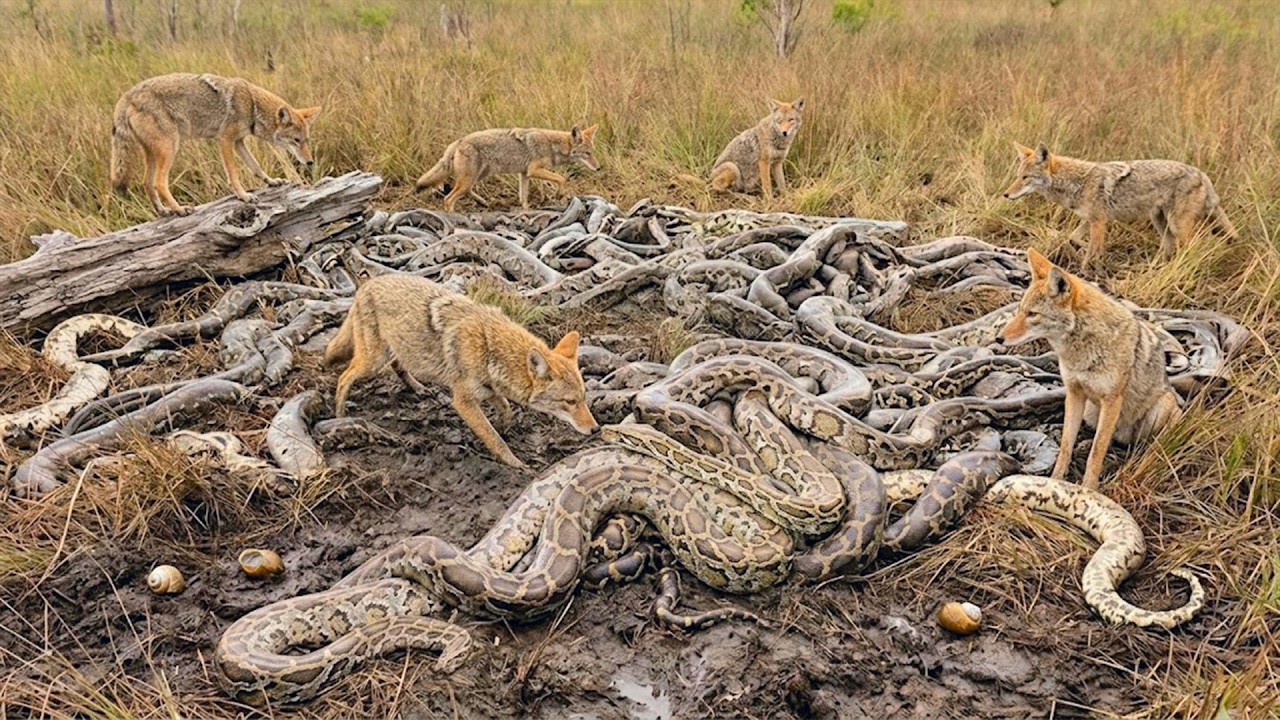
In den Sümpfen Floridas entdeckten Forscher eine Burma-Python – fünf Meter lang, Körper unversehrt, aber der Kopf fehlte vollständig. Der Schnitt war präzise, stammte weder von Menschen noch von Alligatoren, und es gab keine Kampfspuren.
In den Sümpfen Floridas registrierten Forscher ein ungewöhnliches GPS-Signal. Eine mit einem Sender versehene Burma-Python blieb 48 Stunden lang an derselben Stelle. Als das Team den Standort durch dichtes Schilf erreichte, fand es die etwa fünf Meter lange Schlange reglos vor. Ihr Körper war unversehrt, wies aber einen auffälligen Befund auf: Der Kopf fehlte vollständig. Es gab keine Hinweise auf…