Something Is Hunting Florida’s Giant Pythons — Scientists Finally Know What. Researchers tracking the massive invasive snakes in the Everglades noticed something strange: the predators themselves were disappearing.
Burmese python numbers in the Florida Everglades have declined significantly. Governor Ron DeSantis attributed this decline to a partnership with a Miami-based company that manufactures clothing and accessories from python leather. Invasive pythons have caused extensive damage to the South Florida ecosystem, and experts say the snakes continue to expand their range northward.For forty years, the g…
Florida’s new snake killer swapped guns for a far more personal method with pythons, and wildlife officials are already alarmed. The hunter began abandoning lethal tactics entirely, instead tracking massive invasive snakes deep into the Everglades to handle them live.
Florida’s Everglades are home to an estimated 300,000 Burmese pythons, an invasive species that has significantly reduced populations of native mammals such as raccoons, opossums, and marsh rabbits. However, in Big Cypress National Preserve, some young pythons are being killed by native predators, including alligators, cottonmouths, and other mammals.One notable case involved a juvenile python tha…

They released just 30 predators onto the island, then the snakes started vanishing. Wildlife teams had spent years battling an invasive serpent plague that was devastating native birds, so the plan seemed bold but logical.
In 1979, Japan released approximately 30 small carnivores on a remote island with the intention of controlling a venomous snake population. The animals were mongooses, known for their speed and partial resistance to snake venom. The plan appeared to work initially, as snakebite rates declined in the years that followed. However, the mongooses were not responsible for the reduction.The island in qu…
A hungry predator is devouring Florida’s invasive pythons on camera. Wildlife officials hoped this natural hunter could curb the snake explosion devastating local mammals, but the captured footage reveals something far more unsettling.
In southwest Florida, biologists tracking Burmese pythons have found that some hatchlings are being eaten by native predators, including a species researchers did not initially expect. Radio-tagged pythons have been located inside the digestive tracts of Florida cottonmouths, confirming that at least one native snake is capable of preying on the invasive species.The findings emerged from studies i…

The Everglades fires cut through the tall grass, and what surfaced was far more unsettling than snakes. As flames swept the marsh, responders found charred remnants in the ash, objects that did not belong in a natural landscape.
Florida officials are using controlled burns to address the invasive Burmese python population in the Everglades, a method that has revealed the scale of the infestation while also serving as a tool to manage it. Governor Ron DeSantis discussed the state’s latest actions in Stuart, outlining plans to curb the growth of the python population in the region.For years, Burmese pythons have been a pers…
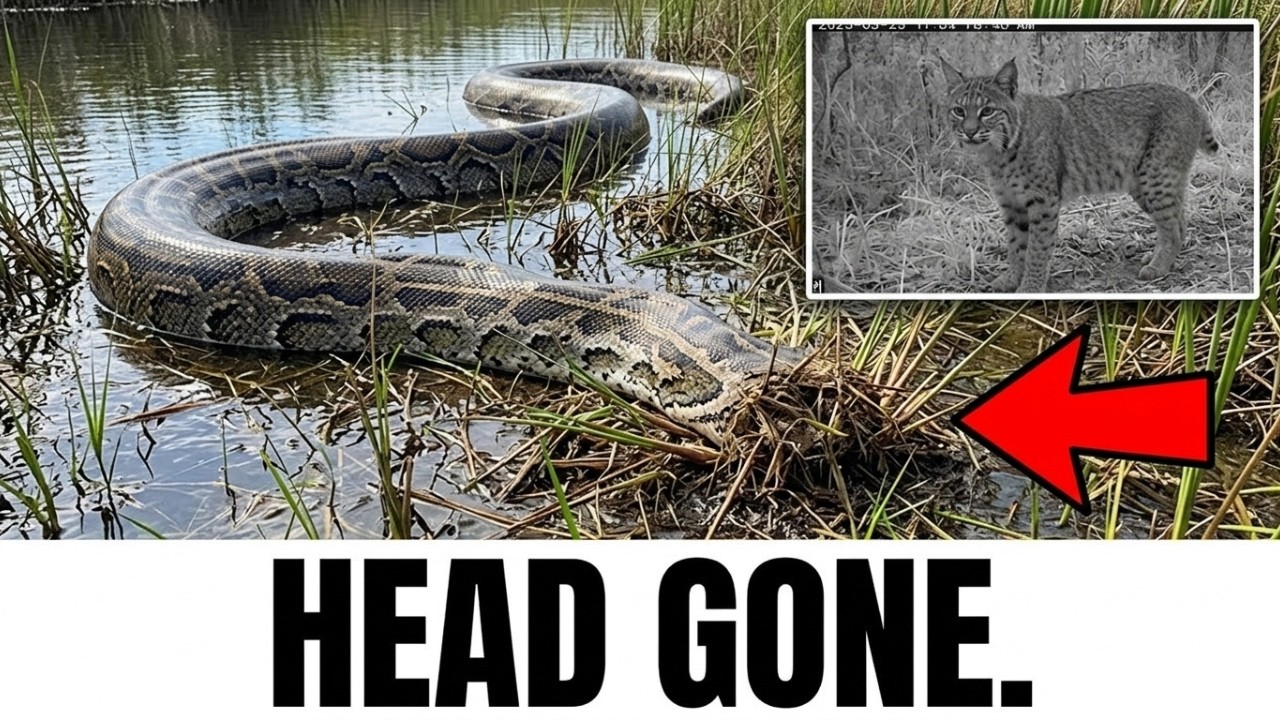
A 20-foot python was found decapitated in the wild, its massive head missing. Investigators initially suspected a rival predator.
Biologists from the Conservancy of Southwest Florida found a 20-foot Burmese python dead in pine flatwoods at the edge of the Everglades. The snake’s head had been removed, and the carcass had been covered with pine needles and debris. The concealment indicated that an animal had killed the python and stored the body for later feeding. Trail cameras placed near the carcass identified the predator…
Saltwater crocodiles are eating cane toads, and scientists say the predator’s survival could now be reshaping an entire ecosystem. For decades, toxic cane toads have been lethal to native animals that bite them, yet crocodiles appear to be developing a tolerance that changes their role in the food chain.
Cane toads have spread across northern Australia and into the Kimberley wilderness since their introduction in 1935, causing significant harm to native wildlife. Local rangers and researchers are now studying how some predators are adapting to survive alongside them.For decades, eating a cane toad in Australia was almost certainly fatal for native animals. The toads carry potent toxins in glands b…

He slithered through swamp water, but Florida wildlife officers now warn this hunter does not chase rodents—it stalks humans. The invasive species, initially dismissed as another python threat, has triggered a statewide alert after documented encounters near residential canals.
In 2016, genetic testing confirmed that Nile crocodiles, a species not native to the Americas, had established a breeding population in the Florida Everglades. The discovery marked the end of a years-long investigation that began with sightings of unusually aggressive crocodilians in canals south of Miami. Researchers concluded that the animals were descendants of specimens brought into the state…
A mysterious force is devastating Florida’s Everglades, and the culprit has wildlife experts bracing for an ecological disaster. Pythons, invasive predators that can grow over twenty feet long, are strangling the natural food chain, and state officials have declared an all-out war.
The Everglades, a vast wetland at the southern tip of Florida, is often described as a swamp, but it is technically a slow-moving river. The area is a complex ecosystem shaped by a unique set of conditions, and its history includes both natural phenomena and human intervention.The region is the only place on Earth where American alligators and American crocodiles share the same habitat. Alligators…

Florida’s giant pythons were disappearing—then scientists finally discovered the predator behind it. For years, invasive Burmese pythons had devastated the Everglades, swallowing everything from raccoons to alligators, and researchers assumed nothing could challenge them.
Burmese pythons had dominated southern Florida for roughly twenty years, preying on deer, wading birds, and even alligators. They helped empty large sections of Everglades National Park of raccoons, opossums, and rabbits. In 2021, however, researchers encountered something they had never documented: a mammal killing a full-grown python on land.A 13-foot, 52-pound male python, tagged with a radio t…